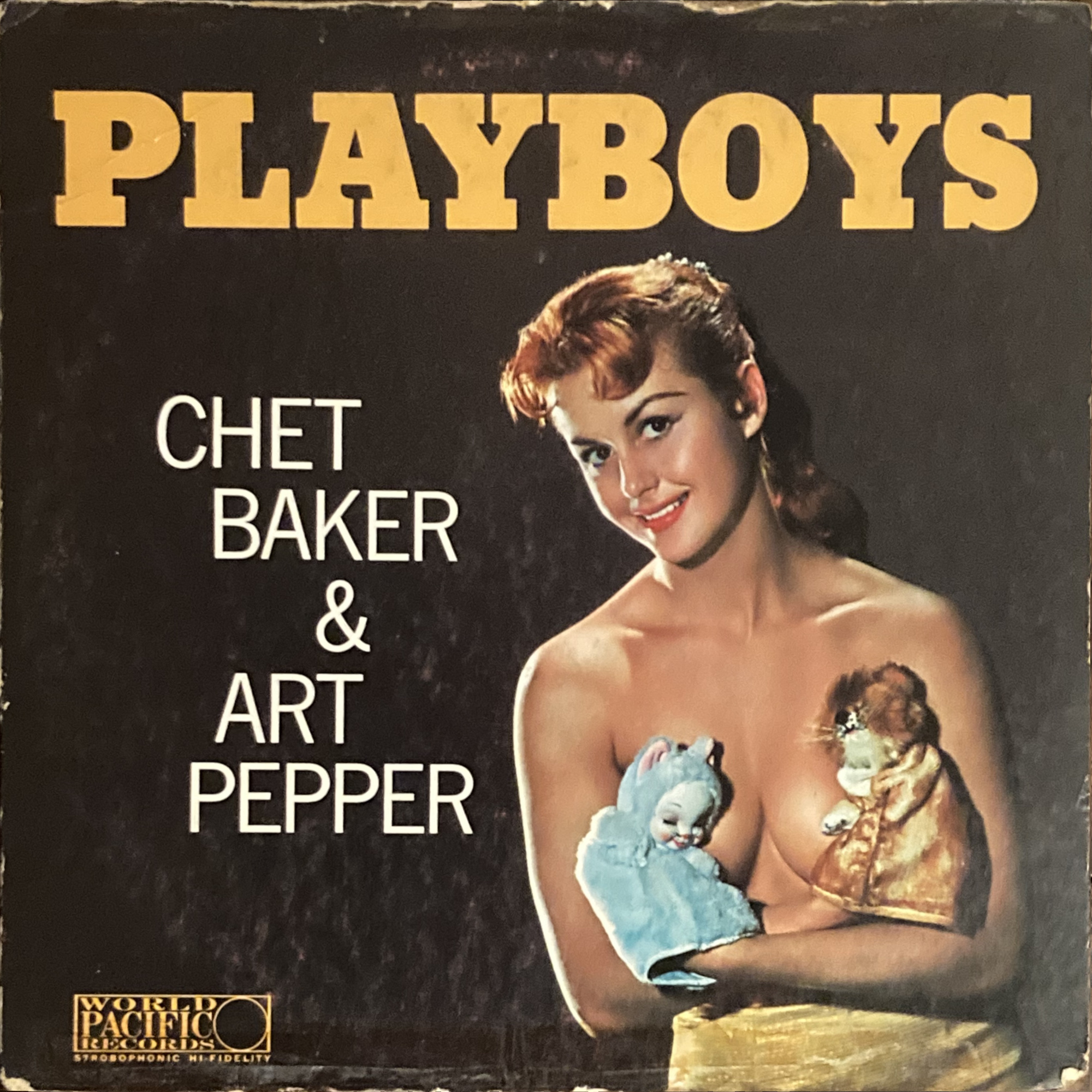
Label: World Pacific Records
No.: PJ-1234
Title: PLAYBOYS
Musician: CHET BAKER AND ART PEPPER SEXTET
Recorded: 1956/10/31
Monaural
Cover address: HOLLYWOOD CALIFORNIA
Coating 無し
Groove Guard
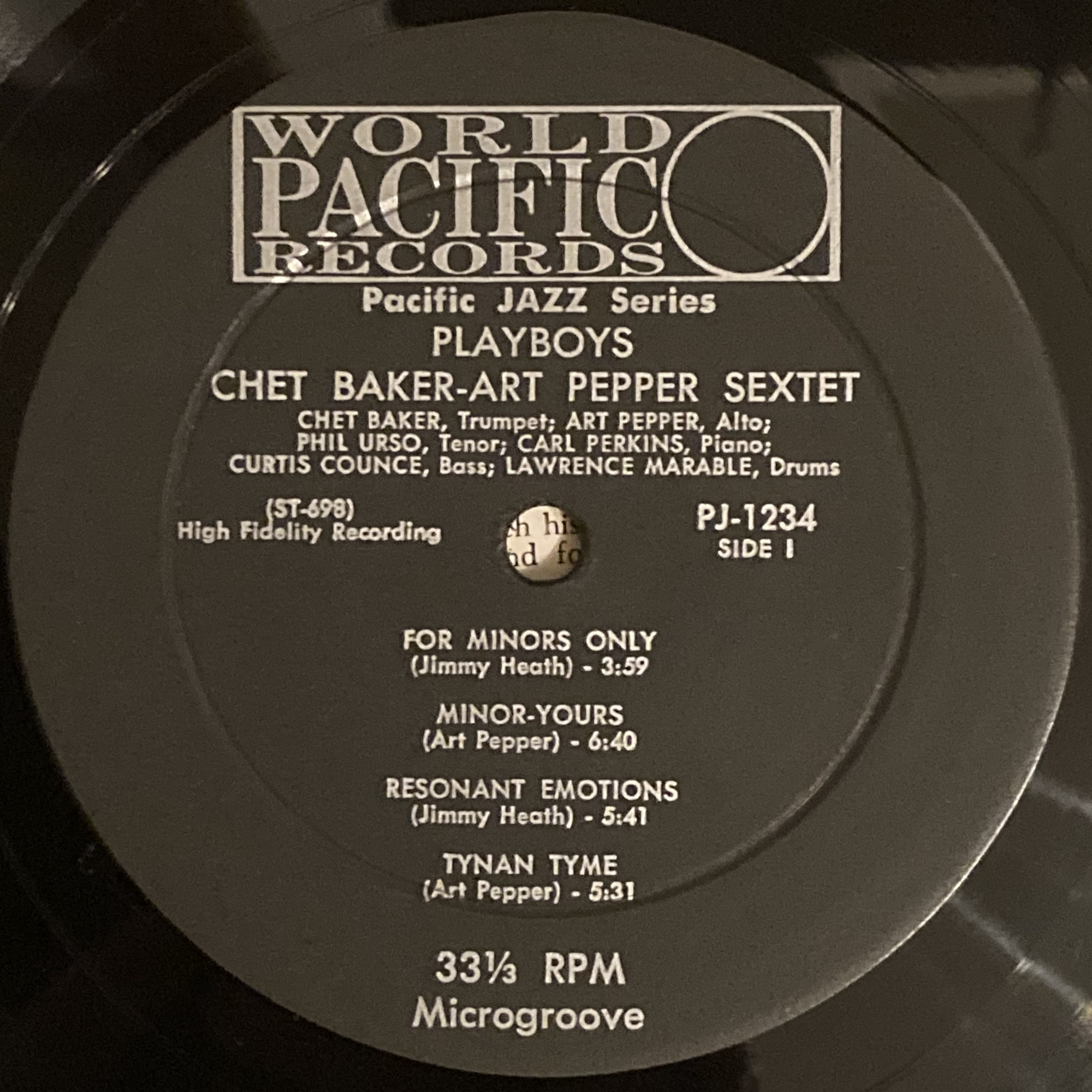
Label Side-1
Black Background
Silver Letter
Address: None
Deep Groove
Dead Wax Info: PJ-ST, 698, H
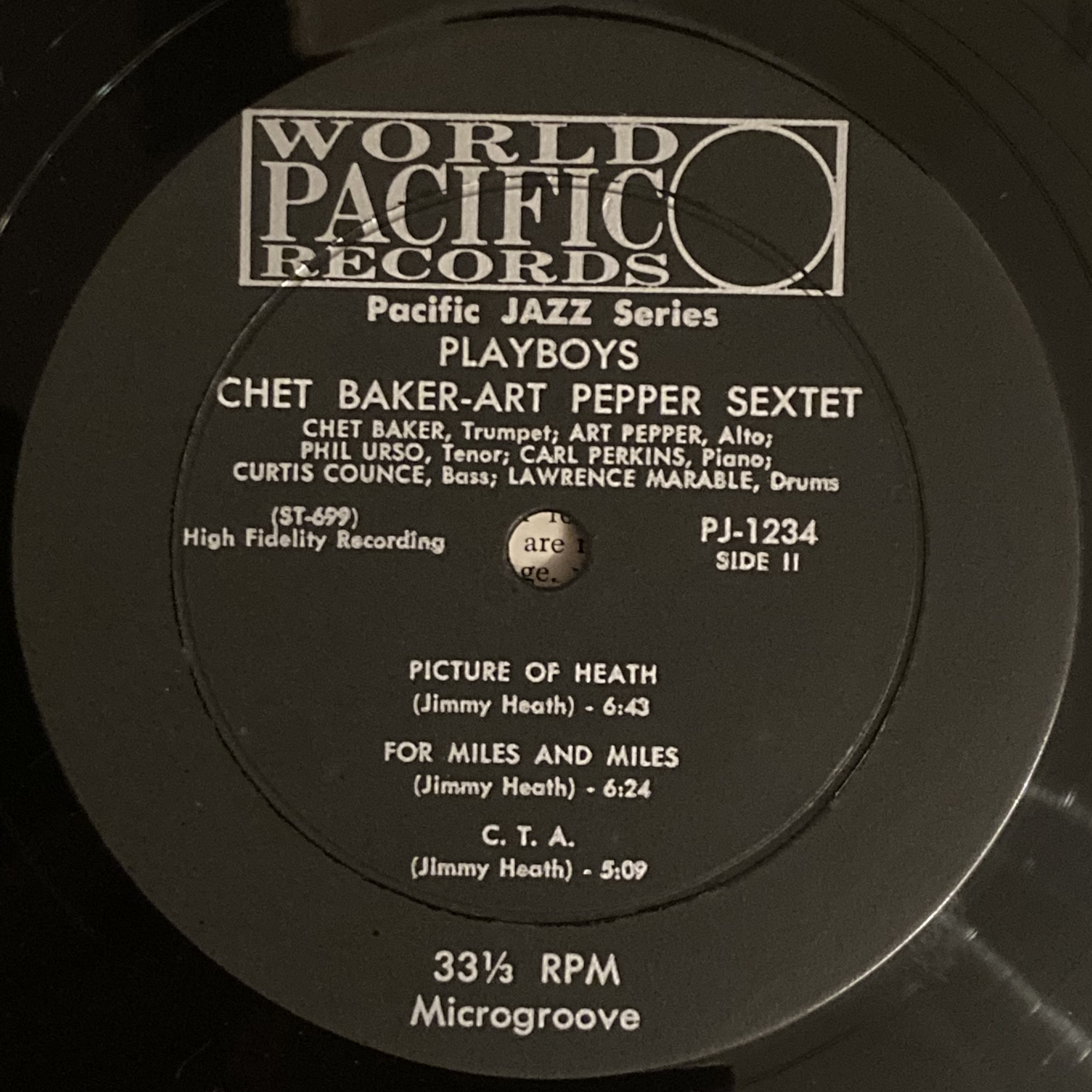
Label Side-2
Black Background
Silver Letter
Address: None
Deep Groove
Dead Wax Info: PJ-ST, 699, H
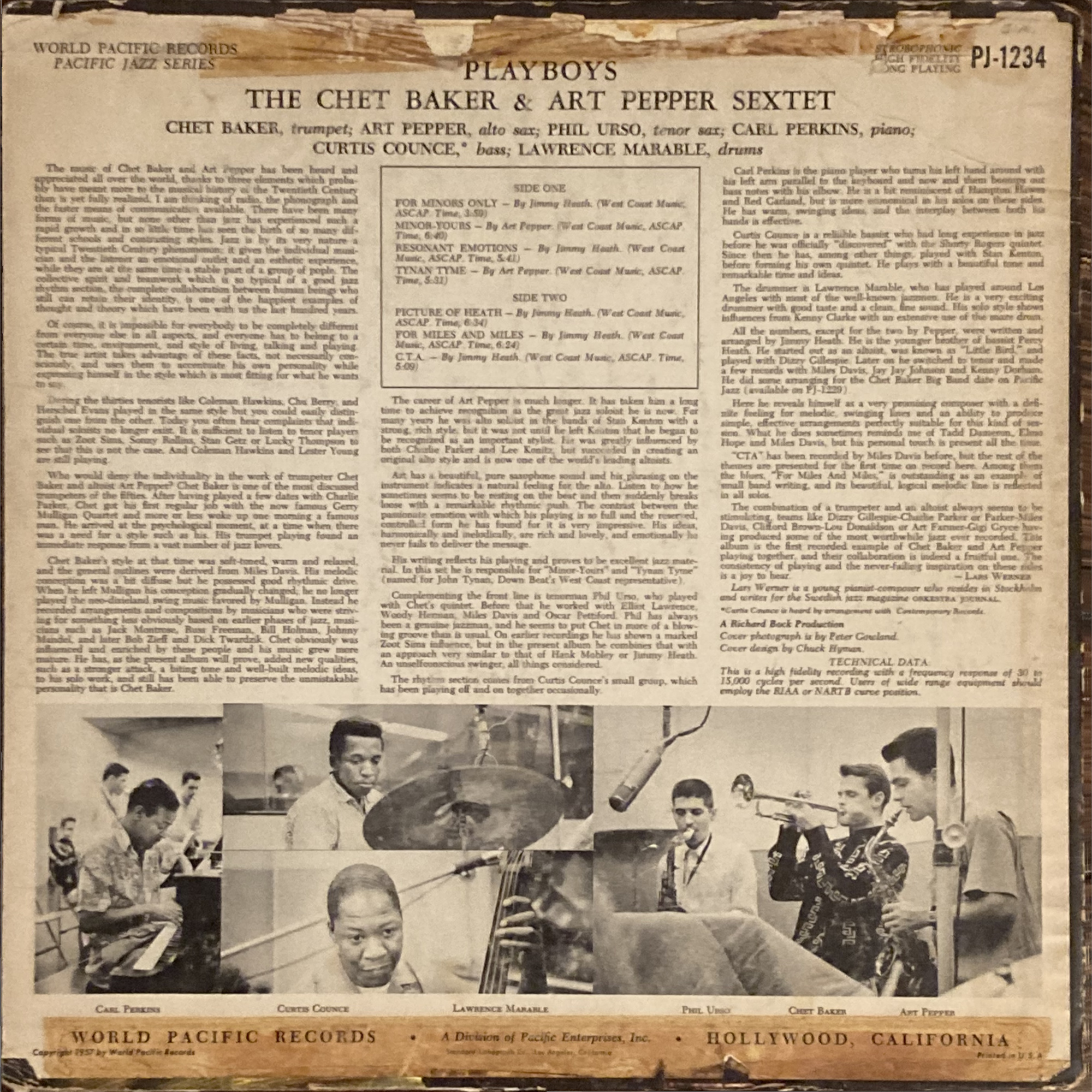
Personnel-
Drums: Lawrence Marable
Bass: Curtis Counce
Piano: Carl Perkins
Tenor Sax: Phil Urso
Alto Sax: Art Pepper
Trumpet: Chet Baker
Tracks-
Side-1
1) For Minors Only 3’59”
2) Minor-Yours 6’40”
3) Resonant Emotions 5’41”
4) Tynan Tyme 5’31”
Side-2
1) Picture of Heath 6’34”
2) For Miles and Miles 6’24”
3) C.T.A. 5’09”
<裏ジャケ原文>
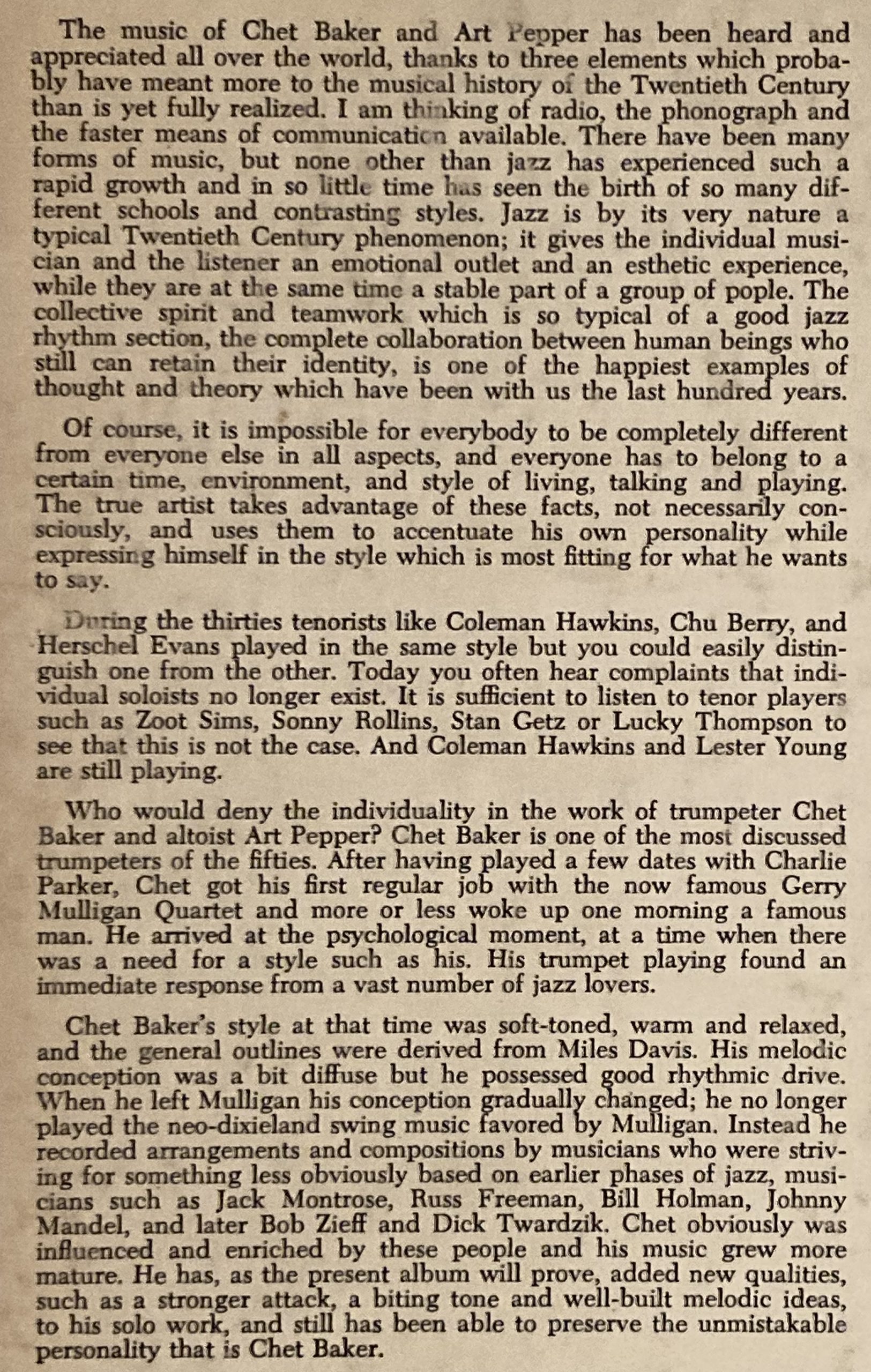
The music of Chet Baker and Art Pepper has been heard and appreciated all over the world, thanks to three elements which proba- bly have meant more to the musical history of the Twentieth Century than is yet fully realized. I am thinking of radio, the phonograph and the faster means of communication available. There have been many forms of music, but none other than jazz has experienced such a rapid growth and in so little time has seen the birth of so many dif- ferent schools and contrasting styles. Jazz is by its very nature a typical Twentieth Century phenomenon; it gives the individual musi- cian and the listener an emotional outlet and an esthetic experience, while they are at the same time a stable part of a group of pople. The collective spirit and teamwork which is so typical of a good jazz rhythm section, the complete collaboration between human beings who still can retain their identity, is one of the happiest examples of thought and theory which have been with us the last hundred years.
Of course, it is impossible for everybody to be completely different from everyone else in all aspects, and everyone has to belong to a certain time, environment, and style of living, talking and playing. The true artist takes advantage of these facts, not necessarily con- sciously, and uses them to accentuate his own personality while expressing himself in the style which is most fitting for what he wants
to say.
During the thirties tenorists like Coleman Hawkins, Chu Berry, and Herschel Evans played in the same style but you could easily distin- guish one from the other. Today you often hear complaints that indi- vidual soloists no longer exist. It is sufficient to listen to tenor players such as Zoot Sims, Sonny Rollins, Stan Getz or Lucky Thompson to see that this is not the case. And Coleman Hawkins and Lester Young are still playing.
Who would deny the individuality in the work of trumpeter Chet Baker and altoist Art Pepper? Chet Baker is one of the most discussed trumpeters of the fifties. After having played a few dates with Charlie Parker, Chet got his first regular job with the now famous Gerry Mulligan Quartet and more or less woke up one morning a famous man. He arrived at the psychological moment, at a time when there was a need for a style such as his. His trumpet playing found an immediate response from a vast number of jazz lovers.
Chet Baker’s style at that time was soft-toned, warm and relaxed, and the general outlines were derived from Miles Davis. His melodic conception was a bit diffuse but he possessed good rhythmic drive. When he left Mulligan his conception gradually changed; he no longer played the neo-dixieland swing music favored by Mulligan. Instead he recorded arrangements and compositions by musicians who were striv- ing for something less obviously based on earlier phases of jazz, musi- cians such as Jack Montrose, Russ Freeman, Bill Holman, Johnny Mandel, and later Bob Zieff and Dick Twardzik. Chet obviously was influenced and enriched by these people and his music grew more mature. He has, as the present album will prove, added new qualities, such as a stronger attack, a biting tone and well-built melodic ideas, to his solo work, and still has been able to preserve the unmistakable personality that is Chet Baker.
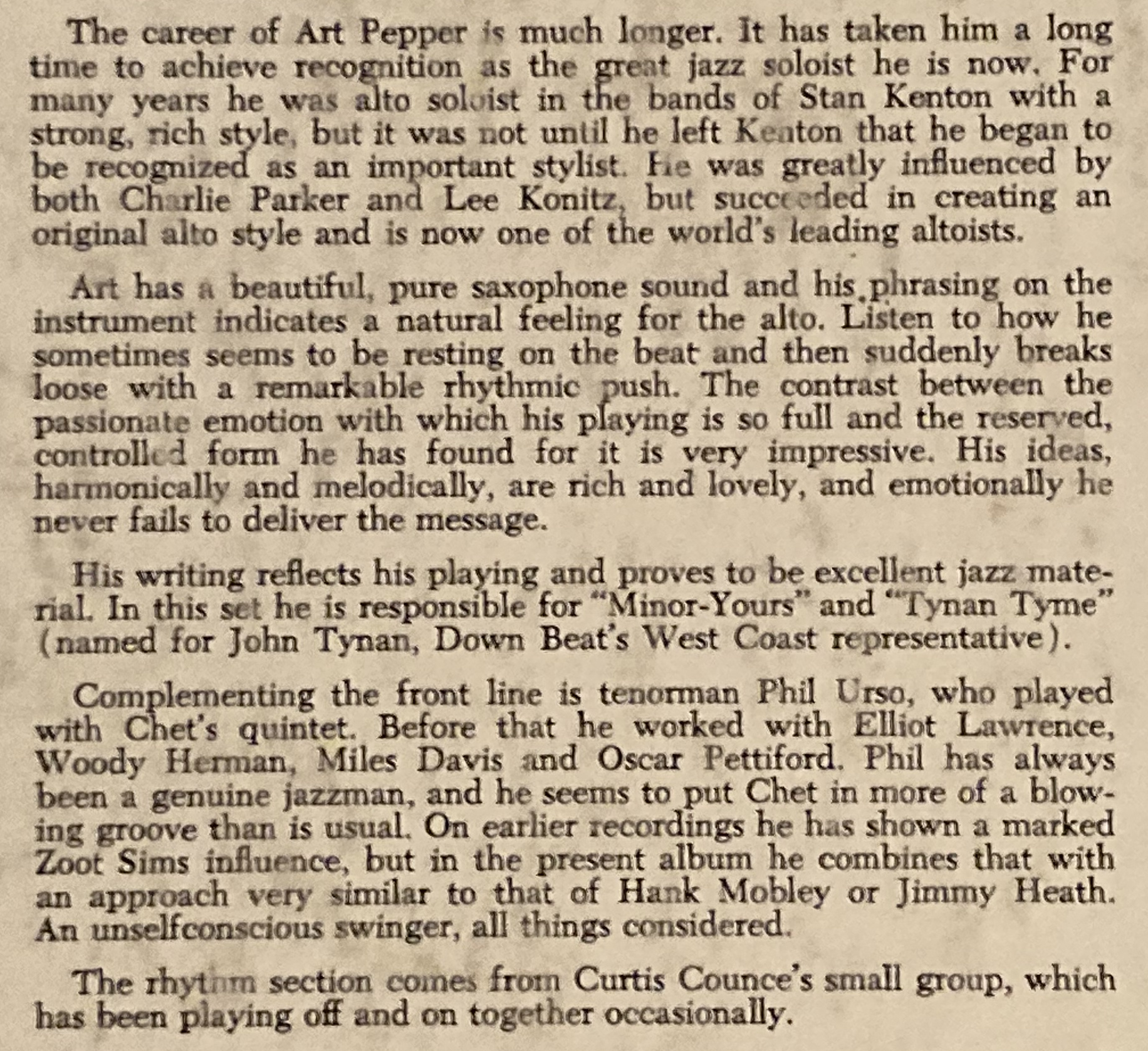
The career of Art Pepper is much longer. It has taken him a long time to achieve recognition as the great jazz soloist he is now. For many years he was alto soloist in the bands of Stan Kenton with a strong, rich style, but it was not until he left Keaton that he began to be recognized as an important stylist. He was greatly influenced by both Charlie Parker and Lee Konitz, but succeeded in creating an original alto style and is now one of the world’s leading altoists.
Art has a beautiful, pure saxophone sound and his phrasing on the instrument indicates a natural feeling for the alto. Listen to how he sometimes seems to be resting on the beat and then suddenly breaks loose with a remarkable rhythmic push. The contrast between the passionate emotion with which his playing is so full and the reserved, controlled form he has found for it is very impressive. His ideas, harmonically and melodically, are rich and lovely, and emotionally he never fails to deliver the message.
His writing reflects his playing and proves to be excellent jazz mate- rial. In this set he is responsible for “Minor-Yours” and “Tynan Tyme” (named for John Tynan, Down Beat’s West Coast representative).
Complementing the front line is tenorman Phil Urso, who played with Chet’s quintet. Before that he worked with Elliot Lawrence, Woody Herman, Miles Davis and Oscar Pettiford. Phil has always been a genuine jazzman, and he seems to put Chet in more of a blow- ing groove than is usual. On earlier recordings he has shown a marked Zoot Sims influence, but in the present album he combines that with an approach very similar to that of Hank Mobley or Jimmy Heath. An unselfconscious swinger, all things considered.
The rhythm section comes from Curtis Counce’s small group, which has been playing off and on together occasionally.
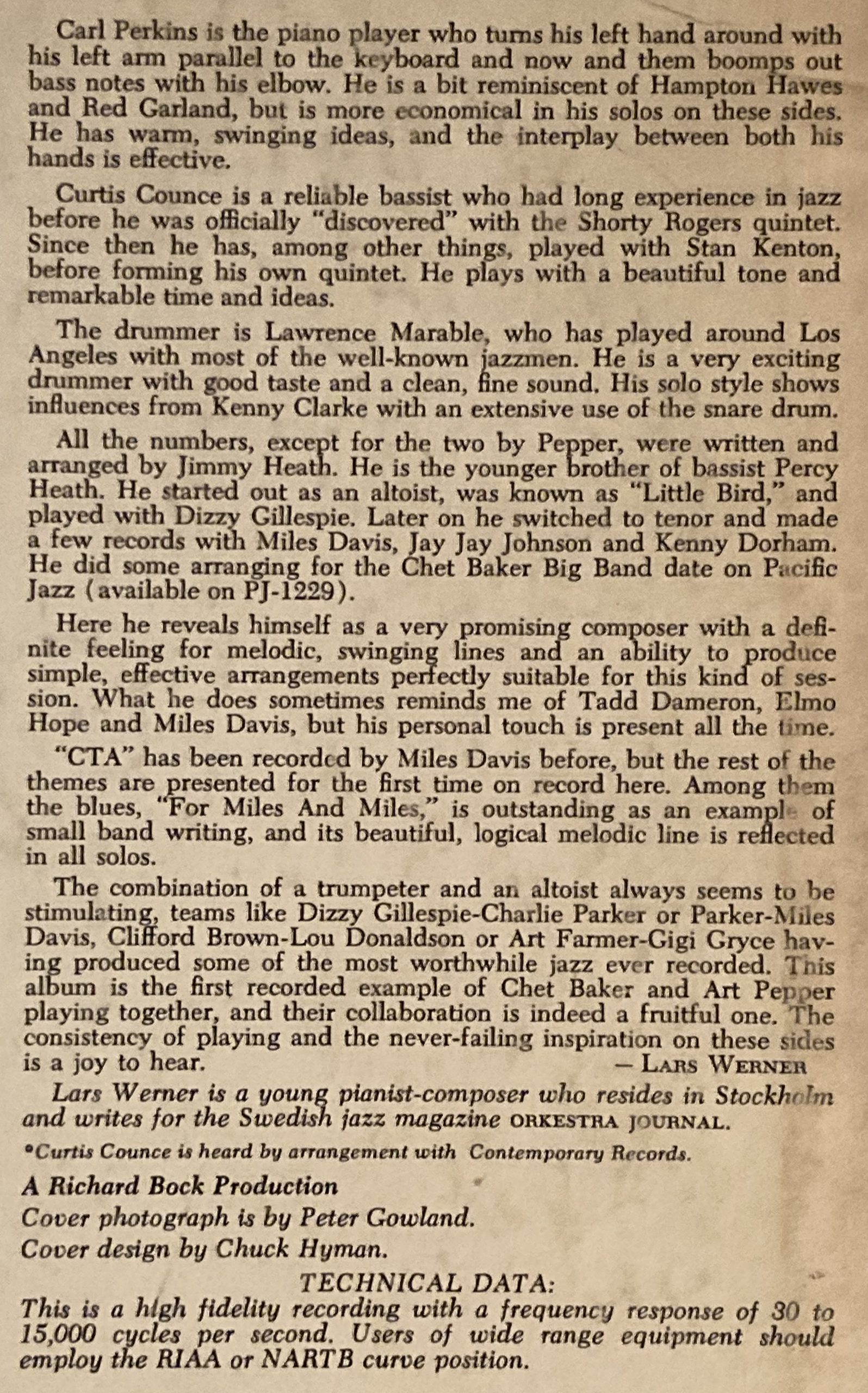
Carl Perkins is the piano player who turns his left hand around with his left arm parallel to the keyboard and now and them boomps out bass notes with his elbow. He is a bit reminiscent of Hampton Hawes and Red Garland, but is more economical in his solos on these sides. He has warm, swinging ideas, and the interplay between both his hands is effective.
Curtis Counce is a reliable bassist who had long experience in jazz before he was officially “discovered” with the Shorty Rogers quintet. Since then he has, among other things, played with Stan Kenton, before forming his own quintet. He plays with a beautiful tone and remarkable time and ideas.
The drummer is Lawrence Marable, who has played around Los Angeles with most of the well-known jazzmen. He is a very exciting drummer with good taste and a clean, fine sound. His solo style shows influences from Kenny Clarke with an extensive use of the snare drum.
All the numbers, except for the two by Pepper, were written and arranged by Jimmy Heath. He is the younger brother of bassist Percy Heath. He started out as an altoist, was known as “Little Bird,” and played with Dizzy Gillespie. Later on he switched to tenor and made a few records with Miles Davis, Jay Jay Johnson and Kenny Dorham. He did some arranging for the Chet Baker Big Band date on Pacific Jazz (available on PJ-1229).
Here he reveals himself as a very promising composer with a defi- nite feeling for melodic, swinging lines and an ability to produce simple, effective arrangements perfectly suitable for this kind of ses- sion. What he does sometimes reminds me of Tadd Dameron, Elmo Hope and Miles Davis, but his personal touch is present all the time.
“CTA” has been recorded by Miles Davis before, but the rest of the themes are presented for the first time on record here. Among them the blues, “For Miles And Miles,” is outstanding as an example of small band writing, and its beautiful, logical melodic line is reflected in all solos.
The combination of a trumpeter and an altoist always seems to be stimulating, teams like Dizzy Gillespie-Charlie Parker or Parker-Miles Davis, Clifford Brown-Lou Donaldson or Art Farmer-Gigi Gryce hav- ing produced some of the most worthwhile jazz ever recorded. This album is the first recorded example of Chet Baker and Art Pepper playing together, and their collaboration is indeed a fruitful one. The consistency of playing and the never-failing inspiration on these sides is a joy to hear. LARS WERNER
Lars Werner is a young pianist-composer who resides in Stockholm and writes for the Swedish jazz magazine ORKESTRA JOURNAL.
“Curtis Counce is heard by arrangement with Contemporary Records.
A Richard Bock Production
Cover photograph is by Peter Gowland.
Cover design by Chuck Hyman.
TECHNICAL DATA:
This is a high fidelity recording with a frequency response of 30 to 15,000 cycles per second. Users of wide range equipment should employ the RIAA or NARTB curve position.
<裏ジャケ和訳>
チェット・ベイカーやアート・ペッパーの音楽が世界中で聴かれ、親しまれてきた背景には、おそらく20世紀の音楽史において、まだ十分に認識されていないほど重要な意味を持つ3つの要素があります。それは、ラジオ、蓄音機(レコード)、そして通信手段の高速化です。これまで数多くの音楽形態が存在してきましたが、ジャズほど短期間で急速な発展を遂げ、これほど多種多様な流派や対照的なスタイルを生み出した音楽は他にありません。ジャズは本質的に、典型的な20世紀の現象と言えます。ジャズは、個々の演奏家や聴き手に感情の吐き出し口や美的体験をもたらすと同時に、彼らをある集団の一員として安定した存在にさせるものでもあります。優れたジャズのリズム・セクションに見られるような集団的精神やチームワーク――つまり、個々のアイデンティティを保ちながら人間同士が完全に協力し合うこと――は、過去1世紀にわたる思想や理論の中でも、最も素晴らしい実例の一つと言えるでしょう。
もちろん、あらゆる面で他者と完全に異なる存在でいることなど不可能ですし、誰もが特定の時代や環境、そして生活様式、話し方、演奏スタイルの中に身を置くことになります。真の芸術家は、そうした事実を(必ずしも意識的とは限りませんが)うまく利用し、自らの個性を際立たせながら、自身の表現したい内容に最も適したスタイルで自己を表現するのです。
1930年代には、コールマン・ホーキンス、チュー・ベリー、ハーシェル・エヴァンスといったテナー・サックス奏者が同じようなスタイルで演奏していましたが、彼らを聴き分けることは容易でした。今日では、個性を備えたソリストがいなくなったという不満を耳にすることがよくあります。しかし、ズート・シムズ、ソニー・ロリンズ、スタン・ゲッツ、ラッキー・トンプソンといったテナー奏者を聴けば、決してそうではないことがわかるはずです。それに、コールマン・ホーキンスやレスター・ヤングも現役で演奏を続けています。
トランペット奏者のチェット・ベイカーやアルト・サックス奏者アート・ペッパーの作品に見られる個性を否定する人などいるでしょうか?チェット・ベイカーは、1950年代に最も話題となったトランペット奏者の一人です。チャーリー・パーカーと何度か共演した後、チェットは当時すでに有名だったジェリー・マリガン・カルテットで初のレギュラー・メンバーとしての仕事を得て、ある朝目覚めると、いつの間にかスターになっていたのです。彼はまさに絶好のタイミングで登場しました。彼のスタイルが求められていた、その瞬間に現れたのです。彼のトランペット演奏は、数多くのジャズ愛好家から即座に熱烈な反応をもって迎えられました。
当時のチェット・ベイカーのスタイルは、柔らかく温かみがあり、リラックスしたもので、その大枠はマイルス・デイヴィスに由来していました。メロディの構成はやや拡散気味でしたが、優れたリズムの推進力を備えていました。マリガンとの共演を終えた後、彼の音楽的構想は徐々に変化していきました。彼はもはや、マリガンが好んだネオ・ディキシーランド・スウィング・ミュージックを演奏することはなくなりました。その代わりに、ジャズの初期の様式に露骨に依拠しない音楽を追求していたミュージシャンたち――ジャック・モントローズ、ラス・フリーマン、ビル・ホルマン、ジョニー・マンデル、そして後にはボブ・ジーフやディック・トワージクといった面々――による編曲や楽曲を録音するようになりました。チェットは明らかに彼らから影響を受けて音楽性を豊かにし、その演奏はより成熟したものとなりました。本作が証明するように、彼は自身のソロ演奏に、より力強いアタック、鋭いトーン、そして構成のしっかりしたメロディ・アイデアといった新たな要素を加えつつも、チェット・ベイカーならではの紛れもない個性を保ち続けています。
アート・ペッパーのキャリアは、それよりもはるかに長いものです。彼が現在のような偉大なジャズ・ソリストとして認められるようになるまでには、長い時間を要しました。長年にわたりスタン・ケントンのバンドで力強く豊かなスタイルのアルト・ソリストを務めていましたが、重要なスタイリストとして認知され始めたのは、ケントンのもとを離れてからのことでした。彼はチャーリー・パーカーとリー・コニッツの双方から多大な影響を受けましたが、独自のアルト・スタイルを確立することに成功し、現在では世界を代表するアルト奏者の一人となっています。
アートは美しく純粋なサックスの音色を持っており、その楽器でのフレージングからは、アルトに対する天性の感覚がうかがえます。彼が時にビートに身を預けるように演奏し、かと思えば突然、驚くべきリズムの推進力で奔放に展開していく様子に耳を傾けてみてください。情熱的な感情に満ちた演奏と、それを表現するために彼が見出した抑制の効いたコントロールされた形式との対比は、実に印象的です。ハーモニーやメロディの面でのアイデアは豊かで美しく、感情面でも常にそのメッセージを聴き手にしっかりと届けてくれます。
彼の作曲作品には自身の演奏スタイルが反映されており、優れたジャズ・ナンバーとなっています。本作では、「マイナー・ユアーズ(Minor-Yours)」と「タイナン・タイム(Tynan Tyme)」(『ダウン・ビート』誌の西海岸担当記者ジョン・タイナンにちなんで名付けられた曲)を手掛けています。フロントラインを支えるのは、チェットのクインテットでも演奏したテナー・サックス奏者のフィル・ウルソだ。それ以前には、エリオット・ローレンス、ウディ・ハーマン、マイルス・デイヴィス、オスカー・ペティフォードらと共演している。根っからのジャズマンである彼は、チェットを普段以上にノリの良いグルーヴへと導いているようだ。初期の録音ではズート・シムズからの強い影響が見られたが、本作ではその要素に加え、ハンク・モブレイやジミー・ヒースを彷彿とさせるアプローチも取り入れている。総じて言えば、実に自然体でスウィングするプレイヤーだ。
リズム・セクションは、折に触れて共演を重ねてきたカーティス・カウンツの小編成グループのメンバーで構成されています。
ピアニストのカール・パーキンスは、左腕を鍵盤と平行に保ちながら左手を動かし、時折、肘で力強く低音(ベース・ノート)を鳴らすような奏法が特徴です。ハンプトン・ホーズやレッド・ガーランドを彷彿とさせる部分もありますが、本作でのソロはより無駄がなく、簡潔な構成になっています。温かみのあるスウィング感に満ちたアイデアを持ち、左右の手のインタープレイ(掛け合い)も効果的です。
カーティス・カウンツは、ショーティ・ロジャース・クインテットで本格的に「発見」される以前からジャズ界で長い経験を積んできた、信頼できるベーシストです。その後、スタン・ケントンらとの共演を経て、自身のクインテットを結成しました。美しい音色と卓越したタイム感、そして豊かな音楽的アイデアを兼ね備えた演奏を聴かせます。
ドラマーのローレンス・マラブルは、ロサンゼルス周辺で数多くの著名なジャズ・ミュージシャンと共演してきました。優れたセンスと、クリーンで上質なサウンドを持つ、非常にエキサイティングなドラマーです。スネア・ドラムを多用するそのソロ・スタイルには、ケニー・クラークの影響が見て取れます。
ペッパーの2曲を除き、すべての楽曲の作曲と編曲をジミー・ヒースが手掛けています。彼はベーシスト、パーシー・ヒースの弟にあたります。当初はアルト・サックス奏者として「リトル・バード」の愛称で知られ、ディジー・ガレスピーとも共演しました。後にテナー・サックスに転向し、マイルス・デイヴィス、J.J.ジョンソン、ケニー・ドーハムらと数々の録音を残しています。また、パシフィック・ジャズ・レーベルにおけるチェット・ベイカー・ビッグ・バンドのセッション(アルバム『PJ-1229』に収録)では編曲も担当しました。
本作で彼は、メロディアスでスウィング感あふれるラインを生み出す確かな感性と、この種のセッションに最適な、シンプルかつ効果的なアレンジを施す能力を発揮し、極めて有望な作曲家であることを証明しています。時にタッド・ダメロン、エルモ・ホープ、あるいはマイルス・デイヴィスを想起させる要素もありますが、そこには常に彼自身の個性が息づいています。
「CTA」は以前マイルス・デイヴィスによって録音されていますが、それ以外の楽曲は本作が初録音となります。中でもブルース・ナンバーの「For Miles And Miles」は、小編成バンドのための楽曲として傑出した出来栄えであり、その美しく論理的なメロディ・ラインは、各奏者のソロ演奏にも反映されています。トランペットとアルト・サックスの組み合わせは、常に刺激的なものをもたらします。ディジー・ガレスピーとチャーリー・パーカー、パーカーとマイルス・デイヴィス、クリフォード・ブラウンとルー・ドナルドソン、あるいはアート・ファーマーとジジ・グライスといった顔合わせは、ジャズ史上屈指の傑作を生み出してきました。本作は、チェット・ベイカーとアート・ペッパーが共演した初の録音であり、そのコラボレーションは実に実り豊かなものとなっています。全編を通じて一貫した素晴らしい演奏と、尽きることのないインスピレーションを堪能できる一枚です。――ラース・ヴェルナー
ラース・ヴェルナーはストックホルム在住の若きピアニスト兼作曲家であり、スウェーデンのジャズ誌『ORKESTRA JOURNAL』に寄稿しています。
※カーティス・カンスの参加はコンテンポラリー・レコードの協力によるものです。
リチャード・ボック・プロダクション
カバー写真:ピーター・ガウランド
カバー・デザイン:チャック・ハイマン
技術データ:
本盤は、周波数特性30~15,000Hzを誇るハイ・フィデリティ(高忠実度)録音です。ワイドレンジ対応の再生機器をお使いの場合は、RIAAまたはNARTBカーブの設定をご利用ください。
※訳文の制作にはGoogleドライブとGoogle翻訳のお世話になりました。


コメント