Label: VERVE
No.: MG VS-6059
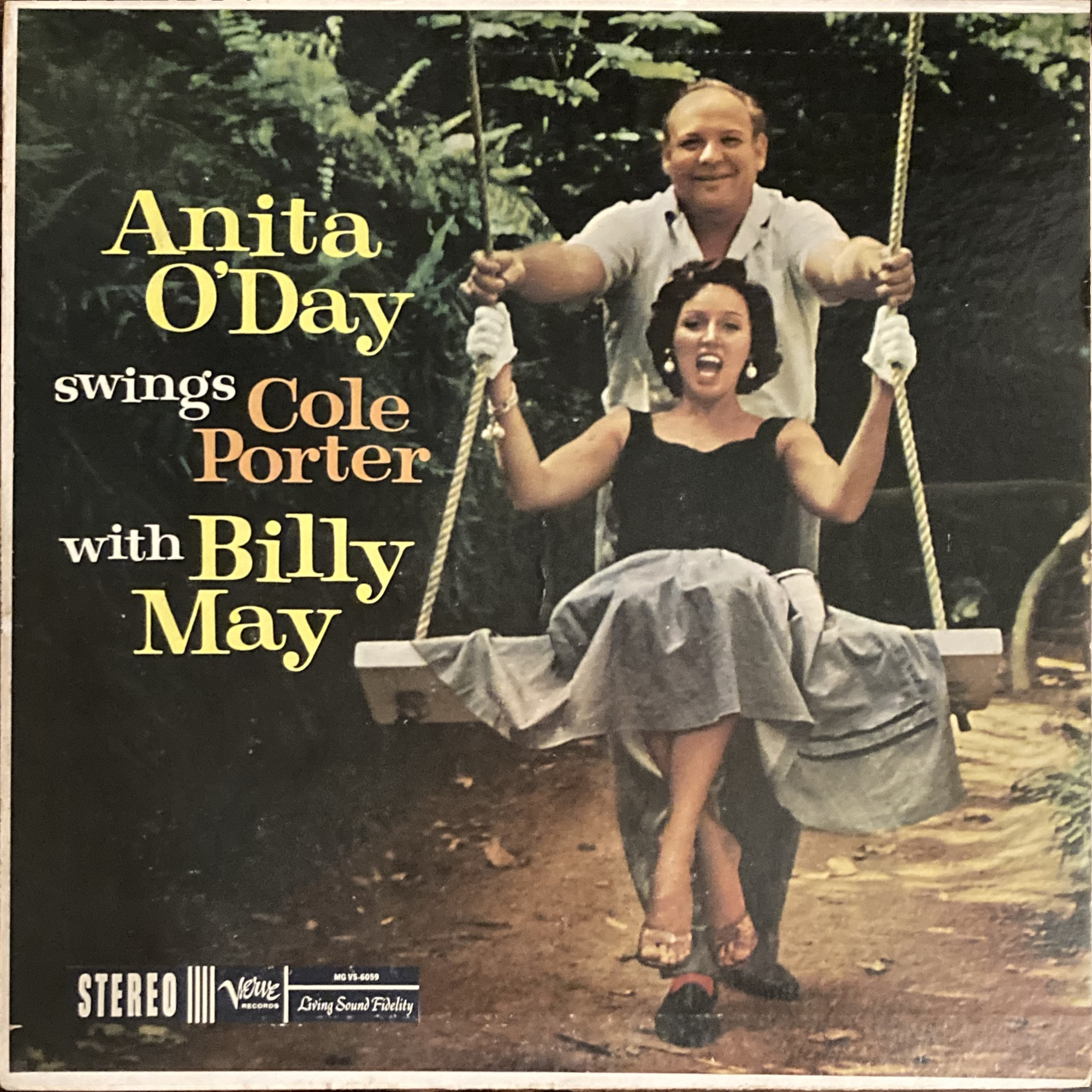
Title: ANITA O’DAY SWINGS COLE PORTER WITH BILLY MAY
Musician: ANITA O’DAY
Recorded: 1959/4/2
Stereo
Cover address: None
Coating無し
Groove Guard
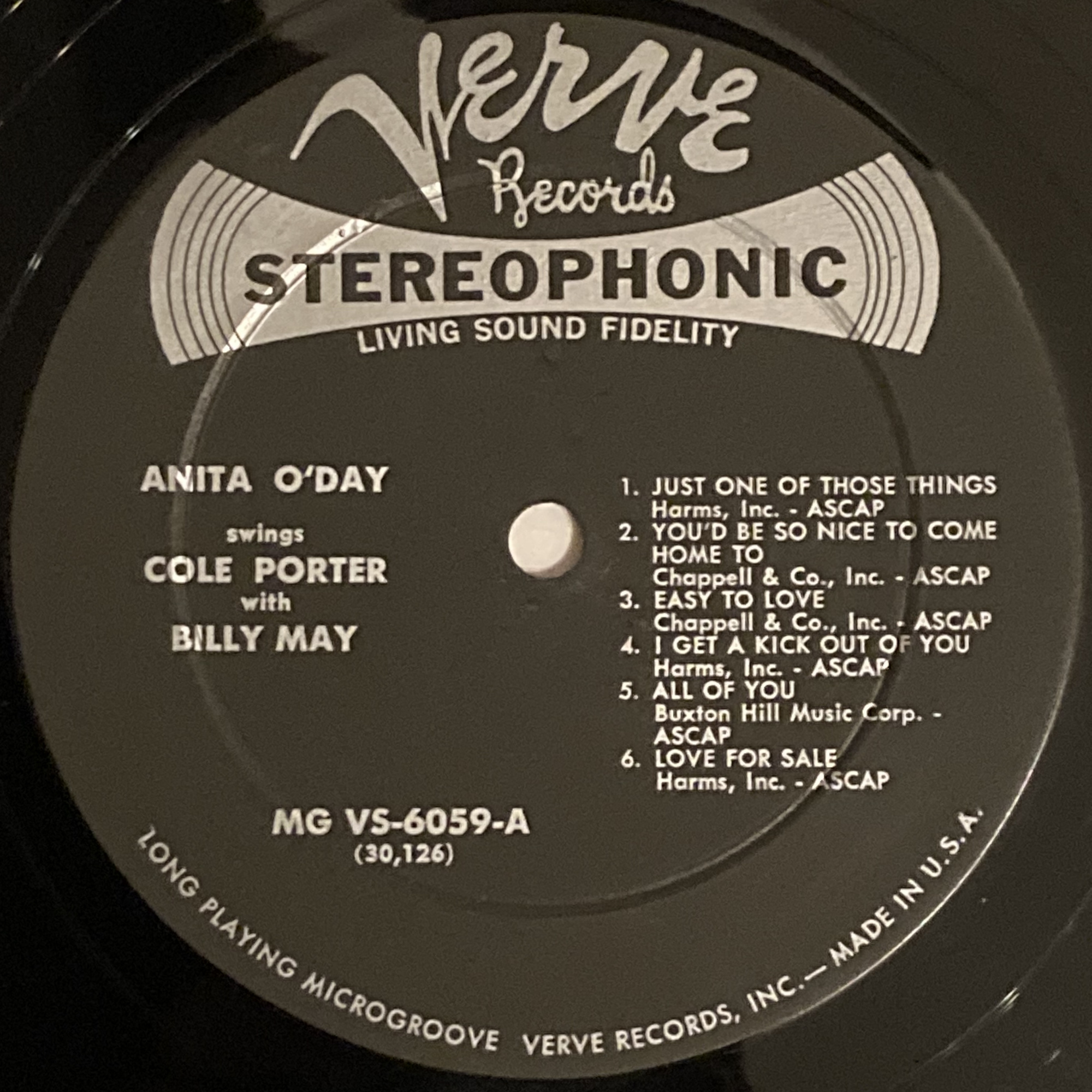
Label Side-A
Black Background
Silver Letter with “STEREOPHONIC” logo
Address: None
Deep Groove
Dead Wax Info: MGVS-6059-A RE, 30.126
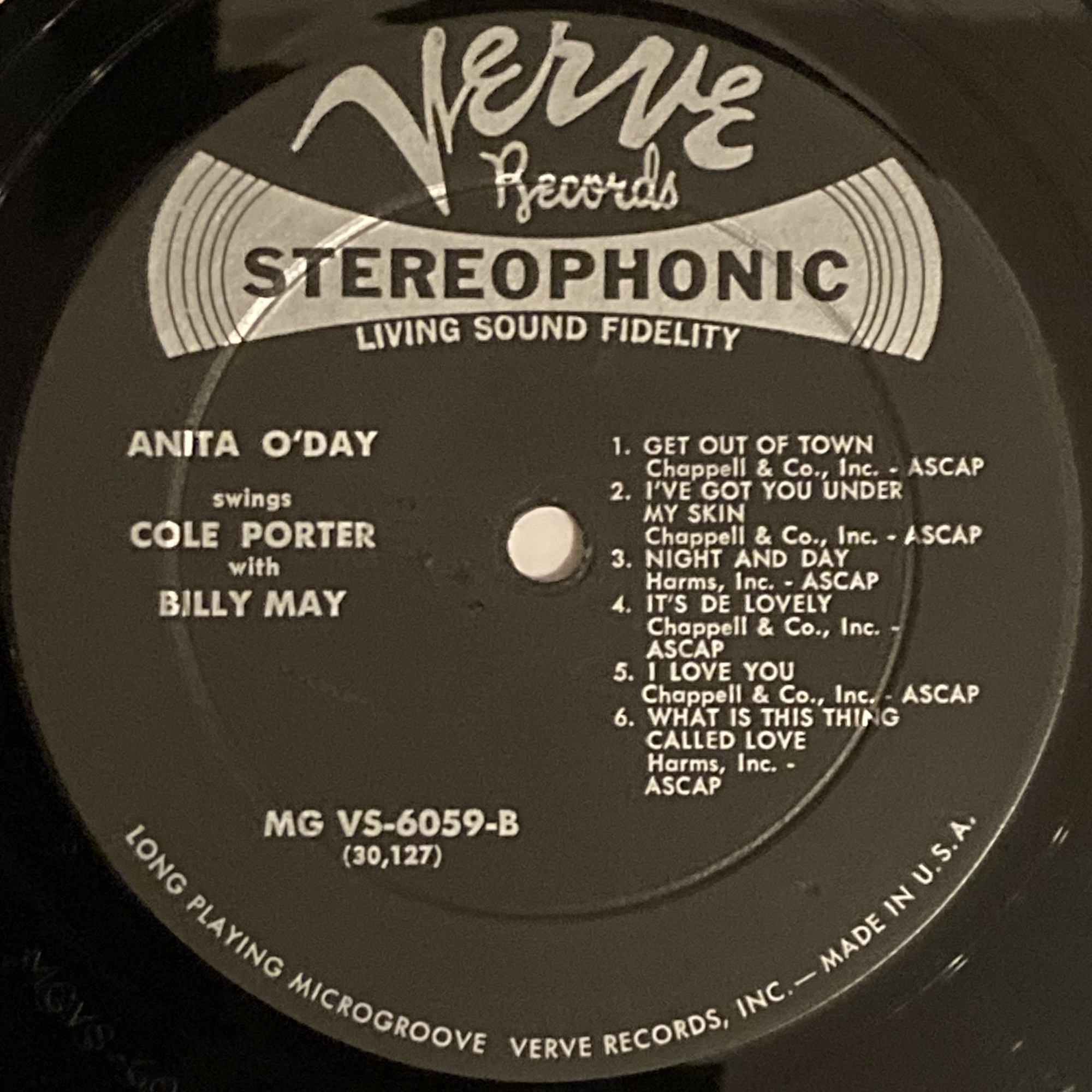
Label Side-B
Black Background
Silver Letter with “STEREOPHONIC” logo
Address: None
Deep Groove
Dead Wax Info: MGVS-6059-B RE, 30.127
Personnel-
Vocal: Anita O’day
Tracks-
Side-A
1) Just One of Those Things
2) You’d Be So Nice To Come Home To
3) Easy to Love
4) I Get a Kick Out of You
5) All of You
6) Love for Sale
Side-B
1) Get Out of Town
2) I’ve Got You Under My Skin
3) Night and Day
4) It’s De Lovely
5) I Love You
6) What is This Thing Called Love
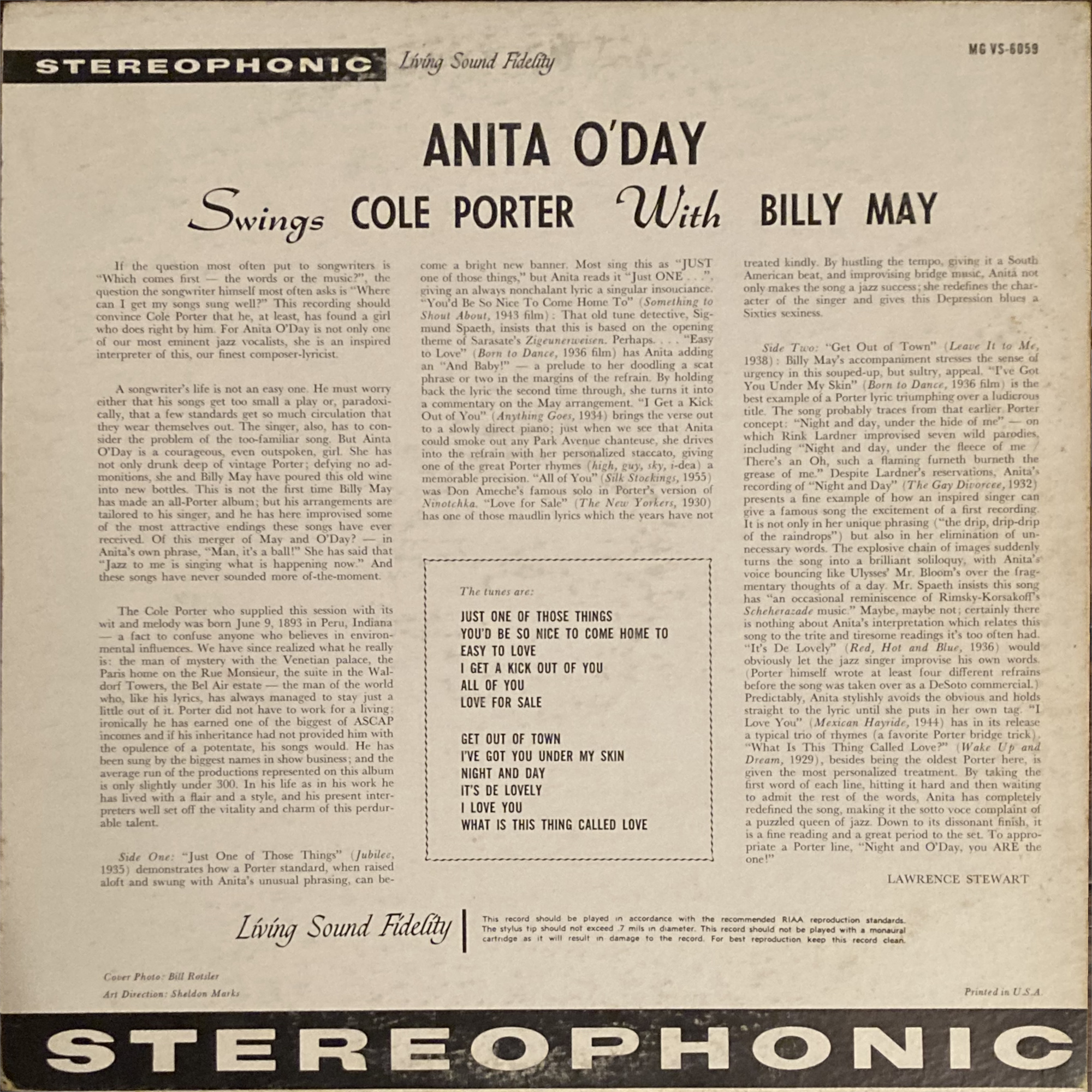
<裏ジャケ原文>
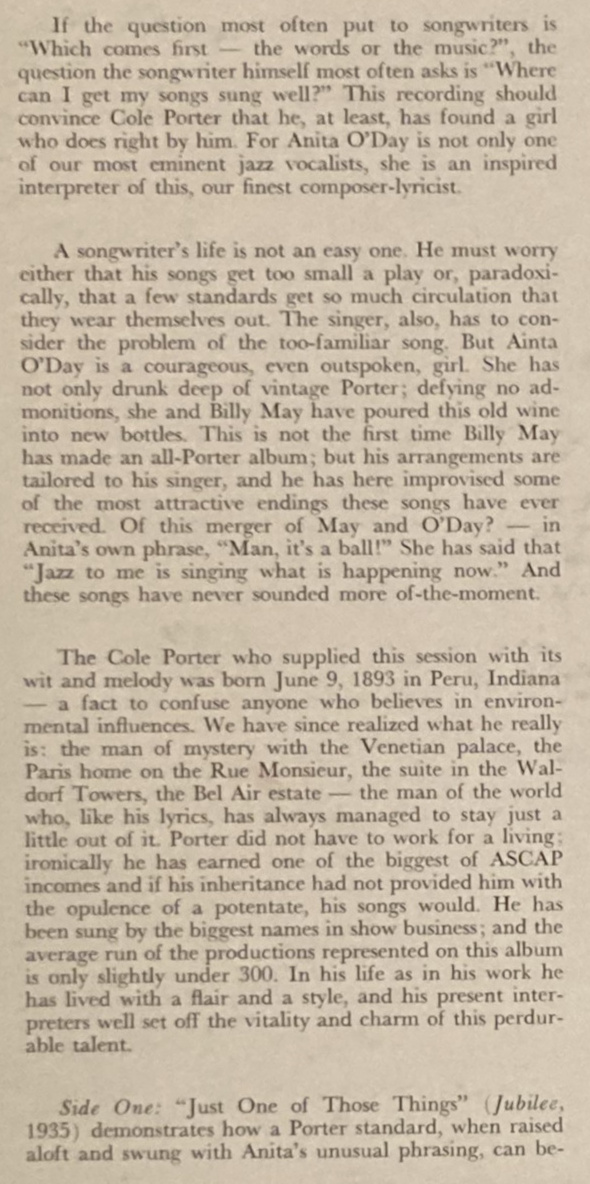
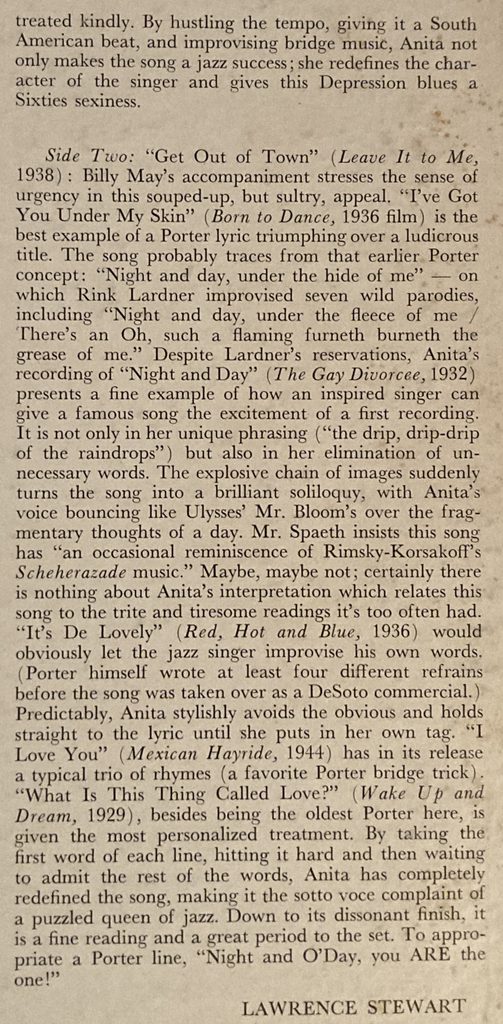
If the question most often put to songwriters is “Which comes first the words or the music?”, the question the songwriter himself most often asks is “Where can I get my songs sung well?” This recording should convince Cole Porter that he, at least, has found a girl who does right by him. For Anita O’Day is not only one of our most eminent jazz vocalists, she is an inspired interpreter of this, our finest composer-lyricist.
A songwriter’s life is not an easy one. He must worry either that his songs get too small a play or, paradoxi- cally, that a few standards get so much circulation that they wear themselves out. The singer, also, has to con- sider the problem of the too-familiar song. But Ainta O’Day is a courageous, even outspoken, girl. She has not only drunk deep of vintage Porter; defying no ad- monitions, she and Billy May have poured this old wine into new bottles. This is not the first time Billy May has made an all-Porter album; but his arrangements are tailored to his singer, and he has here improvised some of the most attractive endings these songs have ever received. Of this merger of May and O’Day? -in Anita’s own phrase, “Man, it’s a ball!” She has said that “Jazz to me is singing what is happening now.” And these songs have never sounded more of-the-moment.
The Cole Porter who supplied this session with its wit and melody was born June 9, 1893 in Peru, Indiana
a fact to confuse anyone who believes in environ- mental influences. We have since realized what he really is: the man of mystery with the Venetian palace, the Paris home on the Rue Monsieur, the suite in the Wal- dorf Towers, the Bel Air estate the man of the world who, like his lyrics, has always managed to stay just a little out of it. Porter did not have to work for a living: ironically he has earned one of the biggest of ASCAP incomes and if his inheritance had not provided him with the opulence of a potentate, his songs would. He has been sung by the biggest names in show business; and the average run of the productions represented on this album is only slightly under 300. In his life as in his work he has lived with a flair and a style, and his present inter- preters well set off the vitality and charm of this perdurable talent.
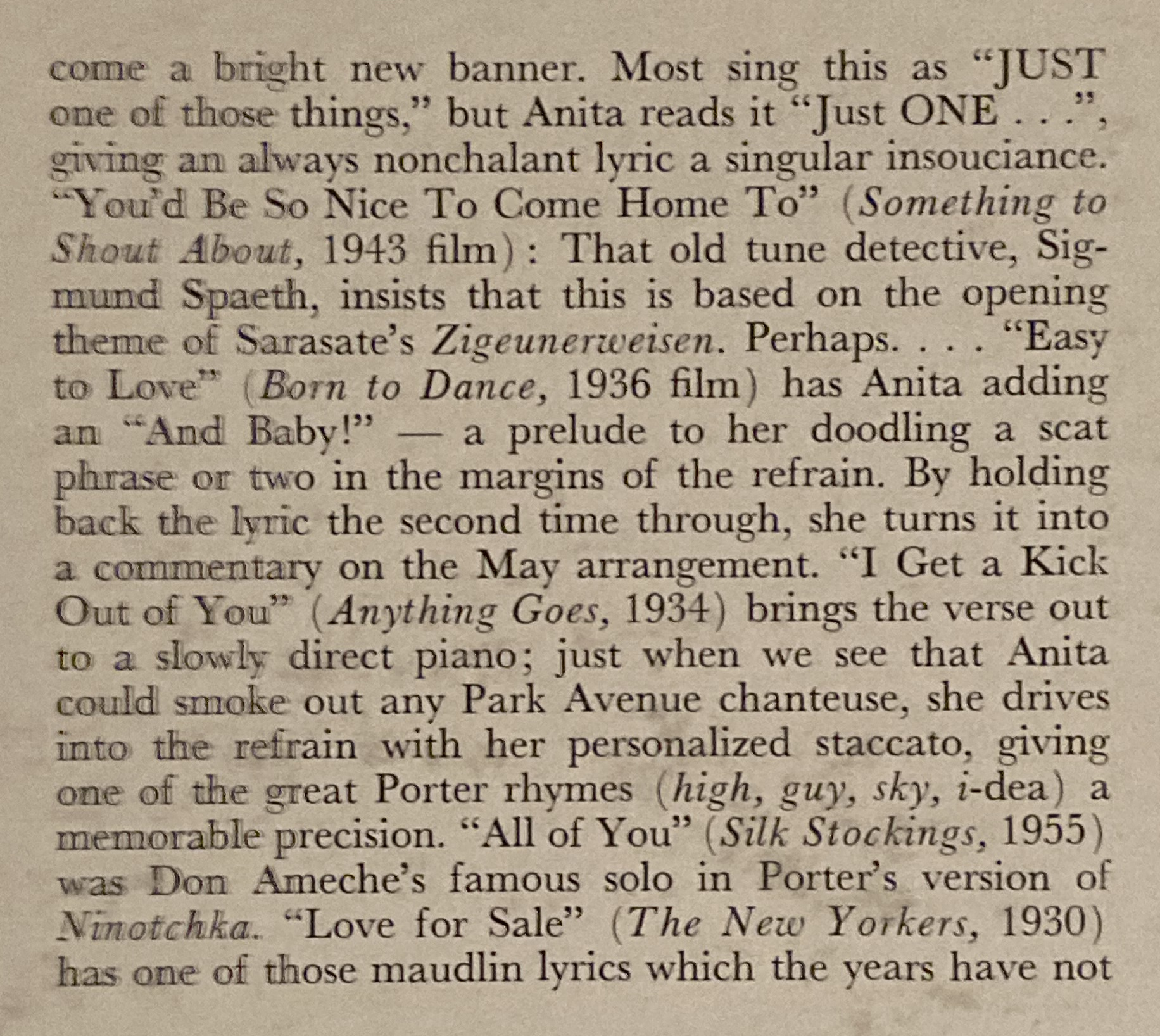
Side One: “Just One of Those Things” (Jubilee, 1935) demonstrates how a Porter standard, when raised aloft and swung with Anita’s unusual phrasing, can become a bright new banner. Most sing this as “JUST one of those things,” but Anita reads it “Just ONE…”, giving an always nonchalant lyric a singular insouciance. “You’d Be So Nice To Come Home To” (Something to Shout About, 1943 film): That old tune detective, Sig- mund Spaeth, insists that this is based on the opening theme of Sarasate’s Zigeunerweisen. Perhaps. . . . “Easy to Love” (Born to Dance, 1936 film) has Anita adding an “And Baby!” a prelude to her doodling a scat phrase or two in the margins of the refrain. By holding back the lyric the second time through, she turns it into a commentary on the May arrangement. “I Get a Kick Out of You” (Anything Goes, 1934) brings the verse out to a slowly direct piano; just when we see that Anita could smoke out any Park Avenue chanteuse, she drives into the refrain with her personalized staccato, giving one of the great Porter rhymes (high, guy, sky, i-dea) a memorable precision. “All of You” (Silk Stockings, 1955) was Don Ameche’s famous solo in Porter’s version of Ninotchka. “Love for Sale” (The New Yorkers, 1930) has one of those maudlin lyrics which the years have not treated kindly. By hustling the tempo, giving it a South American beat, and improvising bridge music, Anita not only makes the song a jazz success; she redefines the char- acter of the singer and gives this Depression blues a Sixties sexiness.
on Side Two: “Get Out of Town” (Leave It to Me, 1938): Billy May’s accompaniment stresses the sense of urgency in this souped-up, but sultry, appeal. “I’ve Got You Under My Skin” (Born to Dance, 1936 film) is the best example of a Porter lyric triumphing over a ludicrous title. The song probably traces from that earlier Porter concept: “Night and day, under the hide of me” which Rink Lardner improvised seven wild parodies, including “Night and day, under the fleece of me There’s an Oh, such a flaming furneth burneth the grease of me.” Despite Lardner’s reservations, Anita’s recording of “Night and Day” (The Gay Divorcee, 1932) presents a fine example of how an inspired singer can give a famous song the excitement of a first recording. It is not only in her unique phrasing (“the drip, drip-drip of the raindrops”) but also in her elimination of un- necessary words. The explosive chain of images suddenly turns the song into a brilliant soliloquy, with Anita’s voice bouncing like Ulysses’ Mr. Bloom’s over the frag- mentary thoughts of a day. Mr. Spaeth insists this song has “an occasional reminiscence of Rimsky-Korsakoff’s Scheherazade music.” Maybe, maybe not; certainly there is nothing about Anita’s interpretation which relates this song to the trite and tiresome readings it’s too often had. “It’s De Lovely” (Red, Hot and Blue, 1936) would obviously let the jazz singer improvise his own words. (Porter himself wrote at least four different refrains before the song was taken over as a DeSoto commercial.) Predictably, Anita stylishly avoids the obvious and holds straight to the lyric until she puts in her own tag. “I Love You” (Mexican Hayride, 1944) has in its release a typical trio of rhymes (a favorite Porter bridge trick). “What Is This Thing Called Love?” (Wake Up and Dream, 1929), besides being the oldest Porter here, is given the most personalized treatment. By taking the first word of each line, hitting it hard and then waiting to admit the rest of the words, Anita has completely redefined the song, making it the sotto voce complaint of a puzzled queen of jazz. Down to its dissonant finish, it is a fine reading and a great period to the set. To appro- priate a Porter line, “Night and O’Day, you ARE the one!”
LAWRENCE STEWART
<裏ジャケ和訳>
ソングライターが最も頻繁に受ける質問が「歌詞とメロディ、どちらが先か?」だとしたら、ソングライター自身が最も頻繁に自問するのは「誰が自分の曲をうまく歌ってくれるだろうか?」ということだろう。このレコーディングを聴けば、コール・ポーターも、自分の曲を完璧に表現してくれる歌い手を見つけたと確信するはずだ。アニータ・オデイは、現代屈指のジャズ・ボーカリストであるだけでなく、この最高の作曲家兼作詞家であるポーターの作品を、インスピレーション豊かに解釈する歌い手だからだ。
ソングライターの人生は決して楽なものではない。自分の曲がほとんど演奏されないことを心配することもあれば、逆に、特定のスタンダード・ナンバーばかりが繰り返し演奏され、すっかり擦り切れてしまうことを懸念することもある。歌い手にとっても、あまりに馴染み深い曲をどう扱うかというのは悩みの種だ。しかし、アニータ・オデイは勇敢で、時には歯に衣着せぬ物言いをするような女性である。彼女はポーターの珠玉の作品群を深く理解しているだけでなく、周囲の忠告など意に介さず、ビリー・メイと共に、それらの「古いワイン」を「新しいボトル」に注ぎ直してみせた。ビリー・メイがコール・ポーター作品集を手がけるのはこれが初めてではないが、今回は歌い手のアニータに合わせてアレンジが施されており、曲の結末には、これまでにないほど魅力的な即興的アイデアが盛り込まれている。ビリー・メイとアニータ・オデイのこのコラボレーションについて、アニータ自身の言葉を借りれば、「最高に楽しい(It’s a ball!)」ということになる。彼女はかつて「私にとってジャズとは、今この瞬間に起きていることを歌うこと」と語ったが、ここでの楽曲は、かつてないほど「今この瞬間」の響きを帯びている。
このセッションにウィットとメロディをもたらしたコール・ポーターは、1893年6月9日、インディアナ州ペルーで生まれた。これは、環境が人間に与える影響を信じる人々を混乱させるような事実かもしれない。私たちは今や、彼がどのような人物であったかを知っている。ヴェネツィアの宮殿、パリのムッシュ通りにある邸宅、ウォルドルフ・タワーズのスイートルーム、ベル・エアの屋敷……そんな数々の住まいを持つ謎めいた人物。彼は、自身の書く歌詞がそうであるように、常に世俗のただ中にいながらも、どこか少しだけそこから距離を置いているような、真のコスモポリタン(世界市民)であった。ポーターは、生活のために働く必要などなかった。皮肉なことに、彼はASCAP(米国作曲家作詞家出版者協会)から巨額の著作権収入を得ていたし、もし莫大な遺産が彼に君主のような豪華な暮らしをもたらしていなかったとしても、彼の書く楽曲がそれをもたらしていただろう。彼の曲はショービジネス界のビッグネームたちによって歌われてきた。また、本作に収録された楽曲が使われた各作品の平均上演回数は、300回に迫るものばかりである。彼は人生においても、そして創作活動においても、常に華やかさと独自のスタイルを貫いてきた。本作の歌い手たちは、この色褪せることのない才能が持つ活力と魅力を、見事に引き出している。
A面:「ジャスト・ワン・オブ・ゾーズ・シングス」(1935年のミュージカル『ジュビリー』より)――アニタ・オデイは、ポーターのスタンダード・ナンバーを大胆に掲げ、独特のフレージングでスウィングさせることで、まるで鮮やかな新しい旗印のように響かせている。多くの歌手は「JUST one of those things」と歌うが、アニタは「Just ONE…」と強調する。これによって、元々さりげない歌詞に、独特の軽妙さが加わっている。「ユード・ビー・ソー・ナイス・トゥ・カム・ホーム・トゥ」(1943年の映画『サムシング・トゥ・シャウト・アバウト』より)――「名曲探偵」の異名を持つジークムント・スペイスは、この曲がサラサーテの『ツィゴイネルワイゼン』の冒頭のテーマに基づいていると主張している。ひょっとすると、そうなのかもしれない……。「イージー・トゥ・ラヴ」(1936年の映画『ボーン・トゥ・ダンス』より)――アニタは「And Baby!」という言葉を付け加え、そこからリフレインの合間にスキャットをいくつか挟み込んでいる。2回目のコーラスでは歌詞をあえて抑え気味に歌うことで、ビリー・メイによるアレンジに対する彼女なりの「コメント」のような表現に仕上げている。「アイ・ゲット・ア・キック・アウト・オブ・ユー」(1934年のミュージカル『エニシング・ゴーズ』より)――ヴァース(導入部)は、ピアノの伴奏に乗せて、ゆっくりと、しかしストレートに歌われる。アニタがパーク・アヴェニュー(上流階級)のどんな女性歌手をも凌駕する実力を見せつけたところで、彼女は独特のスタッカートを効かせながらリフレインへと突入する。ポーターの秀逸な韻(high, guy, sky, i-dea)が、彼女の歌唱によって鮮烈かつ正確に響き渡る。「オール・オブ・ユー」(1955年のミュージカル『シルク・ストッキング』より)――これは、映画『ニノチカ』を基にしたポーターの作品の中で、ドン・アメチーが歌った有名なソロ曲である。 『ラブ・フォー・セール』(ミュージカル『ザ・ニュー・ヨーカーズ』、1930年)の歌詞は、いささか感傷的(メロドラマ的)に過ぎるきらいがあり、歳月を経てなおさら古びた印象を与えるものとなっている。アニータ・オデイは、テンポを速め、南米風のリズムを取り入れ、ブリッジ部分に即興的な演奏を加えることで、この曲をジャズの傑作へと昇華させた。それだけでなく、彼女は歌い手のキャラクターを再定義し、大恐慌時代のブルースに、60年代的なセクシーさを吹き込んだのである。
B面収録の「ゲット・アウト・オブ・タウン」(『リーヴ・イット・トゥ・ミー』、1938年)では、ビリー・メイの伴奏が、この情熱的でありながらもどこか官能的な楽曲に、切迫したニュアンスを強調している。「アイヴ・ゴット・ユー・アンダー・マイ・スキン」(映画『ボーン・トゥ・ダンス』、1936年)は、コール・ポーターの歌詞がいかに馬鹿げたタイトルをも凌駕しうるかを示す最良の例だ。この曲の着想は、おそらくポーターの初期のコンセプト「ナイト・アンド・デイ、アンダー・ザ・ハイド・オブ・ミー(昼も夜も、私の皮膚の下で)」にまで遡るのだろう。リング・ラードナーはこのフレーズをもとに、「ナイト・アンド・デイ、アンダー・ザ・フリース・オブ・ミー(昼も夜も、私の毛皮の下で)――ああ、燃え盛る炉が私の脂を焼き尽くすようだ」といった、奇想天外なパロディを7つも即興で作ってみせた。ラードナーの懸念をよそに、アニタが歌う「ナイト・アンド・デイ」(『ザ・ゲイ・ディヴォーシー』、1932年)は、優れた歌手がいかにして有名な楽曲に、まるで初演のような新鮮な興奮を吹き込めるかを示す好例となっている。その魅力は、彼女独自のフレージング(「雨粒がポタ、ポタ、ポタと落ちる」といった表現)だけでなく、不要な言葉を削ぎ落としている点にもある。次々と溢れ出すイメージの連鎖によって、この曲は鮮やかな独白へと変貌を遂げる。アニタの声は、まるでジェイムズ・ジョイスの『ユリシーズ』に登場するミスター・ブルームが一日の中の断片的な思考を巡らせるかのように、軽やかに跳ね回る。スペイス氏は、この曲には「リムスキー=コルサコフの『シェヘラザード』を彷彿とさせる瞬間がある」と指摘している。そうかもしれないし、そうではないかもしれない。だが、アニタの解釈には、この曲がしばしば陥りがちな、陳腐で退屈な演奏とは無縁の響きがあることは確かだ。「イッツ・デ・ラヴリー」(『レッド・ホット・アンド・ブルー』、1936年)は、ジャズ・シンガーが独自の歌詞を即興で付け加える余地を十分に持っている(実際、ポーター自身も、この曲が自動車メーカー「デソト」のCMソングとして採用される前に、少なくとも4種類の異なるリフレインを書き残している)。アニタは予想通り、ありきたりな表現をスタイリッシュに回避し、歌詞を忠実に歌いながら、最後に彼女自身の「タグ(付け加えのフレーズ)」を挿入している。「アイ・ラヴ・ユー」(『メキシカン・ヘイライド』、1944年)のブリッジ部分には、典型的な3つの韻の連なりが見られるが、これはポーターが好んで用いた手法である。 「What Is This Thing Called Love?」(『Wake Up and Dream』、1929年)は、ここに収録されているポーター作品の中で最も古い曲であるだけでなく、最もパーソナルな解釈が加えられている。各行の最初の単語を力強く歌い上げ、残りの単語をゆっくりと歌うことで、アニタはこの曲を完全に再定義し、困惑したジャズの女王のささやき声のような嘆きへと昇華させている。不協和音で終わるエンディングに至るまで、素晴らしい演奏であり、このセットの重要な一章を飾るにふさわしい。ポーターの歌詞を借りるなら、「昼も夜も、あなたこそが私の運命の人!」
ローレンス・スチュワート
※訳文の制作にはGoogleドライブとGoogle翻訳のお世話になりました。

コメント