
Label: PRESTIGE
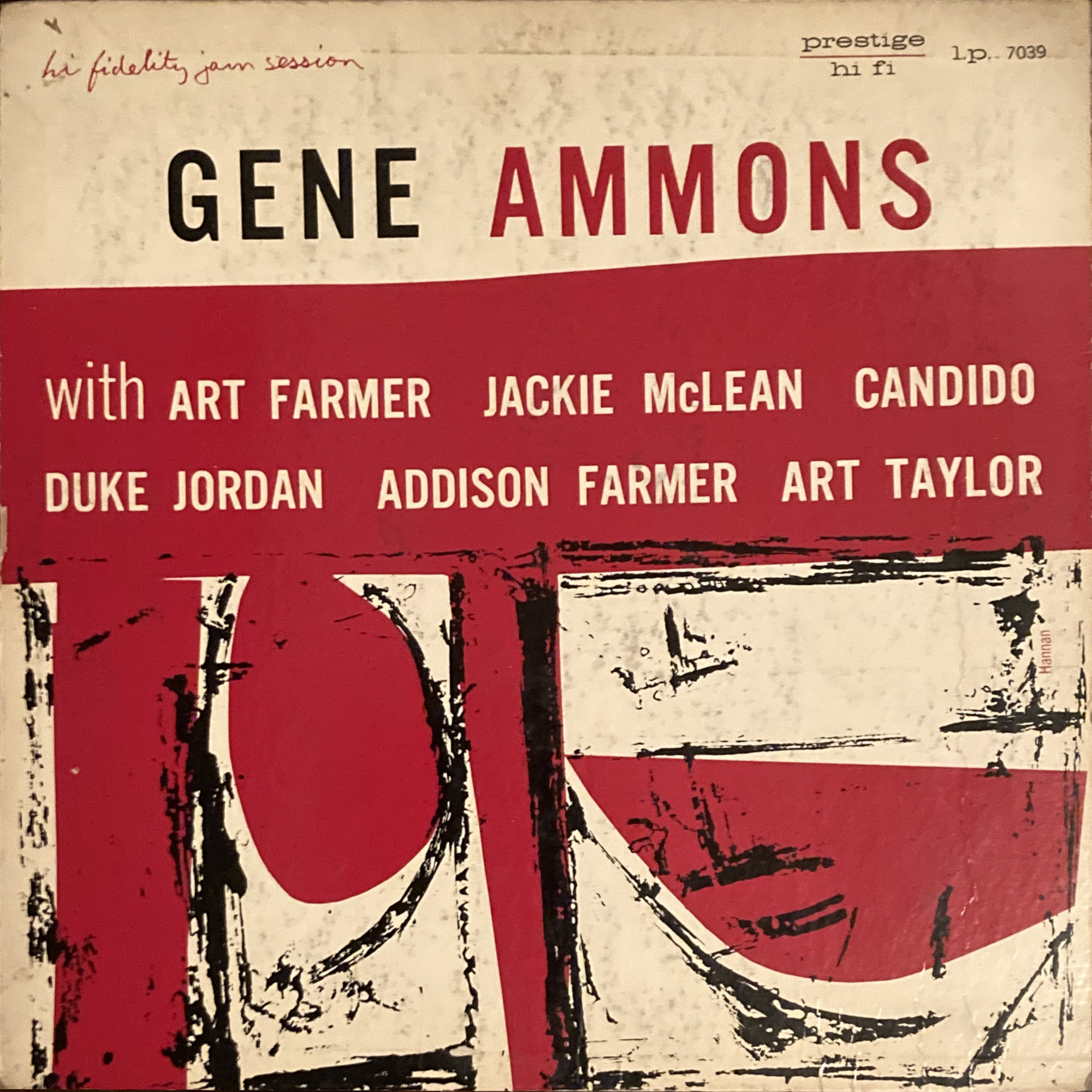
No.: PRLP-7039
Title: GENE AMMONS ALL STAR JAM SESSION (The Happy Blues)
Musician: GENE AMMONS
Recorded: 1956/4/23
Monaural
Cover address: 446 West 50th STREET, New York 19, N.Y.
Coating無し 背文字無し
Flat Edge
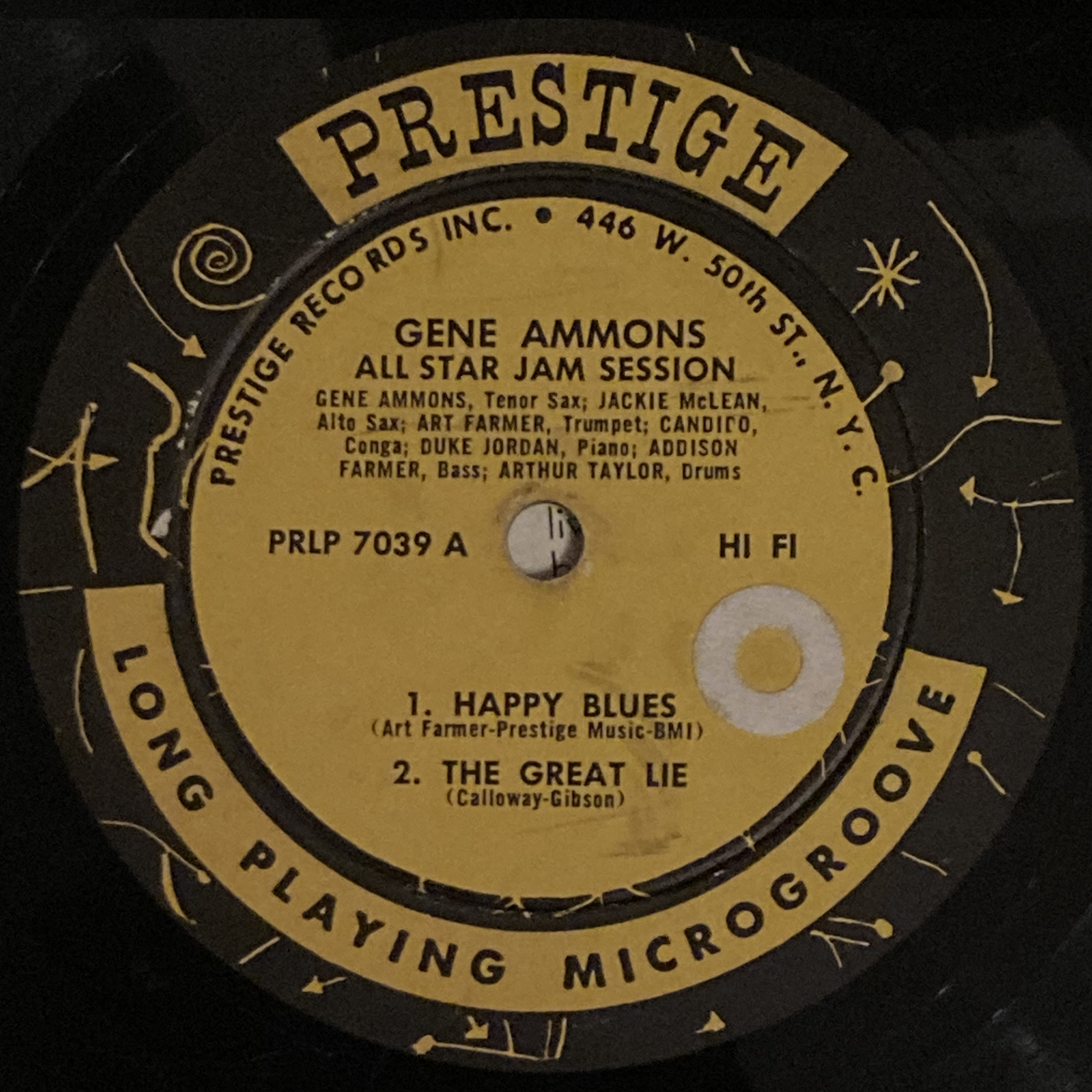
Label Side-A
Yellow Background
Black Letter
Address: 446 W. 50th ST., N.Y.C.
Deep Groove
Dead Wax Info: 手書きRVG, PRLP-7039-A, A, AB
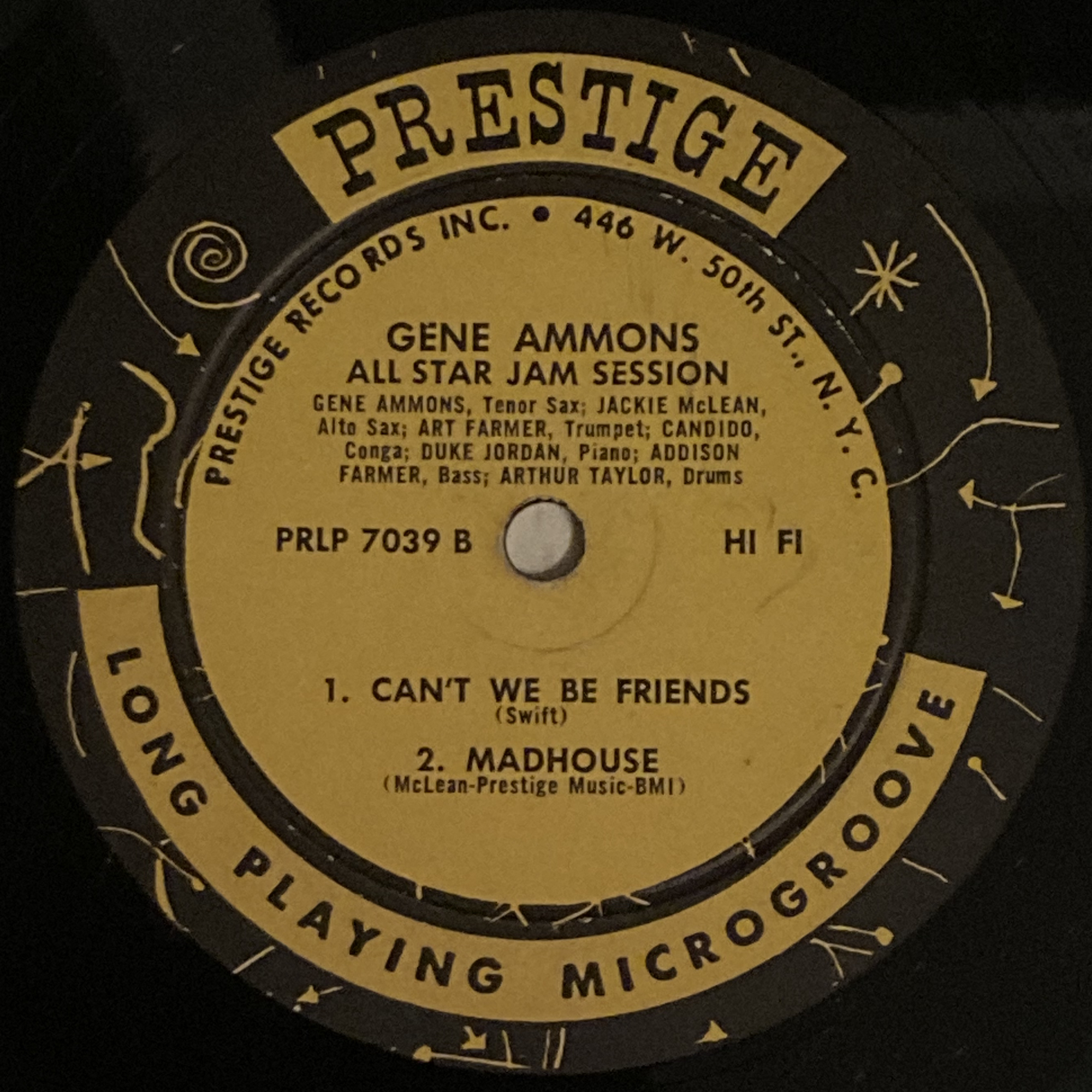
Label Side-B
Yellow Background
Black Letter
Address: 446 W. 50th ST., N.Y.C.
Deep Groove
Dead Wax Info: 手書きRVG, PRLP-7039-B, A, AB,
Personnel-
Drums: Arthur Taylor
Bass: Addison Farmer
Piano: Duke Jordan
Tenor Sax: Gene Ammons
Alto Sax: Jackie McLean
Trumpet: Art Farmer
Conga: Candido Camero
Tracks-
Side-A
1) The Happy Blues
2) The Great Lie
Side-B
1) Can’t We Be Friends?
2) Madhouse
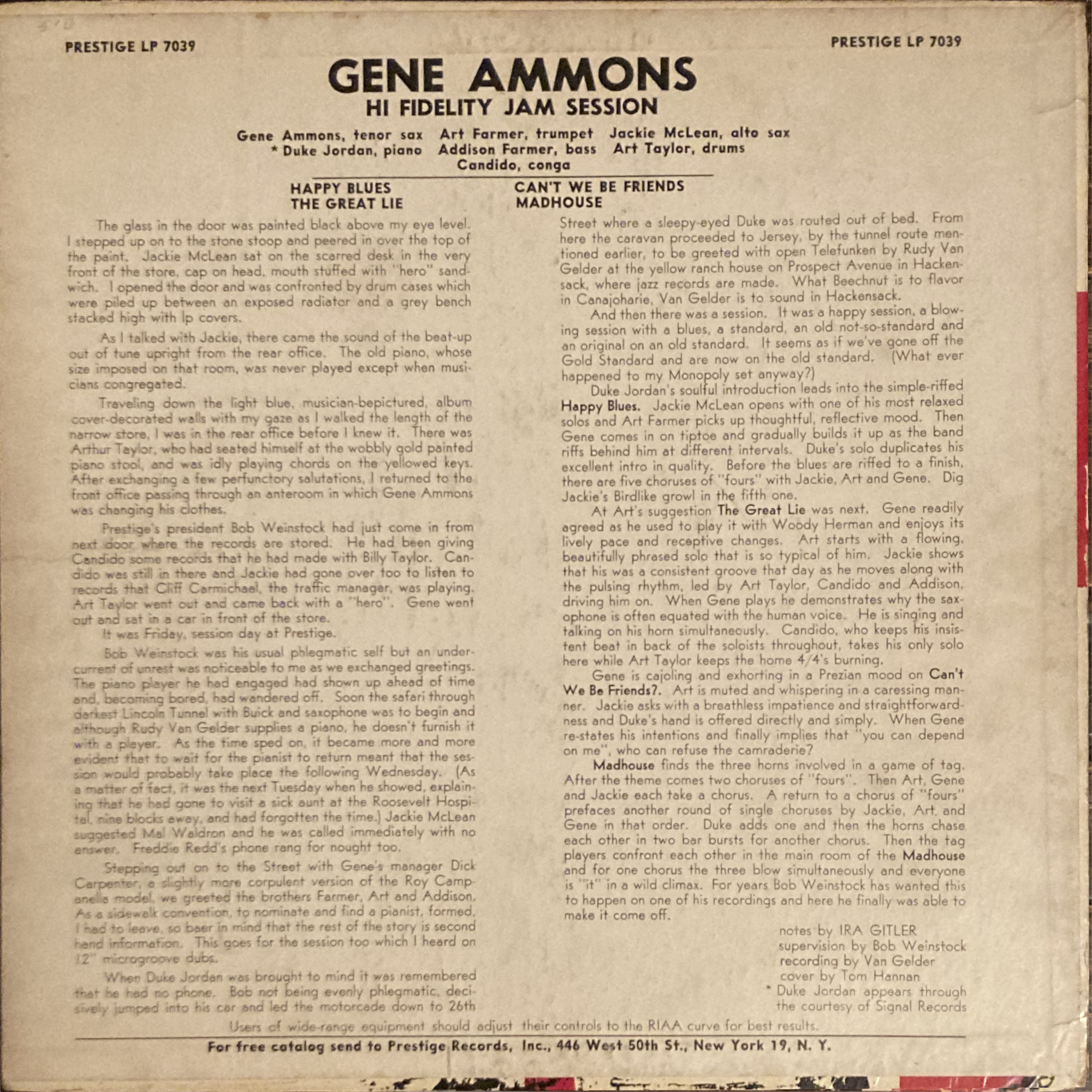
<裏ジャケ原文>
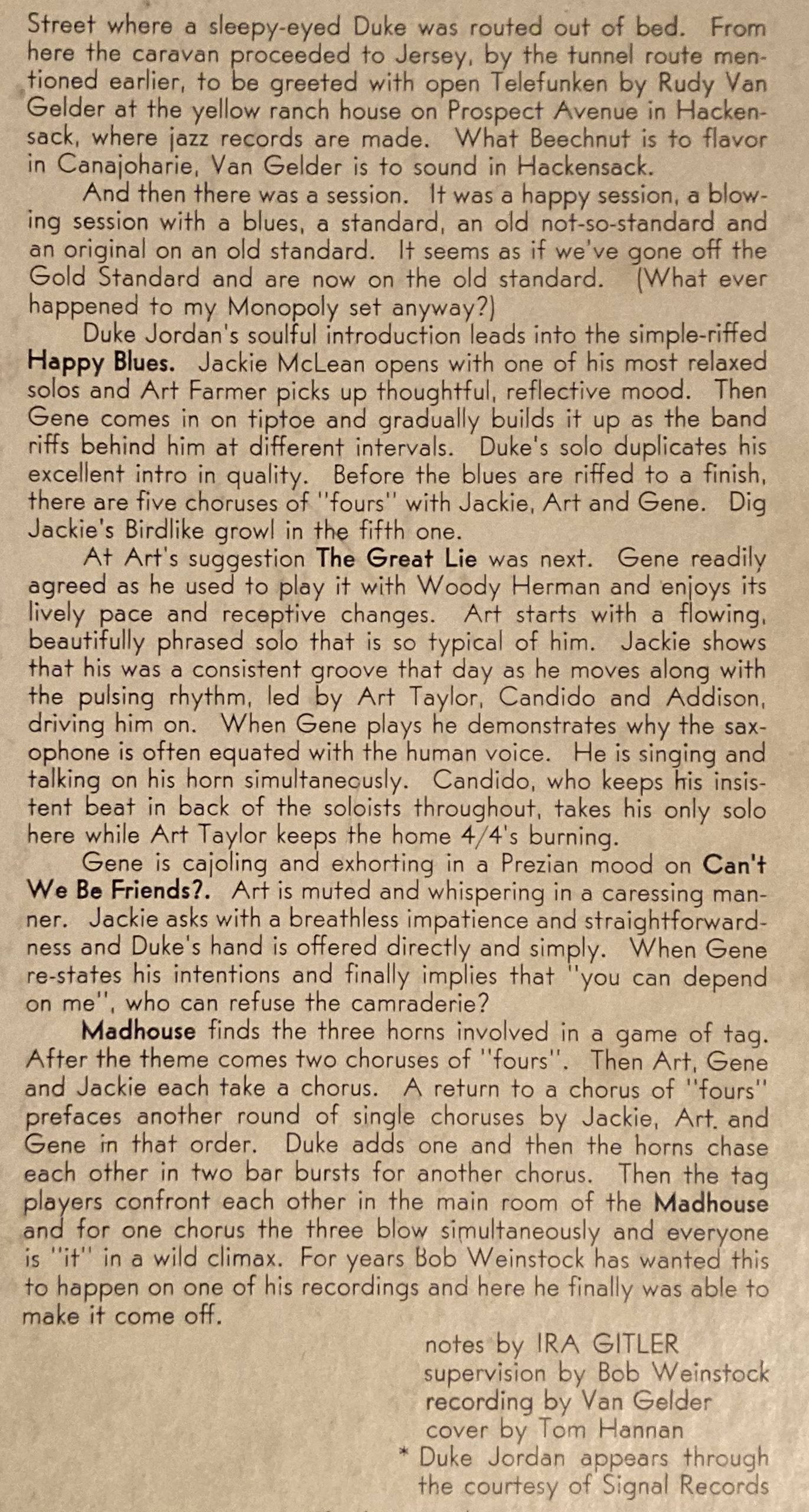
The glass in the door was painted black above my eye level. I stepped up on to the stone stoop and peered in over the top of the paint. Jackie McLean sat on the scarred desk in the very front of the store, cap on head, mouth stuffed with “hero” sand- wich. I opened the door and was confronted by drum cases which were piled up between an exposed radiator and a grey bench stacked high with Ip covers.
As I talked with Jackie, there came the sound of the beat-up out of tune upright from the rear office. The old piano, whose size imposed on that room, was never played except when musi- cians congregated.
Traveling down the light blue, musician-bepictured, album cover-decorated walls with my gaze as I walked the length of the narrow store, I was in the rear office before I knew it. There was Arthur Taylor, who had seated himself at the wobbly gold painted piano stool, and was idly playing chords on the yellowed keys. After exchanging a few perfunctory salutations, I returned to the front office passing through an anteroom in which Gene Ammons was changing his clothes.
Prestige’s president Bob Weinstock had just come in from next door where the records are stored. He had been giving Candido some records that he had made with Billy Taylor. Can- dido was still in there and Jackie had gone over too to listen to records that Cliff Carmichael, the traffic manager, was playing. Art Taylor went out and came back with a “hero”. Gene went out and sat in a car in front of the store.
It was Friday, session day at Prestige.
Bob Weinstock was his usual phlegmatic self but an under- current of unrest was noticeable to me as we exchanged greetings. The piano player he had engaged had shown up ahead of time and, becoming bored, had wandered off. Soon the safari through darkest Lincoln Tunnel with Buick and saxophone was to begin and although Rudy Van Gelder supplies a piano, he doesn’t furnish it with a player. As the time sped on, it became more and more evident that to wait for the pianist to return meant that the ses- sion would probably take place the following Wednesday. (As a matter of fact, it was the next Tuesday when he showed, explain- ing that he had gone to visit a sick aunt at the Roosevelt Hospi- tal, nine blocks away, and had forgotten the time.) Jackie McLean suggested Mal Waldron and he was called immediately with no answer. Freddie Redd’s phone rang for nought too.
Stepping out on to the Street with Gene’s manager Dick Carpenter, a slightly more corpulent version of the Roy Camp- anella model, we greeted the brothers Farmer, Art and Addison. As a sidewalk convention, to nominate and find a pianist, formed, I had to leave, so baer in mind that the rest of the story is second hand information. This goes for the session too which I heard on 12″ microgroove dubs.
When Duke Jordan was brought to mind it was remembered that he had no phone. Bob not being evenly phlegmatic, deci- sively jumped into his car and led the motorcade down to 26th Street where a sleepy-eyed Duke was routed out of bed. From here the caravan proceeded to Jersey, by the tunnel route men- tioned earlier, to be greeted with open Telefunken by Rudy Van Gelder at the yellow ranch house on Prospect Avenue in Hacken- sack, where jazz records are made. What Beechnut is to flavor in Canajoharie, Van Gelder is to sound in Hackensack.
And then there was a session. It was a happy session, a blow- ing session with a blues, a standard, an old not-so-standard and an original on an old standard. It seems as if we’ve gone off the Gold Standard and are now on the old standard. (What ever happened to my Monopoly set anyway?)
Duke Jordan’s soulful introduction leads into the simple-riffed Happy Blues. Jackie McLean opens with one of his most relaxed solos and Art Farmer picks up thoughtful, reflective mood. Then Gene comes in on tiptoe and gradually builds it up as the band riffs behind him at different intervals. Duke’s solo duplicates his excellent intro in quality. Before the blues are riffed to a finish, there are five choruses of “fours” with Jackie, Art and Gene. Dig Jackie’s Birdlike growl in the fifth one.
At Art’s suggestion The Great Lie was next. Gene readily agreed as he used to play it with Woody Herman and enjoys its lively pace and receptive changes. Art starts with a flowing, beautifully phrased solo that is so typical of him. Jackie shows that his was a consistent groove that day as he moves along with the pulsing rhythm, led by Art Taylor, Candido and Addison, driving him on. When Gene plays he demonstrates why the sax- ophone is often equated with the human voice. He is singing and talking on his horn simultaneously. Candido, who keeps his insis- tent beat in back of the soloists throughout, takes his only solo here while Art Taylor keeps the home 4/4’s burning.
Gene is cajoling and exhorting in a Prezian mood on Can’t We Be Friends?. Art is muted and whispering in a caressing man- ner. Jackie asks with a breathless impatience and straightforward- ness and Duke’s hand is offered directly and simply. When Gene re-states his intentions and finally implies that “you can depend on me”, who can refuse the camraderie?
Madhouse finds the three horns involved in a game of tag. After the theme comes two choruses of “fours”. Then Art, Gene and Jackie each take a chorus. A return to a chorus of “fours” prefaces another round of single choruses by Jackie, Art, and Gene in that order. Duke adds one and then the horns chase each other in two bar bursts for another chorus. Then the tag players confront each other in the main room of the Madhouse and for one chorus the three blow simultaneously and everyone is “it” in a wild climax. For years Bob Weinstock has wanted this to happen on one of his recordings and here he finally was able to make it come off.
notes by IRA GITLER
supervision by Bob Weinstock recording by Van Gelder cover by Tom Hannan
Duke Jordan appears through the courtesy of Signal Records
Users of wide-range equipment should adjust their controls to the RIAA curve for best results.
<裏ジャケ和訳>
ドアのガラスは、私の目線より上の部分が黒く塗られていた。石の階段を上がり、その塗料の縁から中を覗き込んだ。ジャッキー・マクリーンが店の最前部に置かれた傷だらけの机に腰掛けていた。帽子をかぶり、口には「ヒーロー・サンドイッチ」を詰め込んでいる。ドアを開けると、むき出しのラジエーターと、LPレコードのジャケットが山積みになった灰色のベンチの間に、ドラムケースが積み上げられているのが目に入った。
ジャッキーと話していると、奥の部屋から、調律の狂った古びたアップライト・ピアノの音が聞こえてきた。その部屋には不釣り合いなほど大きな古いピアノで、ミュージシャンたちが集まった時にしか弾かれることはなかった。
ミュージシャンの写真やアルバムジャケットで飾られた水色の壁を眺めながら、細長い店内を奥へと進んでいくと、いつの間にか奥の部屋にたどり着いていた。そこにはアーサー・テイラーがいて、金色のペンキが塗られたぐらつくピアノ椅子に腰掛け、黄色く変色した鍵盤を何気なく叩いてコードを鳴らしていた。簡単な挨拶を交わした後、私は手前の部屋を通って入り口の方へ戻った。その途中、ジーン・アモンズが着替えをしているのを見かけた。
プレスティッジ・レコードの社長ボブ・ウェインストックが、レコードを保管している隣の部屋から戻ってきたところだった。彼はキャンディドに、ビリー・テイラーと制作したレコードを渡していたようだ。キャンディドはまだ隣の部屋に残っており、ジャッキーもそちらへ行って、トラフィック・マネージャーのクリフ・カーマイケルがかけているレコードに耳を傾けていた。アート・テイラーは一度外へ出て、「ヒーロー・サンドイッチ」を携えて戻ってきた。ジーンは外に出て、店の前に停めてあった車の中に座っていた。
金曜日――プレスティッジのレコーディング・セッションの日だった。
ボブ・ウェインストックはいつものように落ち着き払っていたが、挨拶を交わす中で、どこか不安げな空気が漂っているのが感じ取れた。手配していたピアニストが予定より早く到着したものの、退屈してどこかへ出かけてしまったらしい。まもなく、ビュイックにサックスを積み込み、リンカーン・トンネルという「暗闇の奥地」を抜ける旅が始まる。ルディ・ヴァン・ゲルダーのスタジオにはピアノはあっても、それを弾くピアニストまでは用意されていないのだ。時間が経つにつれ、ピアニストの帰りを待っていては、セッションは翌週の水曜日になってしまう可能性が高いことが、ますます明らかになってきた。(実際には、彼が現れたのは翌週の火曜日だった。彼は、9ブロック先にあるルーズベルト病院へ病気の叔母を見舞いに行っていて、時間を忘れてしまったのだと説明した。)ジャッキー・マクリーンがマル・ウォルドロンを提案し、すぐに電話をかけてみたが、応答はなかった。フレディ・レッドに電話をかけても、やはりつながらなかった。
ジーンのマネージャーであるディック・カーペンター(ロイ・カンパネラを少しふくよかにしたような体格の人物)と共に通りへ出ると、アート・ファーマーとアディソン・ファーマーの兄弟に出くわした。ピアニストを誰にするか話し合う即席の集まりが歩道で始まったのだが、私はその場を離れなければならなかった。したがって、これ以降の話は伝聞であることを断っておく。 12インチのマイクログルーヴ盤(LP)で聴いた、あのセッションについても同じことが言える。
デューク・ジョーダンのことが話題に上った際、彼が電話を持っていないことを思い出した。ボブはのんびり構えているような性格ではなかったため、すぐさま車に飛び乗ると、一行を率いて26丁目へと向かった。そこで、まだ眠たげな様子のデュークをベッドから引っ張り出したのである。その後、一行は先述のトンネルを通ってニュージャージーへと移動した。ハッケンサックのプロスペクト・アベニューにある黄色いランチハウス――そこはジャズ・レコードが生まれる場所だ――では、ルディ・ヴァン・ゲルダーが、テレフンケンの機材を準備して一行を出迎えてくれた。カナジョハリーにおける「ビーチナット(ガム)」が味の代名詞であるように、ハッケンサックにおける「ヴァン・ゲルダー」は、サウンドの代名詞というわけだ。
そして、セッションが始まった。それは実にハッピーな、熱気あふれるセッションだった。ブルースにスタンダード・ナンバー、あまり知られていない古いスタンダード、そして古いスタンダードを基にしたオリジナル曲が演奏された。まるで「金本位制(ゴールド・スタンダード)」から離れて、別の「古いスタンダード」へと移行したかのようだ。(ところで、私の『モノポリー』のセットは一体どこへ行ってしまったのだろう?)
デューク・ジョーダンによるソウルフルなイントロから、シンプルなリフを基調とした「ハッピー・ブルース」へと入っていく。ジャッキー・マクリーンが、彼にしては非常にリラックスしたソロで幕を開け、アート・ファーマーがそれに続いて、思慮深く内省的なムードを醸し出す。続いてジーンが忍び足のように加わり、バンドが様々な間隔でリフを重ねる中、徐々に盛り上げていく。デュークのソロは、あの素晴らしいイントロに匹敵するほどの出来栄えだ。ブルースがリフを繰り返しながら終盤に向かう前には、ジャッキー、アート、ジーンの3人による4小節ずつの交換演奏(フォア・バース)が5コーラス分繰り広げられる。5コーラス目で見せる、チャーリー・パーカー(バード)を彷彿とさせるジャッキーの唸るようなプレイに注目してほしい。
アートの提案で、次は『ザ・グレート・ライ(The Great Lie)』が演奏されることになった。ジーンはウディ・ハーマンのバンドでこの曲を演奏した経験があり、その快活なテンポと、即興演奏を受け入れやすいコード進行を気に入っていたため、即座に同意した。アートは、彼らしい流麗で美しいフレージングのソロで幕を開ける。ジャッキーは、アート・テイラー、カンディード、アディソンが作り出す躍動感あふれるリズムに乗って、終始安定したグルーヴを披露している。ジーンの演奏を聴けば、なぜサックスがしばしば「人間の声」に例えられるのかがよくわかる。彼は楽器を通して、歌い、語りかけているのだ。ソロイストの背後で力強いビートを刻み続けていたカンディードが、ここで唯一のソロを披露し、その間もアート・テイラーが熱気あふれる4/4拍子のリズムを支え続ける。
『キャント・ウィ・ビー・フレンズ?(Can’t We Be Friends?)』では、ジーンがレスター・ヤング(プレズ)を彷彿とさせるムードで、相手を優しく誘い、語りかける。アートはミュートを使い、囁くように、慈しむような音色を響かせる。ジャッキーは、息を切らすような焦燥感とストレートな感情をぶつけ、デュークはそれに対して、率直かつシンプルに応える。ジーンが改めて自身の想いを伝え、「僕を頼っていいんだよ」と語りかけるとき、誰がその親密な誘いを断れるだろうか。
『マッドハウス(Madhouse)』では、3本の管楽器がまるで「鬼ごっこ」をしているかのようなやり取りを繰り広げる。テーマの後に4小節ずつの交換(フォア・バー・エクスチェンジ)が2コーラス続き、続いてアート、ジーン、ジャッキーがそれぞれ1コーラスずつソロをとる。再び4小節ずつの交換を経て、今度はジャッキー、アート、ジーンの順でそれぞれ1コーラスずつソロを披露。デュークも1コーラス加わり、その後、管楽器陣が2小節単位で互いを追いかけ合うような掛け合いが1コーラス続く。そして、「マッドハウス(狂った家)」のメインルームで鬼ごっこの参加者たちが対峙し、1コーラスの間、3人が同時に吹き鳴らす。誰もが「鬼」となって入り乱れる、熱狂的なクライマックスだ。ボブ・ワインストックは長年、自身のプロデュース作品でこうした展開を実現したいと願っており、ついに本作でそれを形にすることができた。
ライナーノーツ:アイラ・ギトラー
スーパーバイザー:ボブ・ワインストック 録音:ヴァン・ゲルター カバー・デザイン:トム・ハナン
デューク・ジョーダンはシグナル・レコード(Signal Records)の厚意により参加。
ワイドレンジな再生機器をお使いの場合は、最良の音質を得るために、イコライザー設定をRIAAカーブに合わせて調整してください。
※訳文の制作にはGoogleドライブとGoogle翻訳のお世話になりました。
コメント