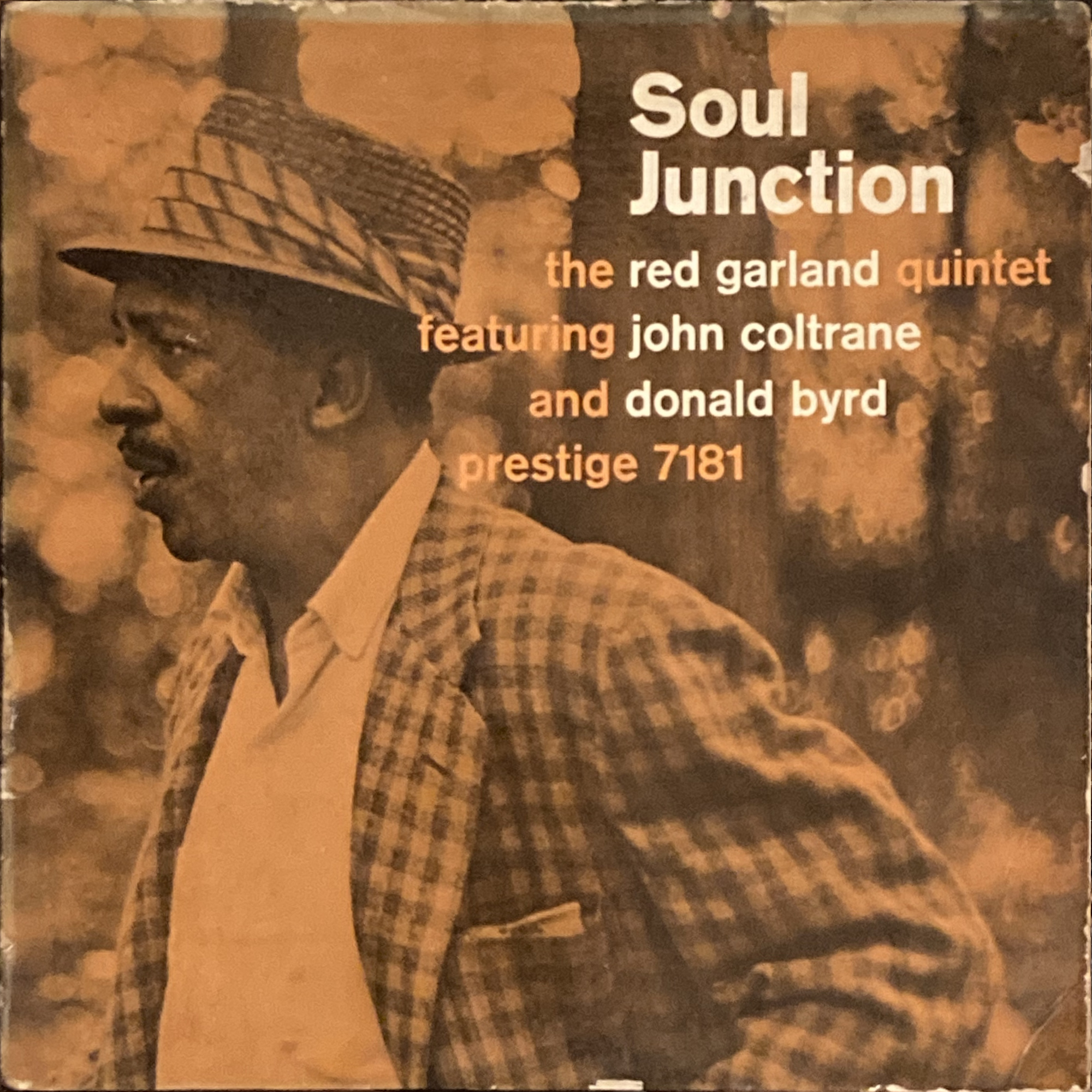
Label: PRESTIGE
No.: PRLP-7181
Title: SOUL JUNCTION
Musician: RED GARLAND
Recorded: 1957/11/15
Monaural
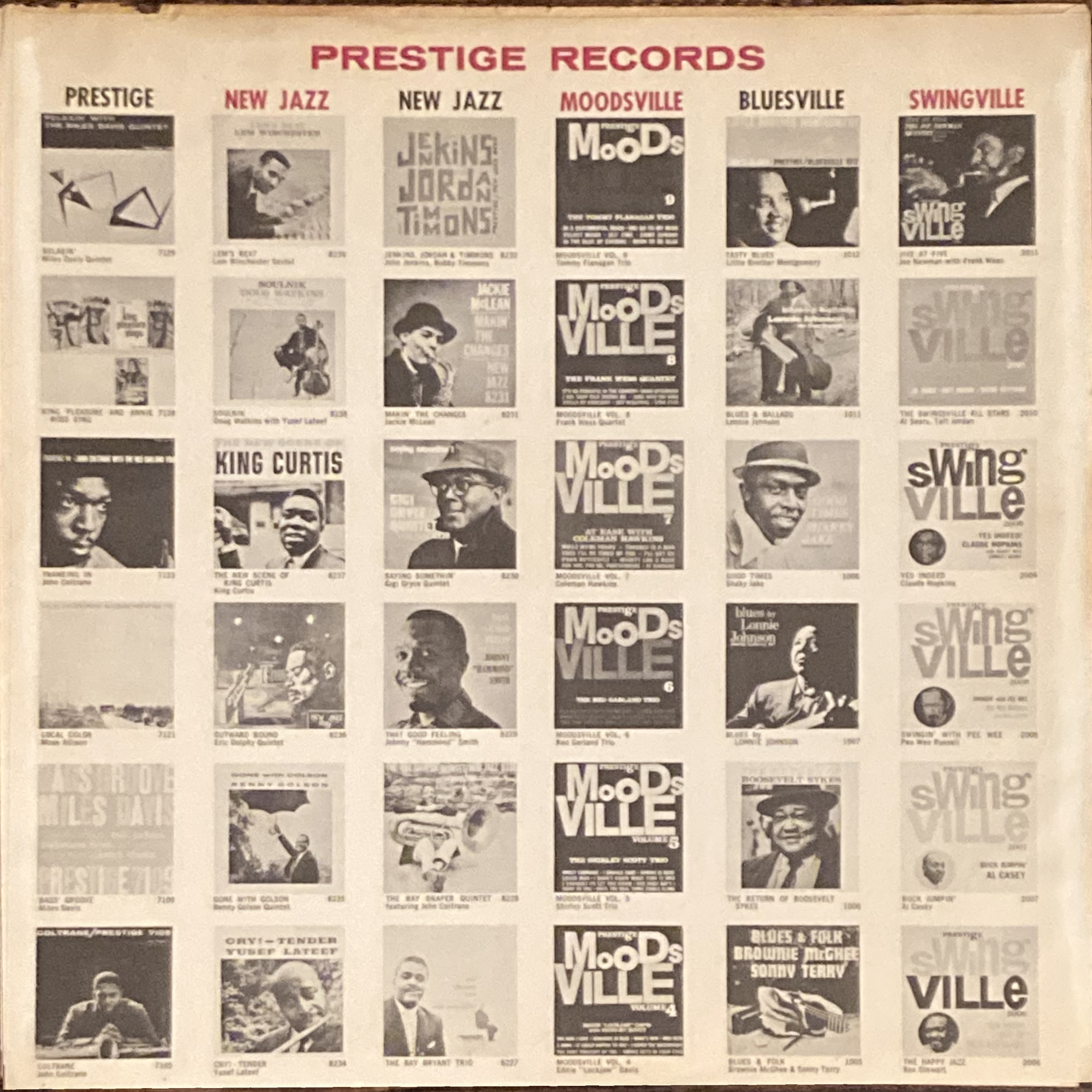
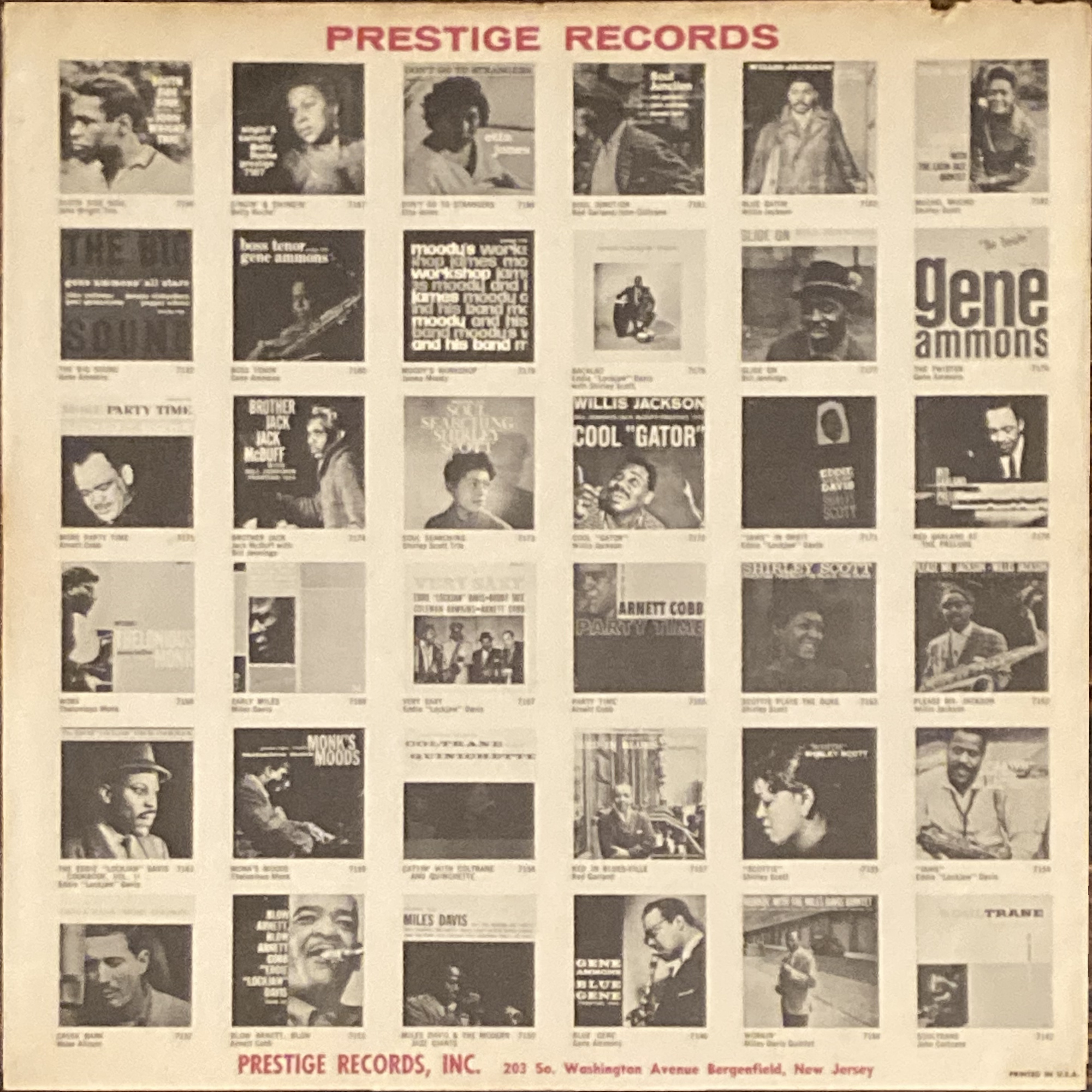
Cover address: 203 SO. WASHIGTON AVE. BERGENIFIELD N.J.
Laminate Coating, 背文字有り
Groove Guard
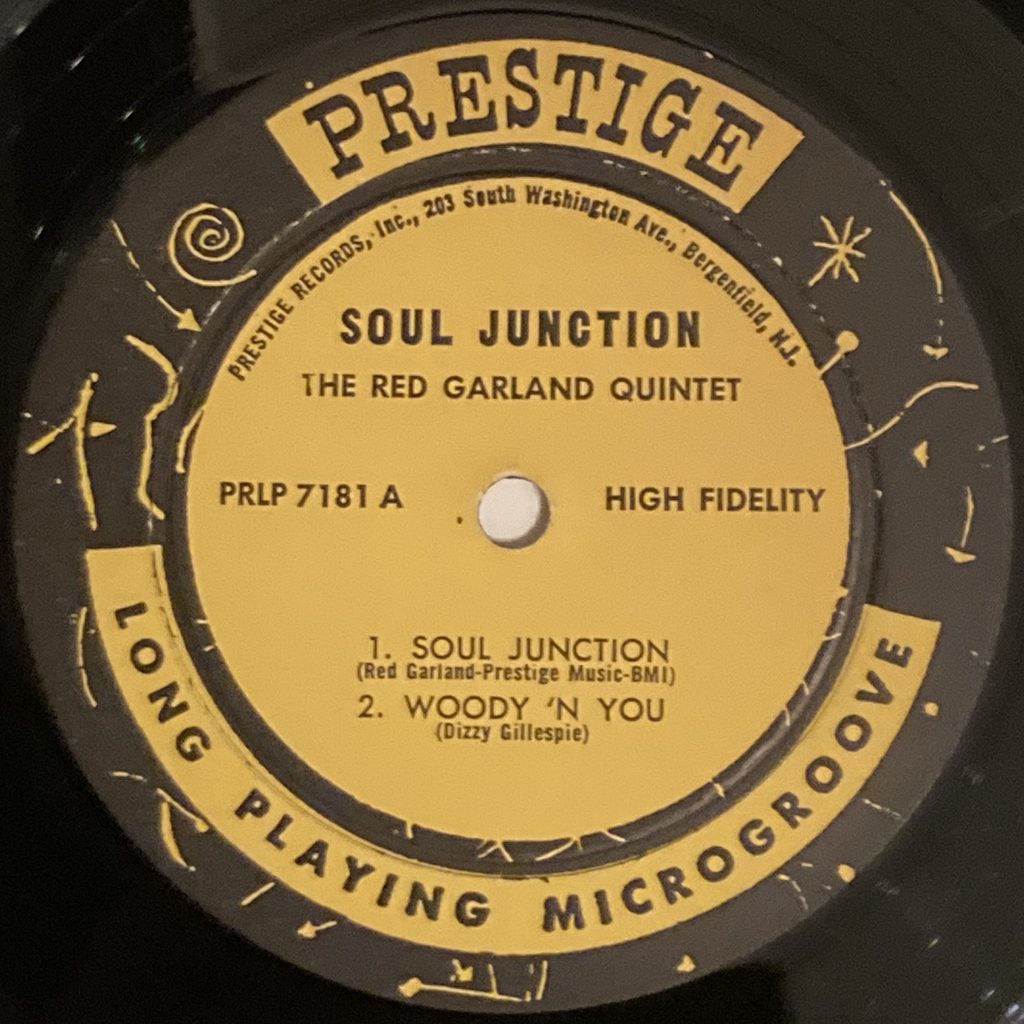
Label Side-A
Yellow Background
Black Letter
Address: 203 South Washington Ave., Bergenfield, N.J.
Deep Groove
Dead Wax Info: PRLP-7181-A, RVGスタンプ
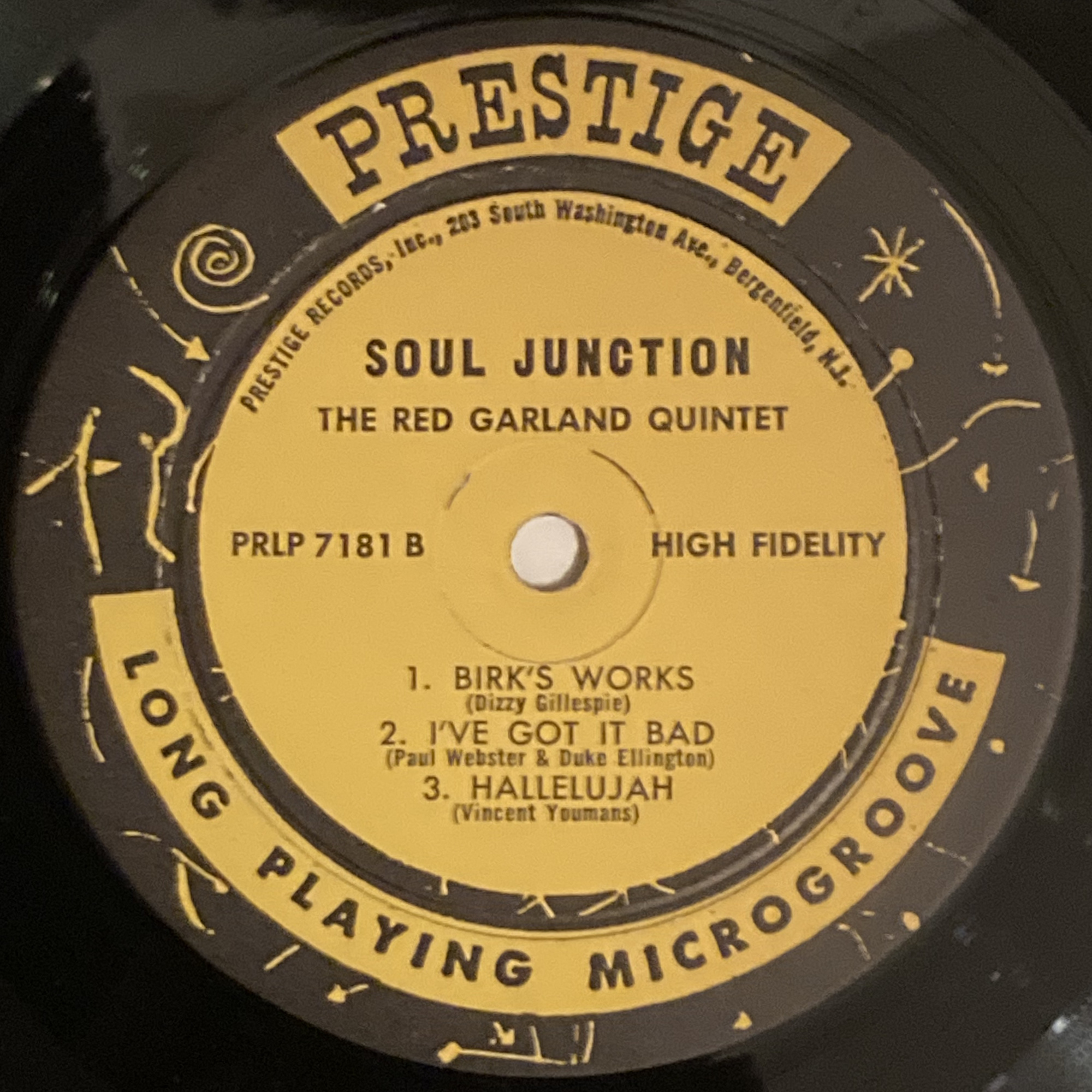
Label Side-B
Yellow Background
Black Letter
Address: 203 South Washington Ave., Bergenfield, N.J.
Deep Groove
Dead Wax Info: PRLP-7181-B, RVGスタンプ
Personnel-
Drums: Arthur Taylor
Bass: George Joyner
Piano: Red Garland
Tenor Sax: John Coltrane
Trumpet: Donald Byrd
Tracks-
Side-A
1) Soul Junction 15’30”
2) Woody’n You 6’50”
Side-B
1) Birk’s Works 7’35”
2) I’ve Got it Bad 6’15”
3) Hallelujah 6’31”
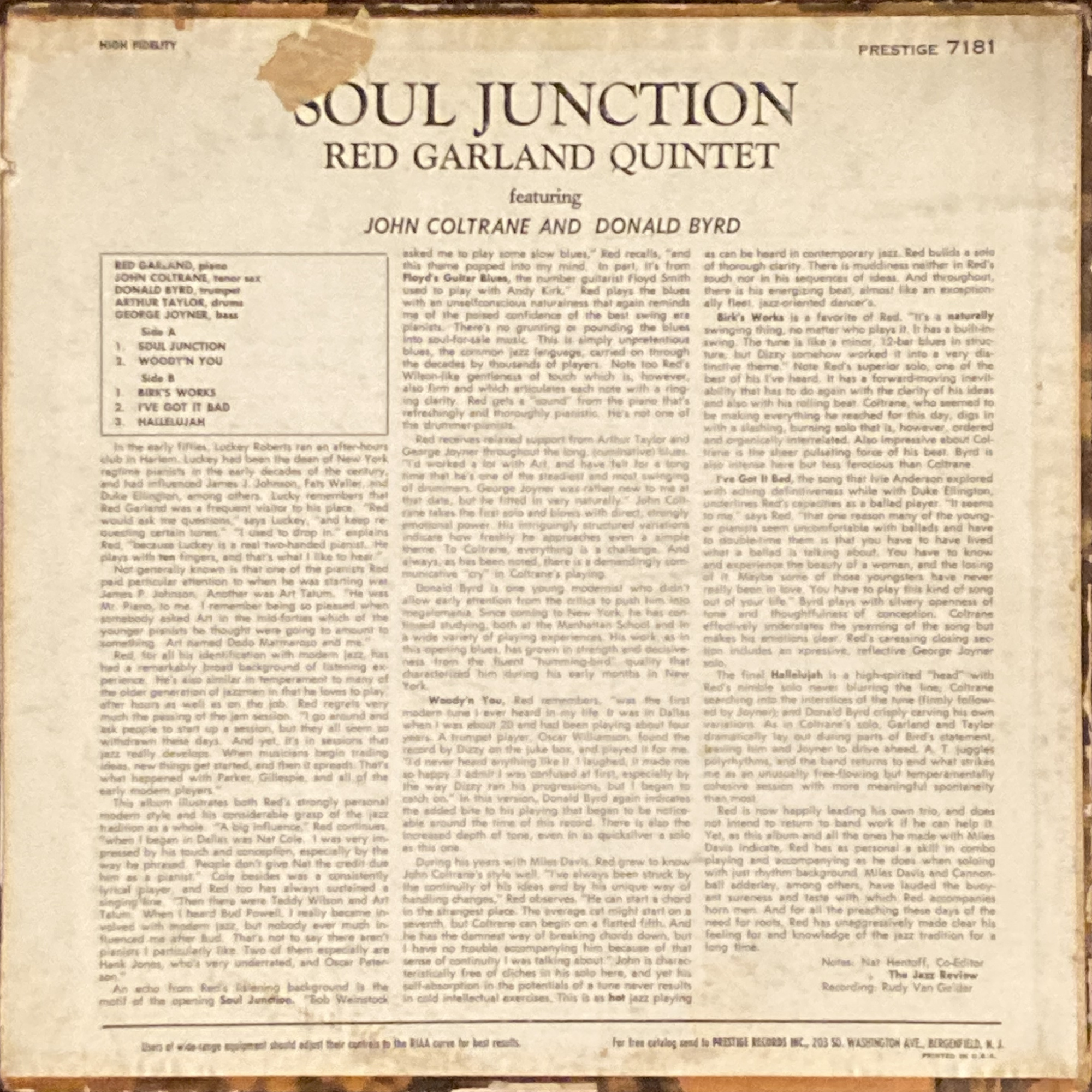
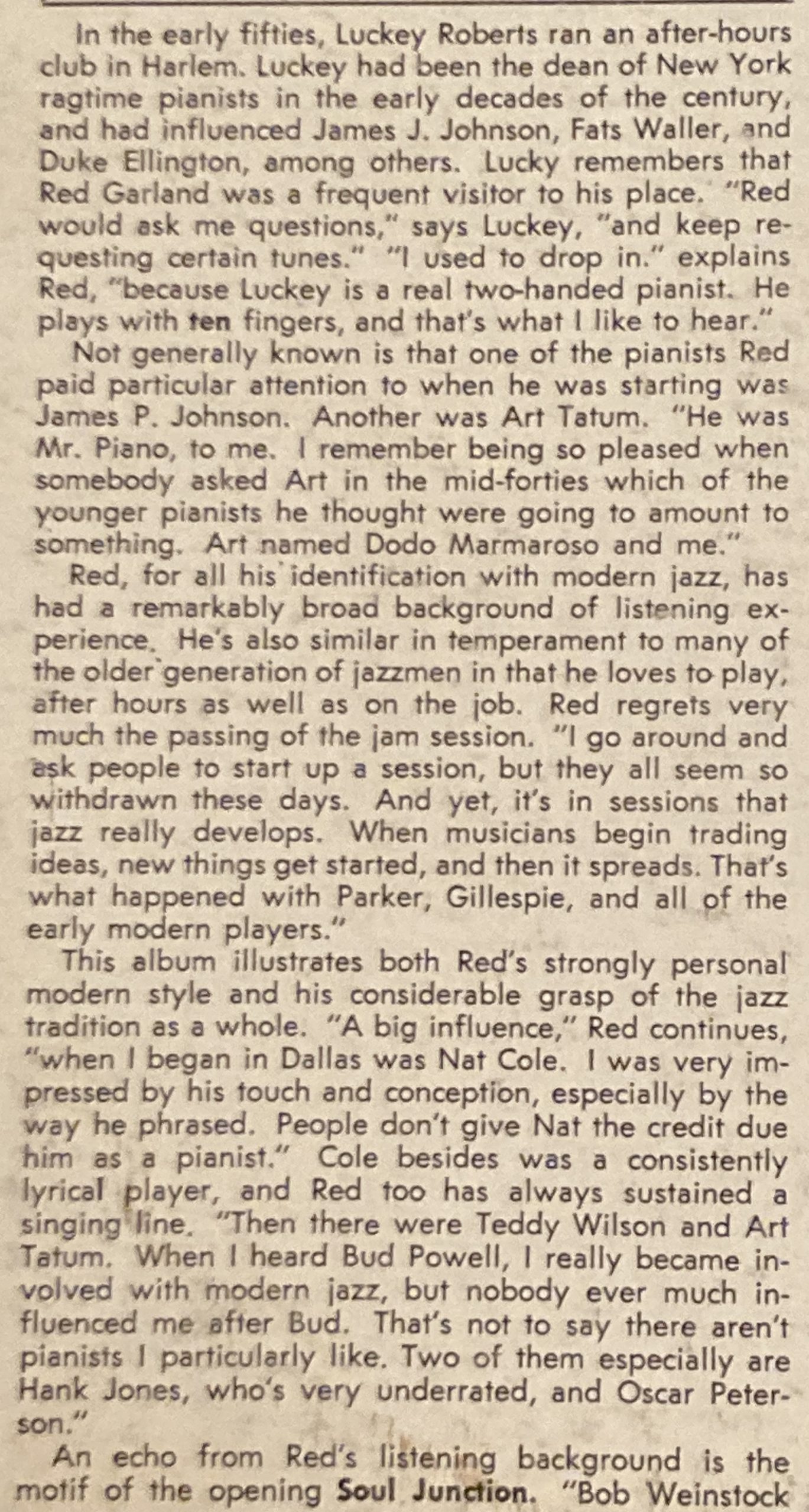
<裏ジャケ原文>
In the early fifties, Luckey Roberts ran an after-hours club in Harlem. Luckey had been the dean of New York ragtime pianists in the early decades of the century, and had influenced James J. Johnson, Fats Waller, and Duke Ellington, among others. Lucky remembers that Red Garland was a frequent visitor to his place. “Red would ask me questions,” says Luckey, “and keep re- questing certain tunes.” “I used to drop in.” explains Red, “because Luckey is a real two-handed pianist. He plays with ten fingers, and that’s what I like to hear.”
Not generally known is that one of the pianists Red paid particular attention to when he was starting was James P. Johnson. Another was Art Tatum. “He was Mr. Piano, to me. I remember being so pleased when somebody asked Art in the mid-forties which of the younger pianists he thought were going to amount to something. Art named Dodo Marmaroso and me.”
Red, for all his identification with modern jazz, has had a remarkably broad background of listening ex- perience. He’s also similar in temperament to many of the older generation of jazzmen in that he loves to play, after hours as well as on the job. Red regrets very much the passing of the jam session. “I go around and ask people to start up a session, but they all seem so withdrawn these days. And yet, it’s in sessions that jazz really develops. When musicians begin trading ideas, new things get started, and then it spreads. That’s what happened with Parker, Gillespie, and all of the early modern players.”
This album illustrates both Red’s strongly personal modern style and his considerable grasp of the jazz tradition as a whole. “A big influence,” Red continues, “when I began in Dallas was Nat Cole. I was very im- pressed by his touch and conception, especially by the way he phrased. People don’t give Nat the credit due him as a pianist.” Cole besides was a consistently lyrical player, and Red too has always sustained a singing line. “Then there were Teddy Wilson and Art Tatum. When I heard Bud Powell, I really became in- volved with modern jazz, but nobody ever much in- fluenced me after Bud. That’s not to say there aren’t pianists I particularly like. Two of them especially are Hank Jones, who’s very underrated, and Oscar Peter- son.”
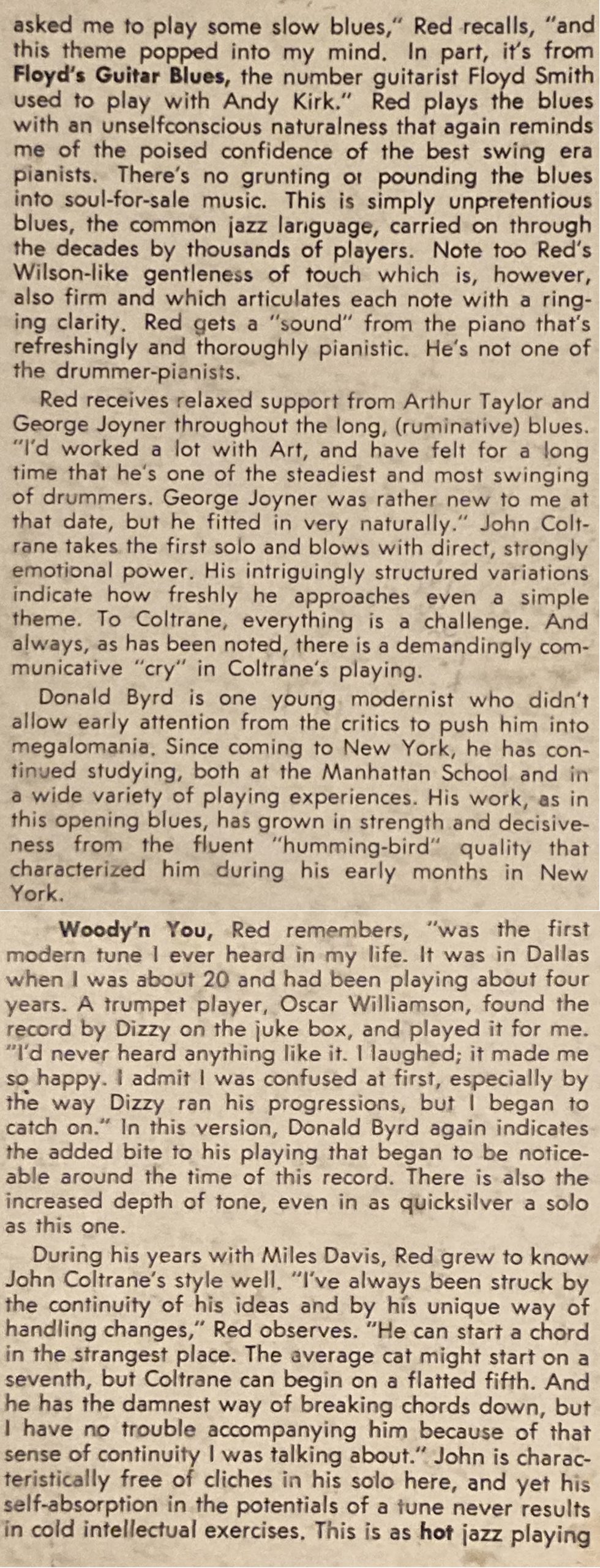
An echo from Red’s listening background is the motif of the opening Soul Junction. “Bob Weinstock asked me to play some slow blues,” Red recalls, “and this theme popped into my mind. In part, it’s from Floyd’s Guitar Blues, the number guitarist Floyd Smith used to play with Andy Kirk.” Red plays the blues with an unselfconscious naturalness that again reminds me of the poised confidence of the best swing era pianists. There’s no grunting or pounding the blues into soul-for-sale music. This is simply unpretentious blues, the common jazz language, carried on through the decades by thousands of players. Note too Red’s Wilson-like gentleness of touch which is, however, also firm and which articulates each note with a ring- ing clarity. Red gets a “sound” from the piano that’s refreshingly and thoroughly pianistic. He’s not one of the drummer-pianists.
Red receives relaxed support from Arthur Taylor and George Joyner throughout the long, (ruminative) blues. “I’d worked a lot with Art, and have felt for a long time that he’s one of the steadiest and most swinging of drummers. George Joyner was rather new to me at that date, but he fitted in very naturally.” John Colt- rane takes the first solo and blows with direct, strongly emotional power. His intriguingly structured variations indicate how freshly he approaches even a simple theme. To Coltrane, everything is a challenge. And always, as has been noted, there is a demandingly com- municative “cry” in Coltrane’s playing.
Donald Byrd is one young modernist who didn’t allow early attention from the critics to push him into megalomania, Since coming to New York, he has con- tinued studying, both at the Manhattan School and in a wide variety of playing experiences. His work, as in this opening blues, has grown in strength and decisive- ness from the fluent “humming-bird” quality that characterized him during his early months in New York.
Woody’n You, Red remembers, “was the first modern tune I ever heard in my life. It was in Dallas when I was about 20 and had been playing about four years. A trumpet player, Oscar Williamson, found the record by Dizzy on the juke box, and played it for me. “I’d never heard anything like it. I laughed; it made me so happy. I admit I was confused at first, especially by the way Dizzy ran his progressions, but I began to catch on.” In this version, Donald Byrd again indicates the added bite to his playing that began to be notice- able around the time of this record. There is also the increased depth of tone, even in as quicksilver a solo as this one.
During his years with Miles Davis, Red grew to know John Coltrane’s style well. “I’ve always been struck by the continuity of his ideas and by his unique way of handling changes,” Red observes. “He can start a chord in the strangest place. The average cat might start on a seventh, but Coltrane can begin on a flatted fifth. And he has the damnest way of breaking chords down, but I have no trouble accompanying him because of that sense of continuity I was talking about.” John is charac- teristically free of cliches in his solo here, and yet his self-absorption in the potentials of a tune never results in cold intellectual exercises. This is as hot jazz playing as can be heard in contemporary jazz. Red builds a solo of thorough clarity. There is muddiness neither in Red’s touch nor in his sequences of ideas. And throughout, there is his energizing beat, almost like an exception- ally fleet, jazz-oriented dancer’s.
Birk’s Works is a favorite of Red. “It’s a naturally swinging thing, no matter who plays it. It has a built-in- swing. The tune is like a minor, 12-bar blues in struc- ture; but Dizzy somehow worked it into a very dis- tinctive theme.” Note Red’s superior solo, one of the best of his I’ve heard. It has a forward-moving inevit- ability that has to do again with the clarity of his ideas and also with his rolling beat. Coltrane, who seemed to be making everything he reached for this day, digs in with a slashing, burning solo that is, however, ordered and organically interrelated. Also impressive about Col- trane is the sheer pulsating force of his beat. Byrd is also intense here but less ferocious than Coltrane.
I’ve Got It Bad, the song that Ivie Anderson explored with aching definitiveness while with Duke Ellington, underlines Red’s capacities as a ballad player. “It seems to me,” says Red, “that one reason many of the young- er pianists seem uncomfortable with ballads and have to double-time them is that you have to have lived what a ballad is talking about. You have to know and experience the beauty of a woman, and the losing of it. Maybe some of those youngsters have never really been in love. You have to play this kind of song out of your life.” Byrd plays with silvery openness of tone and thoughtfulness of conception. Coltrane effectively understates the yearning of the song but makes his emotions clear. Red’s caressing closing sec- tion includes an xpressive, reflective George Joyner solo.
The final Hallelujah is a high-spirited “head” with Red’s nimble solo never blurring the line; Coltrane searching into the interstices of the tune (firmly follow- ed by Joyner); and Donald Byrd crisply carving his own variations. As in Coltrane’s solo, Garland and Taylor dramatically lay out during parts of Bird’s statement, leaving him and Joyner to drive ahead. A. T. juggles polyrhythms, and the band returns to end what strikes me as an unusually free-flowing but temperamentally cohesive session with more meaningful spontaneity than most.
Red is now happily leading his own trio, and does not intend to return to band work if he can help it. Yet, as this album and all the ones he made with Miles Davis indicate, Red has as personal a skill in combo playing and accompanying as he does when soloing with just rhythm background, Miles Davis and Cannon- ball adderley, among others, have lauded the buoy- ant sureness and taste with which Red accompanies horn men. And for all the preaching these days of the need for roots, Red has unaggressively made clear his feeling for and knowledge of the jazz tradition for a long time.
Notes: Nat Hentoff, Co-Editor The Jazz Review
Recording: Rudy Van Gelder
<裏ジャケ和訳>
1950年代初頭、ラッキー・ロバーツはハーレムでアフター・アワーズ・クラブ(深夜営業の店)を経営していました。ラッキーは20世紀初頭のニューヨークにおけるラグタイム・ピアニストの第一人者であり、ジェームズ・P・ジョンソン、ファッツ・ウォーラー、デューク・エリントンらに影響を与えた人物です。ラッキーは、レッド・ガーランドがよく店を訪れていたことを覚えています。「レッドは私にいろいろと質問をしてきたり、特定の曲をリクエストし続けたりしたものです」とラッキーは語ります。一方、レッドはこう説明します。「よく顔を出していましたよ。ラッキーは正真正銘、両手を駆使するピアニストですからね。10本の指すべてを使って弾く、あのスタイルを聴くのが好きだったんです。」
あまり知られていませんが、レッドがキャリアの初期に特に注目していたピアニストの一人がジェームズ・P・ジョンソンでした。もう一人はアート・テイタムです。「私にとって、彼はまさに『ミスター・ピアノ』でした。1940年代半ば、誰かがアートに『将来有望な若手ピアニストは誰か』と尋ねた際、彼がドードー・マルマローソと私の名前を挙げてくれたときは、本当に嬉しかったのを覚えています。」
モダン・ジャズの代表的な存在であるレッドですが、その音楽的背景や聴いてきた音楽の幅は驚くほど広いものです。また、仕事中だけでなく仕事が終わった後(アフター・アワーズ)にも演奏することを好むという点では、古い世代のジャズマンたちと気質が似ています。レッドはジャム・セッションの衰退を非常に残念に思っています。「あちこちでセッションを始めようと声をかけるんですが、最近の連中はみんな消極的ですね。でも、ジャズが真に発展するのはセッションの場なんです。ミュージシャン同士がアイデアを交換し合うことで新しいものが生まれ、それが広がっていく。パーカーやガレスピー、そして初期のモダン・ジャズの演奏家たちの間でも、まさにそうしたことが起きていたわけです。」
このアルバムは、レッドの極めて個性的なモダン・スタイルと、ジャズの伝統全体に対する深い理解の両方を物語っています。「ダラスで活動を始めた頃、大きな影響を受けたのがナット・コールでした」とレッドは続けます。「彼のタッチや音楽的構想、とりわけフレージングの素晴らしさには強く感銘を受けました。世間はピアニストとしてのナットを正当に評価していませんね。」コールは終始リリカルな演奏をするピアニストでしたが、レッドもまた、常に歌心のある旋律を大切にしてきました。 「それから、テディ・ウィルソンやアート・テイタムもいました。バド・パウエルを聴いて、私は本格的にモダン・ジャズにのめり込みましたが、バド以降、誰かに大きな影響を受けたということはありません。もちろん、特に好きなピアニストがいないわけではありません。その中でもとりわけ、過小評価されているハンク・ジョーンズと、オスカー・ピーターソンは別格です」
オープニング曲「ソウル・ジャンクション」のモチーフには、レッドがこれまで聴いてきた音楽の記憶が反映されています。「ボブ・ワインストックからスロー・ブルースを弾いてくれないかと頼まれたとき、このテーマがふと頭に浮かんだんです」とレッドは振り返ります。「これは、ギタリストのフロイド・スミスがアンディ・カークのバンドで演奏していた『フロイズ・ギター・ブルース』に一部由来しています」。レッドが奏でるブルースには、気負いのない自然さがあり、スウィング時代の名ピアニストたちが持っていた、あの堂々とした自信を彷彿とさせます。うなり声を上げたり、ブルースを「売れ筋のソウル・ミュージック」に仕立て上げようと鍵盤を叩きつけたりすることはありません。ここにあるのは、何千人もの演奏家によって何十年にもわたって受け継がれてきた、ジャズの共通言語としての、飾らないブルースそのものです。また、ウィルソンを思わせるレッドのタッチの優しさにも注目してください。それは優しくありながらも芯が強く、一音一音を鮮明に響かせています。レッドがピアノから引き出す「サウンド」は、実に清々しく、徹底してピアノらしい響きを湛えています。彼は、ドラマーのような叩き方をするタイプのピアニストではないのです。長く、かつ思索的なブルースの演奏中、レッドはアーサー・テイラーとジョージ・ジョイナーから、肩の力の抜けたサポートを受けている。「アートとは以前からよく共演していて、彼が最も堅実でスウィング感あふれるドラマーの一人だとずっと思っていました。ジョージ・ジョイナーはこの時まだ私にとって新しい存在でしたが、実に自然に溶け込んでいましたね」。ジョン・コルトレーンが最初のソロを取り、ストレートで感情のほとばしるような力強さで演奏する。その興味深い構成のバリエーションは、彼がいかに新鮮な感覚で単純なテーマにさえアプローチしているかを示している。コルトレーンにとって、すべてが挑戦なのだ。そして、これまでも指摘されてきたように、彼の演奏には常に、聴き手に強く訴えかける「叫び(クライ)」のようなものが存在する。
ドナルド・バードは、批評家から初期に注目を浴びても、うぬぼれや慢心に陥ることのなかった若きモダニストの一人だ。ニューヨークに来て以来、彼はマンハッタン音楽院での学習と、多岐にわたる演奏経験の両面で研鑽を積み続けてきた。ニューヨークでの初期に見られた、流麗で「ハチドリ」のような軽やかさを特徴としていた彼の演奏は、このオープニングのブルースでも聴かれるように、より力強く、確信に満ちたものへと成長している。
レッドは「ウッディン・ユー(Woody’n You)」についてこう回想する。「あれは私が人生で初めて耳にしたモダン・ジャズの曲でした。ダラスにいた頃で、私は20歳くらい、演奏を始めて4年ほど経った頃だったと思います。トランペット奏者のオスカー・ウィリアムソンがジュークボックスでディジーのレコードを見つけて、私に聴かせてくれたんです。あんな音楽はそれまで聴いたことがありませんでした。思わず笑ってしまったし、すごく嬉しかったですね。最初は戸惑いましたよ。特にディジーのコード進行の扱い方にはね。でも、次第にその感覚をつかめるようになっていきました」。このバージョンでも、ドナルド・バードは、このレコードの頃から顕著になり始めた演奏の「鋭さ(バイト)」を再び見せている。また、これほど目まぐるしく展開するソロの中にあっても、音色の深みが増していることも感じられる。
マイルス・デイヴィスのバンドに在籍していた時期、レッドはジョン・コルトレーンのスタイルを深く知ることになった。「彼のアイデアの連続性や、コード進行(チェンジ)に対する独特なアプローチには、いつも感銘を受けていました」とレッドは語る。「彼は、驚くような場所からコードを弾き始めることができるんです」 「普通の連中ならセブンス(第7音)から始めるところを、コルトレーンはフラッテッド・フィフス(減5度)から入ったりする。コードを解体していくやり方も実に独特なんだけど、さっき言った『連続性』の感覚のおかげで、こっちも難なく伴奏できるんだ」。ここでのジョンのソロには、彼らしいクリシェ(ありふれた常套句)のなさが際立っている。それでいて、曲の可能性を徹底的に探求するその姿勢は、決して冷ややかな知的遊戯に陥ることはない。これぞ現代ジャズにおける最高にホットな演奏だ。レッドのソロは極めて明晰に構築されている。彼のタッチにも、アイデアの展開にも、曖昧さや濁りといったものは一切ない。そして全編を通して、聴く者を奮い立たせるようなビートが流れている。それはまるで、驚くほど軽快な動きを見せるジャズ・ダンサーのステップのようだ。
「Birk’s Works」はレッドのお気に入りの曲だ。「誰が演奏しても自然とスウィングしてしまう曲なんだ。最初からスウィングする要素が組み込まれているというか。構造的にはマイナー・キーの12小節ブルースに近いんだけど、ディジーはそれを実に個性的なテーマに仕上げている」。ここで聴けるレッドのソロは出色で、私がこれまでに聴いた彼の演奏の中でも最高のものの一つだ。そこには、前へと突き進むような必然性がある。それは彼のアイデアの明晰さと、あのうねるようなビートに由来するものだ。この日は何をやっても冴え渡っていたコルトレーンは、鋭く切り込むような熱いソロを展開するが、その構成は整然としており、各フレーズは有機的に結びついている。コルトレーンに関しては、そのビートが放つ強烈な躍動感もまた印象的だ。バード(ドナルド・バード)もここでは激しいプレイを見せているが、コルトレーンほどの猛々しさはない。
デューク・エリントン楽団在籍時にアイヴィー・アンダーソンが切々と歌い上げた「I’ve Got It Bad」は、バラード・プレイヤーとしてのレッドの力量を際立たせている。「若いピアニストの多くがバラードを苦手とし、テンポを倍にして演奏しがちなのは、バラードが語る内容を自らの人生で経験していないからじゃないかな」とレッドは語る。「女性の美しさを知り、それを失うという経験が必要なんだ。もしかすると、彼らの中には本当の恋をしたことがない連中もいるのかもしれないね」こうした曲は、自らの人生から絞り出すように演奏しなければならない。バードは、銀色に輝くような開放的な音色と、思慮深い構成力で演奏している。コルトレーンは、この曲に込められた切望の念をあえて控えめに表現しつつも、自身の感情を鮮明に伝えている。レッドが優しく包み込むような演奏を聴かせる終盤のセクションには、ジョージ・ジョイナーによる、表現豊かで内省的なソロも含まれている。
最後の「ハレルヤ(Hallelujah)」は、活気あふれるテーマ(ヘッド)で幕を開けます。そこでは、レッドが軽快なソロをとりつつも決して一線を越えることはなく、コルトレーンが楽曲の隙間を縫うように探求し(ジョイナーがしっかりと追随します)、ドナルド・バードが鮮やかに独自の変奏を刻み出します。コルトレーンのソロと同様、バードの演奏パートでもガーランドとテイラーは劇的に演奏を控え、バードとジョイナーに推進力を委ねています。A.T.がポリリズムを操る中、バンドは再び合流し、このセッションを締めくくります。私には、このセッションは並外れて自由な流れを持ちながらも、気質的なまとまりがあり、他の多くの演奏よりも意味のある自発性に満ちたものに感じられました。
現在、レッドは自身のトリオを率いることに満足しており、できればバンド活動には戻らないつもりでいます。しかし、このアルバムやマイルス・デイヴィスとの一連の共演作が示すように、レッドはリズム・セクションをバックにしたソロ演奏と同様に、コンボでの演奏や伴奏においても、極めて個性的な手腕を発揮しています。マイルス・デイヴィスやキャノンボール・アダレイらは、ホーン奏者に寄り添うレッドの伴奏の、弾むような確実さとセンスを高く評価してきました。また、昨今「ルーツ(音楽的ルーツ)」の重要性が盛んに説かれていますが、レッドは以前から、ジャズの伝統に対する自身の思いや知識を、声高に主張することなく、しかし明確に示し続けてきたのです。
解説:ナット・ヘントフ(『ジャズ・レビュー』誌共同編集者)
録音:ルディ・ヴァン・ゲルダー
※訳文の制作にはGoogleドライブとGoogle翻訳のお世話になりました。
コメント