Label: CONTEMPORARY
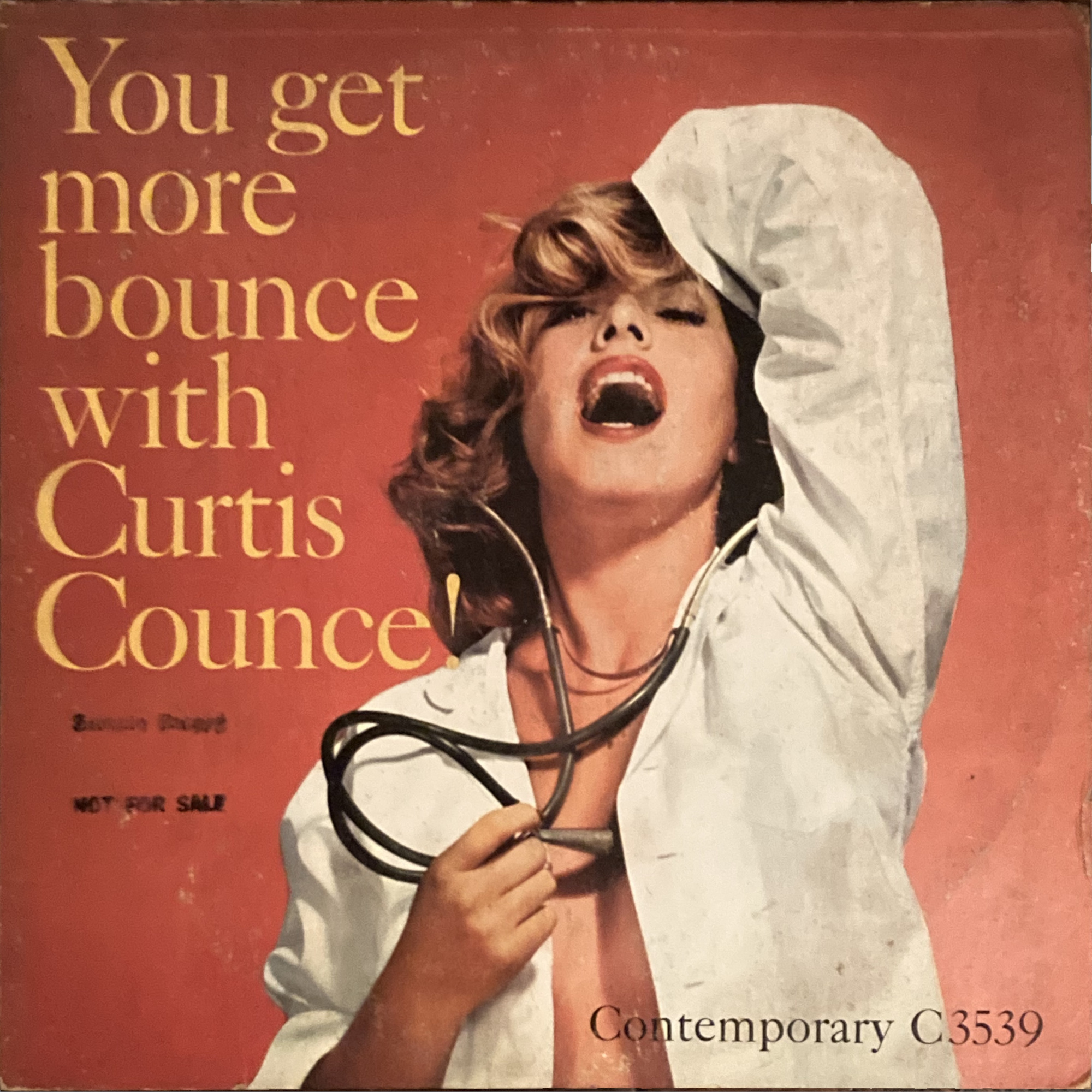
No.: C 3539
Title: THE CURTIS COUNCE GROUP, VOL.2
Musician: CURTIS COUNCE
Recorded: 1957/9/3
Monaural
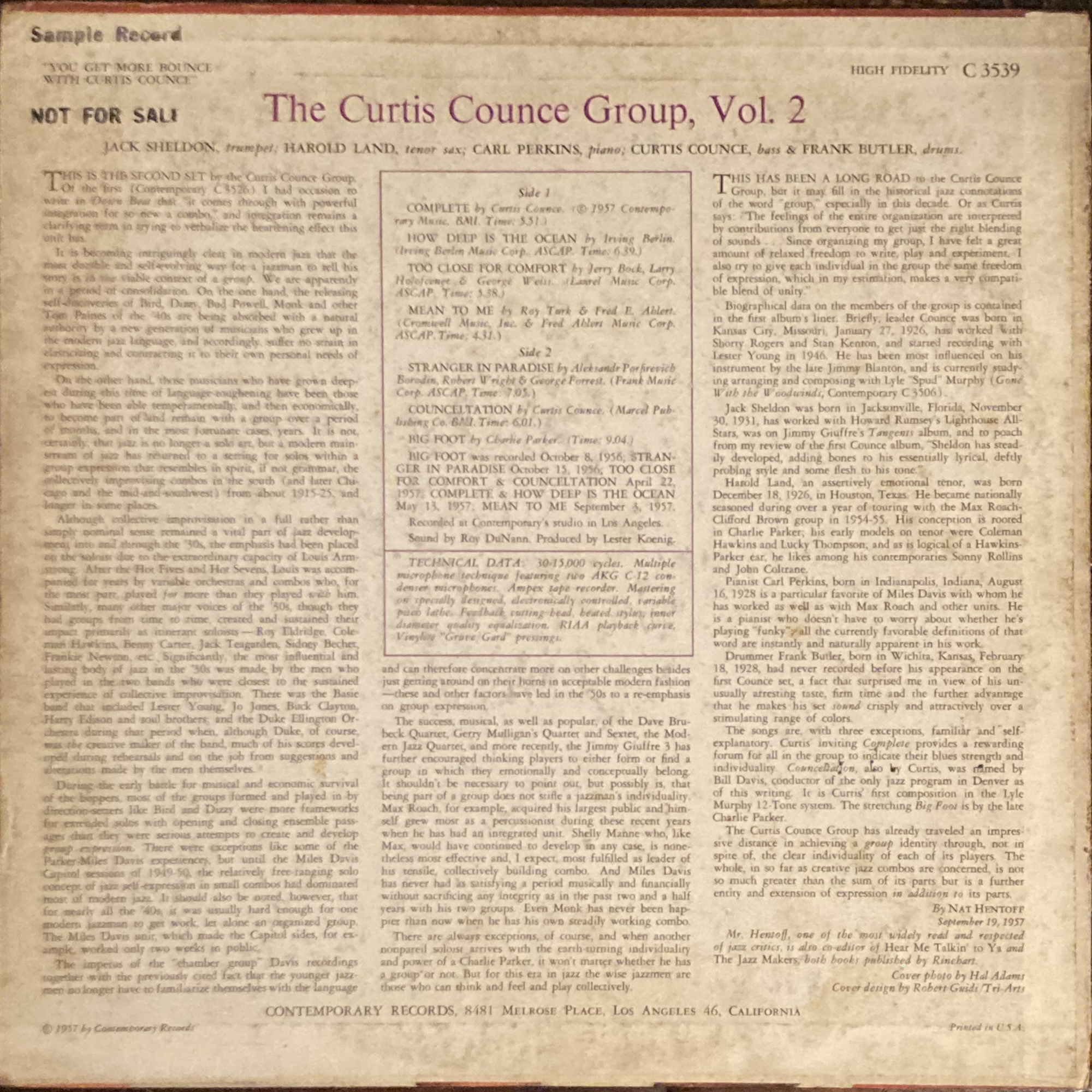
Cover address: 8481 MELROSE PLACE, LOS ANGELS 46, CALIFORNIA
Coating無し
Groove Guard
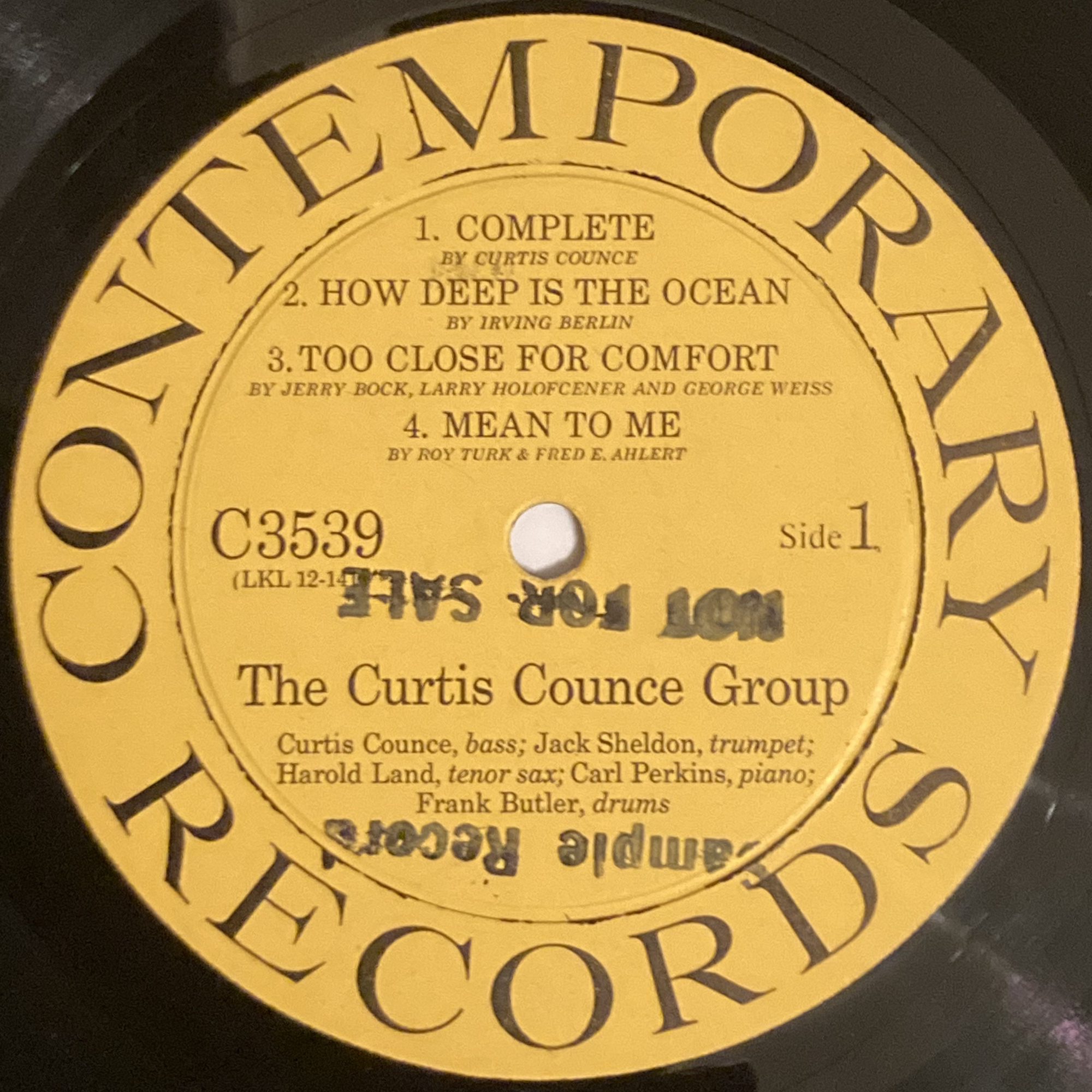
Label Side-A
Yellow Background
Black Letter
Address: None
Deep Groove
Dead Wax Info: LKL-12-141-D1, H
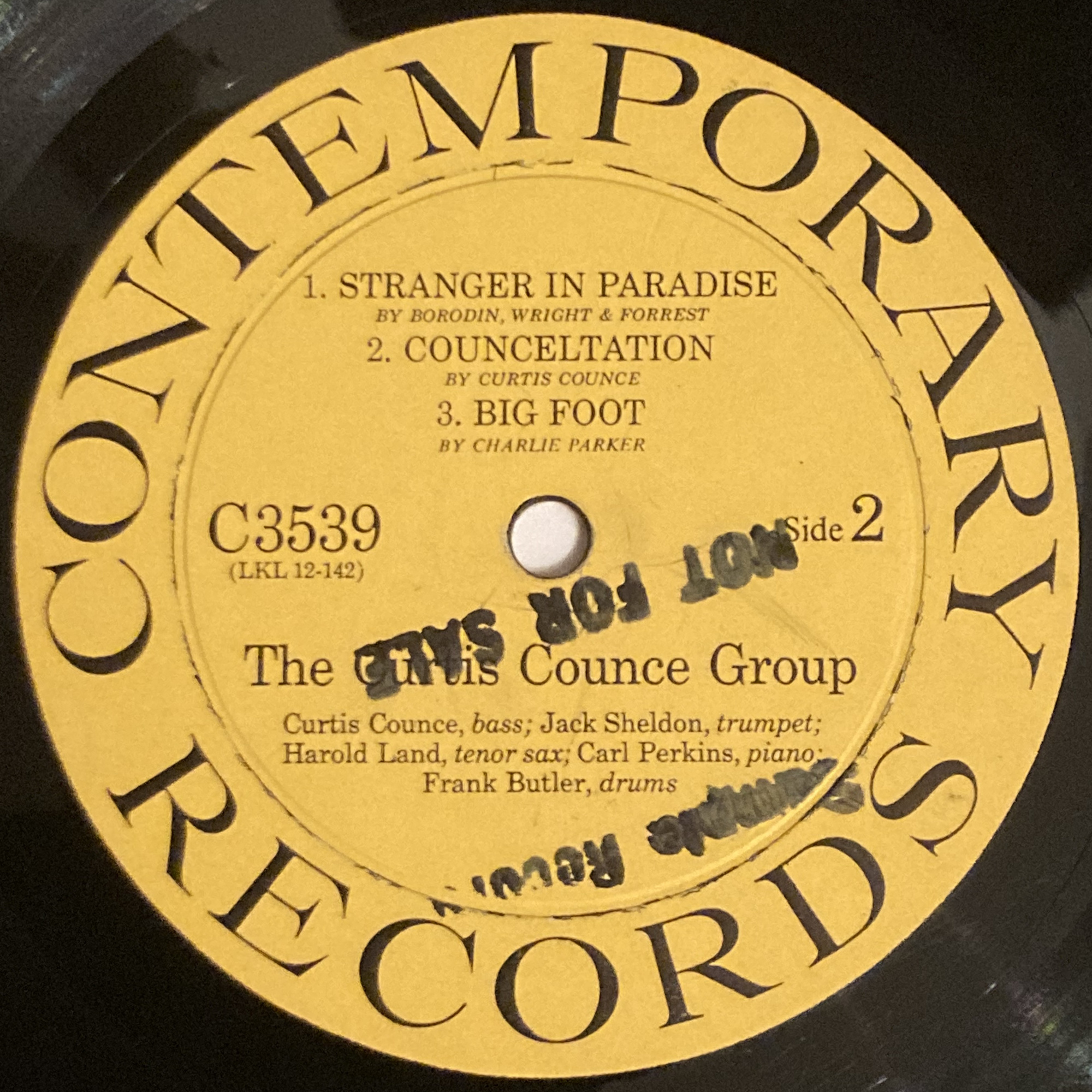
Label Side-B
Yellow Background
Black Letter
Address: None
Deep Groove
Dead Wax Info: LKL-12-142-D1, H
Personnel-
Drums: Frank Butler
Bass: Curtis Counce
Piano: Carl Perkins
Tenor Sax: Harold Land
Trumpet: Jack Sheldon
Tracks-
Side-A
1) Complete 5’51”
2) How Deep is the Ocean 6’39”
3) Too Close For Comfort 5’38”
4) Mean to Me 4’31”
Side-B
1) Stranger in Paradise 7’05”
2) Counceltation 6’01”
3) Big Foot 9’04”
<裏ジャケ原文>
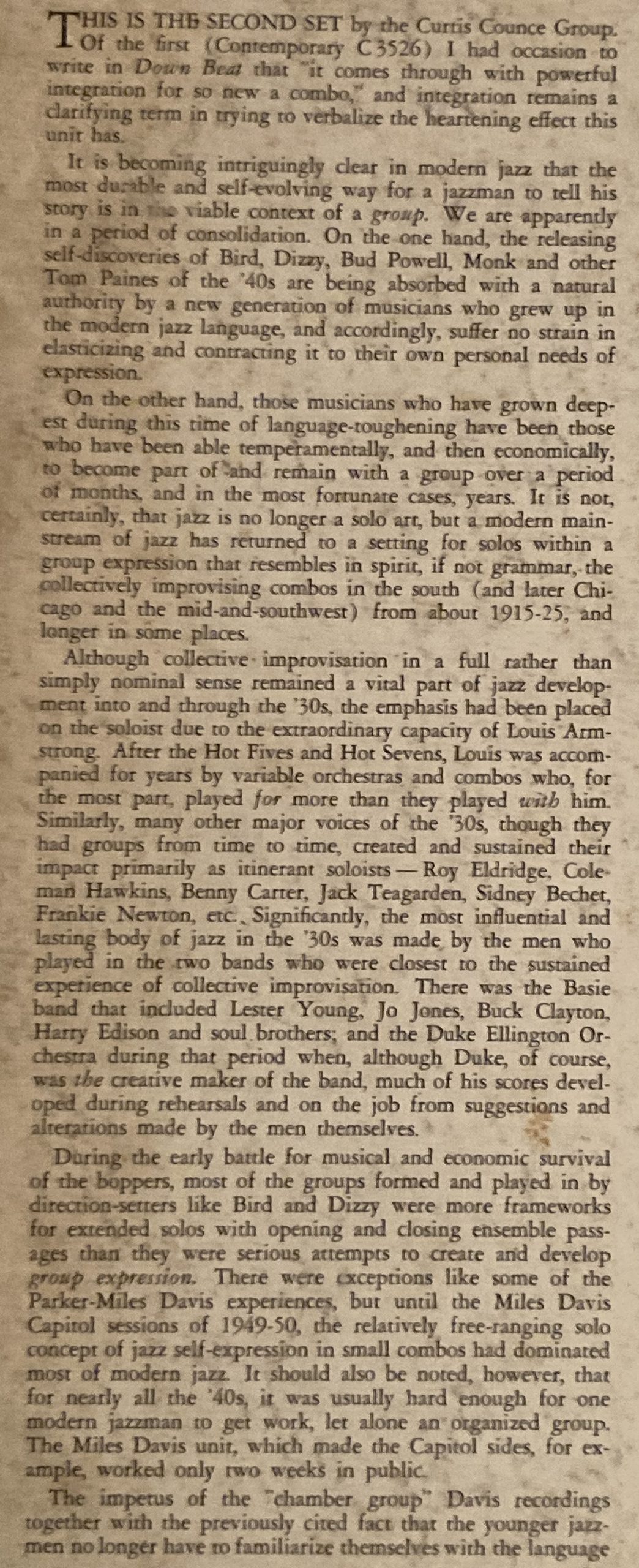
TO HIS IS THE SECOND SET by the Curtis Counce Group. Of the first (Contemporary C3526) I had occasion to write in Down Beat that “it comes through with powerful integration for so new a combo,” and integration remains a clarifying term in trying to verbalize the heartening effect this
unit has.
It is becoming intriguingly clear in modern jazz that the most durable and self-evolving way for a jazzman to tell his story is in the viable context of a group. We are apparently in a period of consolidation. On the one hand, the releasing self-discoveries of Bird, Dizzy, Bud Powell, Monk and other Tom Paines of the ’40s are being absorbed with a natural authority by a new generation of musicians who grew up in the modern jazz language, and accordingly, suffer no strain in elasticizing and contracting it to their own personal needs of expression.
On the other hand, those musicians who have grown deep- est during this time of language-toughening have been those who have been able temperamentally, and then economically, to become part of and remain with a group over a period of months, and in the most fortunate cases, years. It is not, certainly, that jazz is no longer a solo art, but a modern main- stream of jazz has returned to a setting for solos within a group expression that resembles in spirit, if not grammar, the collectively improvising combos in the south (and later Chi- cago and the mid-and-southwest) from about 1915-25, and longer in some places.
Although collective improvisation in a full rather than simply nominal sense remained a vital part of jazz develop- ment into and through the ’30s, the emphasis had been placed on the soloist due to the extraordinary capacity of Louis Arm- strong. After the Hot Fives and Hot Sevens, Louis was accom- panied for years by variable orchestras and combos who, for the most part, played for more than they played with him. Similarly, many other major voices of the ’30s, though they had groups from time to time, created and sustained their impact primarily as itinerant soloists-Roy Eldridge, Cole- man Hawkins, Benny Carter, Jack Teagarden, Sidney Bechet, Frankie Newton, etc. Significantly, the most influential and lasting body of jazz in the ’30s was made by the men who played in the two bands who were closest to the sustained experience of collective improvisation. There was the Basie band that included Lester Young, Jo Jones, Buck Clayton, Harry Edison and soul brothers; and the Duke Ellington Or- chestra during that period when, although Duke, of course, was the creative maker of the band, much of his scores devel- oped during rehearsals and on the job from suggestions and alterations made by the men themselves.
During the early battle for musical and economic survival of the boppers, most of the groups formed and played in by direction-setters like Bird and Dizzy were more frameworks for extended solos with opening and closing ensemble pass- ages than they were serious attempts to create and develop group expression. There were exceptions like some of the Parker-Miles Davis experiences, but until the Miles Davis Capitol sessions of 1949-50, the relatively free-ranging solo concept of jazz self-expression in small combos had dominated most of modern jazz. It should also be noted, however, that for nearly all the ’40s, it was usually hard enough for one modern jazzman to get work, let alone an organized group. The Miles Davis unit, which made the Capitol sides, for ex- ample, worked only two weeks in public.
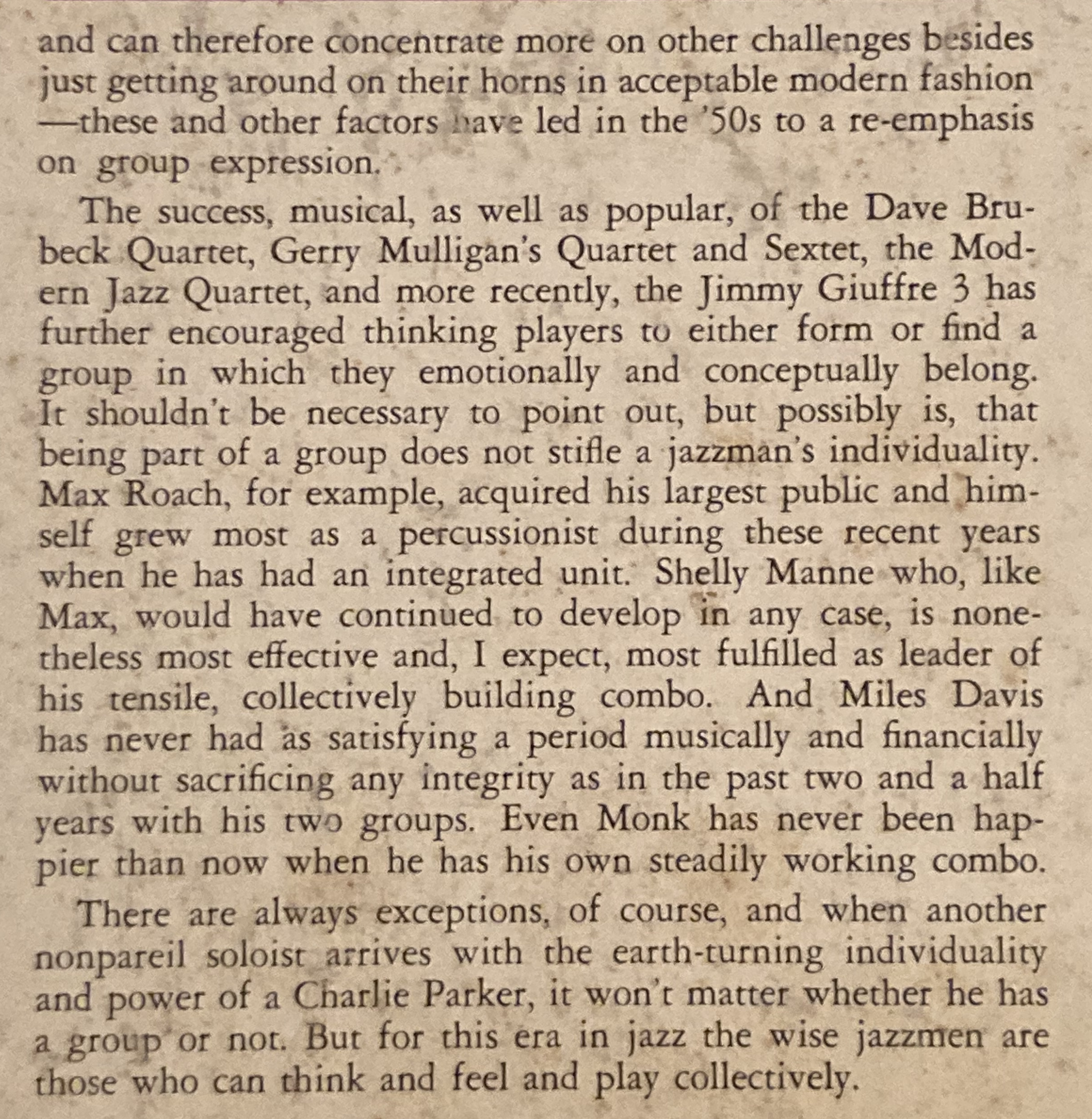
The impetus of the chamber group” Davis recordings together with the previously cited fact that the younger jazz- men no longer have to familiarize themselves with the language and can therefore concentrate more on other challenges besides just getting around on their horns in acceptable modern fashion -these and other factors have led in the ’50s to a re-emphasis on group expression.
The success, musical, as well as popular, of the Dave Bru- beck Quartet, Gerry Mulligan’s Quartet and Sextet, the Mod- ern Jazz Quartet, and more recently, the Jimmy Giuffre 3 has further encouraged thinking players to either form or find a group in which they emotionally and conceptually belong. It shouldn’t be necessary to point out, but possibly is, that being part of a group does not stifle a jazzman’s individuality. Max Roach, for example, acquired his largest public and him- self grew most as a percussionist during these recent years when he has had an integrated unit. Shelly Manne who, like Max, would have continued to develop in any case, is none- theless most effective and, I expect, most fulfilled as leader of his tensile, collectively building combo. And Miles Davis has never had as satisfying a period musically and financially without sacrificing any integrity as in the past two and a half years with his two groups. Even Monk has never been hap- pier than now when he has his own steadily working combo.
There are always exceptions, of course, and when another nonpareil soloist arrives with the earth-turning individuality and power of a Charlie Parker, it won’t matter whether he has a group or not. But for this era in jazz the wise jazzmen are those who can think and feel and play collectively.
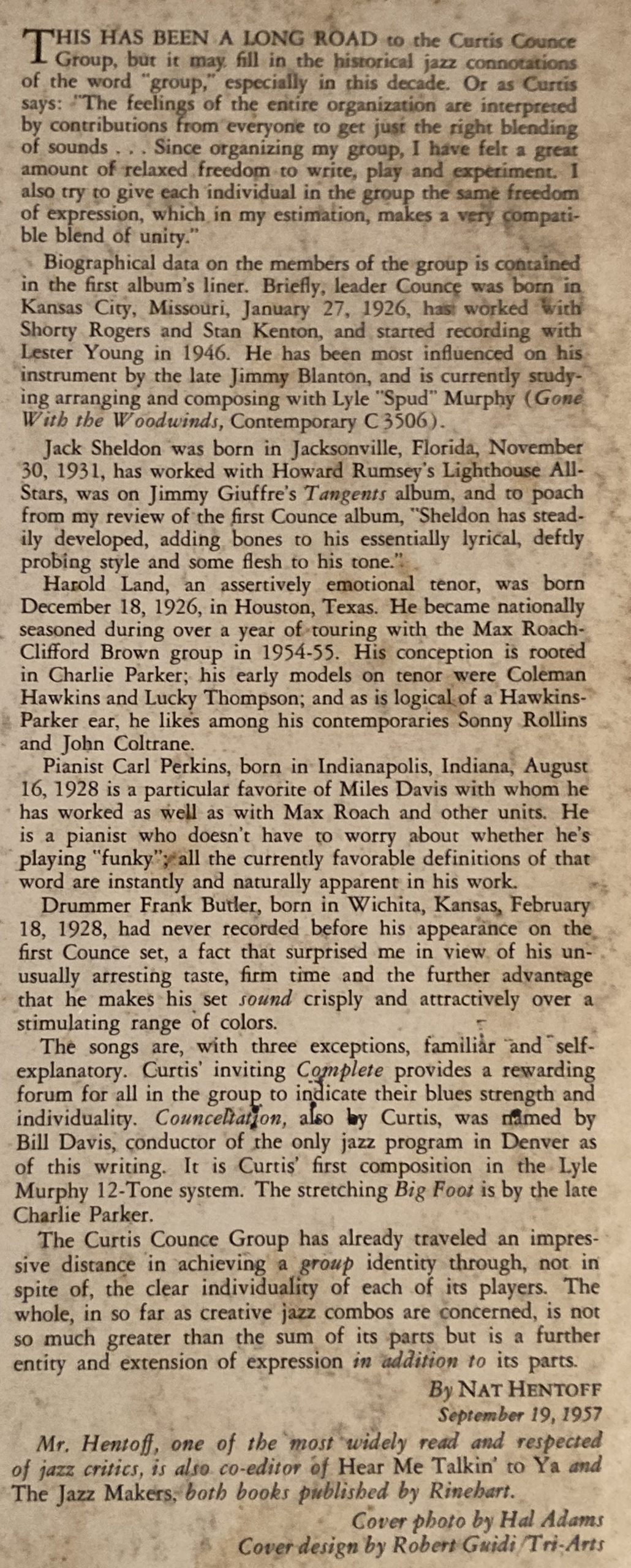
HIS HAS BEEN A LONG ROAD to the Curtis Counce TH Group, but it may fill in the historical jazz connotations of the word “group,” especially in this decade. Or as Curtis says: “The feelings of the entire organization are interpreted by contributions from everyone to get just the right blending of sounds Since organizing my group, I have felt a great amount of relaxed freedom to write, play and experiment. I also try to give each individual in the group the same freedom of expression, which in my estimation, makes a very compati- ble blend of unity.”
Biographical data on the members of the group is contained in the first album’s liner. Briefly, leader Counce was born in Kansas City, Missouri, January 27, 1926, has worked with Shorty Rogers and Stan Kenton, and started recording with Lester Young in 1946. He has been most influenced on his instrument by the late Jimmy Blanton, and is currently study- ing arranging and composing with Lyle “Spud” Murphy (Gone With the Woodwinds, Contemporary C3506).
Jack Sheldon was born in Jacksonville, Florida, November 30, 1931, has worked with Howard Rumsey’s Lighthouse All- Stars, was on Jimmy Giuffre’s Tangents album, and to poach from my review of the first Counce album, “Sheldon has stead- ily developed, adding bones to his essentially lyrical, deftly probing style and some flesh to his tone.”
Harold Land, an assertively emotional tenor, was born December 18, 1926, in Houston, Texas. He became nationally seasoned during over a year of touring with the Max Roach- Clifford Brown group in 1954-55. His conception is rooted in Charlie Parker; his early models on tenor were Coleman Hawkins and Lucky Thompson; and as is logical of a Hawkins- Parker ear, he likes among his contemporaries Sonny Rollins and John Coltrane.
Pianist Carl Perkins, born in Indianapolis, Indiana, August 16, 1928 is a particular favorite of Miles Davis with whom he has worked as well as with Max Roach and other units. He is a pianist who doesn’t have to worry about whether he’s playing “funky”; all the currently favorable definitions of that word are instantly and naturally apparent in his work.
Drummer Frank Butler, born in Wichita, Kansas, February 18, 1928, had never recorded before his appearance on the first Counce set, a fact that surprised me in view of his un- usually arresting taste, firm time and the further advantage that he makes his set sound crisply and attractively over a stimulating range of colors.
The songs are, with three exceptions, familiar and self- explanatory. Curtis’ inviting Complete provides a rewarding forum for all in the group to indicate their blues strength and individuality. Counceltation, also by Curtis, was named by Bill Davis, conductor of the only jazz program in Denver as of this writing. It is Curtis’ first composition in the Lyle Murphy 12-Tone system. The stretching Big Foot is by the late Charlie Parker.
The Curtis Counce Group has already traveled an impres- sive distance in achieving a group identity through, not in spite of, the clear individuality of each of its players. The whole, in so far as creative jazz combos are concerned, is not so much greater than the sum of its parts but is a further entity and extension of expression in addition to its parts.
By NAT HENTOFF September 19, 1957
Mr. Hentoff, one of the most widely read and respected of jazz critics, is also co-editor of Hear Me Talkin’ to Ya and The Jazz Makers, both books published by Rinehart.
Cover photo by Hal Adams Cover design by Robert Guidi /Tri-Arts
<裏ジャケ和訳>
本作は、カーティス・カウンス・グループによる第2作目のアルバムである。第1作(Contemporary C3526)について、私はかつて『ダウン・ビート』誌で「結成間もないコンボとしては驚くほど見事な一体感(インテグレーション)を見せている」と評したが、このグループが聴き手に与える心強い印象を言葉にする上で、やはり「一体感」という言葉こそがその本質を的確に表していると言えるだろう。
現代ジャズにおいて、ジャズ・ミュージシャンが自らの物語を語るための最も持続可能かつ自己進化的な方法は、グループという現実的な枠組みの中に身を置くことである、という事実が興味深いほど鮮明になってきている。現在は明らかに、ある種の「定着・成熟」の時代にあると言える。一方では、バード(チャーリー・パーカー)、ディジー(・ガレスピー)、バド・パウエル、モンクといった40年代の革命児たち(いわばジャズ界のトマス・ペインたち)がもたらした自己発見の成果が、現代ジャズの語法を母国語のようにして育った新世代のミュージシャンたちに、極めて自然な形で吸収されている。彼らにとって、その語法を自身の表現の必要性に合わせて伸縮自在に操ることに、何ら無理や不自然さはないのである。
他方で、この「語法の洗練・強化」の時代に最も深く成長を遂げたのは、気質的にも経済的にもグループの一員となり、数ヶ月、あるいは幸運な場合には数年にわたってそのグループに留まることができたミュージシャンたちであった。もちろん、ジャズがもはやソロ・アート(独奏芸術)ではなくなったわけではない。しかし、現代ジャズの主流は、グループ表現の中でのソロという形態に回帰している。その精神において――音楽的な文法は異なるとはいえ――1915年から25年頃(一部の地域ではそれ以降も)にかけて南部(やがてシカゴ、中西部、南西部へと広がった)で活躍した、集団即興演奏を行うコンボのあり方と通底するものがあるのだ。
単なる名目上のものではなく、真の意味での集団即興演奏は、30年代に入ってからもジャズの発展において重要な役割を果たし続けていた。しかし、ルイ・アームストロングという傑出した才能の存在により、当時の関心はソロイストへと向けられていた。「ホット・ファイヴ」や「ホット・セヴン」の時代を経て、ルイは長年にわたり様々なオーケストラやコンボをバックに演奏したが、それらのバンドの多くは、ルイと「共に」演奏するというよりは、単にルイの「伴奏」に終始していたと言える。同様に、1930年代の他の多くの主要な演奏家たち――ロイ・エルドリッジ、コールマン・ホーキンス、ベニー・カーター、ジャック・ティーガーデン、シドニー・ベシェ、フランキー・ニュートンなど――も、時折グループを組むことはあったものの、主に各地を巡るソリストとして活動し、その影響力を築き維持していました。注目すべきは、1930年代において最も影響力があり、後世に残るジャズの業績を残したのが、集団即興演奏(コレクティブ・インプロヴィゼーション)の経験を継続的に積んでいた二つのバンドのメンバーたちだったという点です。その二つとは、レスター・ヤング、ジョー・ジョーンズ、バック・クレイトン、ハリー・エジソンらを擁したベイシー・バンドと、デューク・エリントン・オーケストラです。後者については、もちろんデューク自身がバンドの創造的な主導者でしたが、彼の楽譜の多くは、リハーサルや実際の演奏の場で、メンバー自身からの提案や修正を経て作り上げられていったものでした。
「バッパー(ビバップの演奏家)」たちが音楽的・経済的に生き残りをかけて戦っていた初期の段階では、バード(チャーリー・パーカー)やディジー(ディジー・ガレスピー)といった先駆者たちが結成・参加したグループの多くは、グループとしての表現を創造・発展させようとする本格的な試みというよりは、むしろ、冒頭と結末にアンサンブルのパートを置き、その間を長いソロ演奏でつなぐための枠組みに過ぎませんでした。パーカーとマイルス・デイヴィスによる共演など例外もありましたが、1949年から50年にかけてのマイルス・デイヴィスによるキャピトル・セッションに至るまで、モダン・ジャズの主流を占めていたのは、小編成のコンボにおいて、比較的自由な発想でソロを展開し自己表現を行うというスタイルでした。ただし、1940年代のほぼ全期間を通じて、モダン・ジャズの演奏家が(グループとしてではなく)個人として仕事を得ることさえ困難だったという点も忘れてはなりません。例えば、キャピトル・セッションの録音を行ったマイルス・デイヴィスのグループでさえ、公の場での演奏活動はわずか2週間にとどまっていました。
マイルス・デイヴィスの「チェンバー・グループ(室内楽的編成)」による録音、そして若手ジャズマンたちがもはや(演奏の基礎となる)「言語」の習得に追われる必要がなくなり、単に楽器を現代的なスタイルでそつなく操るという段階を超えて、より高度な課題に集中できるようになったという事実――こうした要因が重なり、1950年代にはグループとしての表現が再び重視されるようになりました。
デイヴ・ブルーベック・カルテット、ジェリー・マリガンのカルテットやセクステット、モダン・ジャズ・カルテット、そして近年ではジミー・ジュフリー・トリオといったグループが、音楽的にも大衆的にも成功を収めたことは、思索的な演奏家たちをさらに刺激しました。彼らは、感情的にも概念的にも自分にしっくりくるグループを結成したり、そうしたグループに加わったりするようになったのです。言うまでもないことかもしれませんが、念のために言えば、グループの一員であることがジャズマンの個性を抑圧するわけではありません。例えばマックス・ローチは、まとまりのあるバンドを率いてきたここ数年の間に、パーカッショニストとして最も大きく成長し、かつ最大の聴衆を獲得しました。マックスと同様、どのような状況であれ成長を続けていたであろうシェリー・マンも、緊張感に満ち、メンバー全員で音楽を構築していくコンボのリーダーとして、最もその力を発揮し、充実した活動を行っていると言えるでしょう。またマイルス・デイヴィスにとっても、過去2年半にわたる2つのグループでの活動は、音楽的にも経済的にも、そして自身の芸術的誠実さを何ら犠牲にすることなく、かつてないほど満足のいくものでした。あのモンクでさえ、安定して活動を続ける自身のコンボを率いている今ほど幸せな時期はなかったはずです。
もちろん例外は常に存在します。チャーリー・パーカーのような、世界を一変させるほどの個性と力を持った比類なきソリストが新たに登場すれば、その人がグループを組んでいるかどうかなど問題にはならないでしょう。しかし、この時代のジャズにおいては、集団として考え、感じ、演奏できることこそが、賢明なジャズマンのあり方なのです。
カーティス・カウンス・グループの結成に至る道のりは長いものでしたが、このグループは、特に1950年代という時代において、「グループ」という言葉が持つジャズ史的なニュアンスを体現するものと言えるかもしれません。カーティス自身、次のように語っています。「グループ全体の音楽的感性は、メンバー全員の貢献によって解釈され、絶妙なサウンドのブレンドを生み出しています。自分のグループを結成して以来、作曲や演奏、そして実験的な試みを行う上で、大きな自由とリラックスした感覚を味わっています。また、グループの各メンバーにも同様の表現の自由を与えるようにしており、それが結果として、調和のとれた素晴らしい一体感を生み出していると考えています。」
メンバーの経歴については、ファースト・アルバムのライナーノーツに記載されていますが、ここで簡単に紹介しておきましょう。リーダーのカウンスは1926年1月27日、ミズーリ州カンザスシティ生まれ。ショーティ・ロジャースやスタン・ケントンと共演し、1946年にはレスター・ヤングとのレコーディングも開始しました。自身の楽器(ベース)に関しては故ジミー・ブラントンから多大な影響を受けており、現在はライル・“スパッド”・マーフィー(アルバム『Gone With the Woodwinds』[Contemporary C3506]で知られる)に編曲と作曲を師事しています。
ジャック・シェルドンは1931年11月30日、フロリダ州ジャクソンビル生まれ。ハワード・ラムジー率いるライトハウス・オールスターズでの活動や、ジミー・ジュフリーのアルバム『Tangents』への参加で知られています。以前、私がカウンスのファースト・アルバムのレビューで書いた言葉を借りれば、「シェルドンは着実に成長を遂げており、本質的に叙情的かつ巧みに探求心あふれるスタイルに『骨格』を加え、その音色に『肉付け』を行っている」と言えます。
ハロルド・ランドは、力強く感情豊かなテナー・サックス奏者で、1926年12月18日、テキサス州ヒューストン生まれ。1954年から55年にかけてマックス・ローチ=クリフォード・ブラウン・グループと1年以上にわたるツアーを行い、全国的な経験を積みました。彼の音楽的コンセプトはチャーリー・パーカーに根ざしており、テナー奏者としての初期の模範はコールマン・ホーキンスとラッキー・トンプソンでした。ホーキンスやパーカーを聴いて育った彼が、同時代の奏者としてソニー・ロリンズやジョン・コルトレーンを好むのは、極めて自然なことと言えるでしょう。
ピアニストのカール・パーキンスは1928年8月16日、インディアナ州インディアナポリス生まれ。マイルス・デイヴィスのお気に入りの奏者の一人であり、マイルスやマックス・ローチ、その他のグループと共演を重ねています。彼は、自分が「ファンキー」に演奏しているかどうかを気にする必要などないピアニストだ。その言葉が持つ今日的な肯定的意味合いのすべてが、彼の演奏には即座に、そして自然に表れているからである。
ドラマーのフランク・バトラー(1928年2月18日カンザス州ウィチタ生まれ)は、カーティス・カウンス・グループの最初のアルバムに参加するまで、それまで一度もレコーディングを行ったことがなかった。その事実には驚かされた。なぜなら彼は、極めて印象的なセンスと確かなタイム感を備えているだけでなく、刺激的な音色の幅を駆使してドラムセットを歯切れよく魅力的に響かせるという長所も持ち合わせていたからだ。
収録曲は、3曲を除けば、誰もが知るお馴染みの曲ばかりである。カーティス作の「コンプリート(Complete)」は、グループ全員がブルースにおける実力と個性を発揮するための、実りある場となっている。同じくカーティス作の「カウンセルテーション(Counceltation)」は、執筆時点でデンバー唯一のジャズ番組の司会者を務めていたビル・デイヴィスによって命名された。これは、ライル・マーフィーの12音技法を用いて書かれたカーティス初の作品である。演奏に広がりを持たせた「ビッグ・フット(Big Foot)」は、故チャーリー・パーカーの作品だ。
カーティス・カウンス・グループは、各メンバーの際立った個性を損なうことなく、むしろそれを活かす形で、グループとしてのアイデンティティを確立するという素晴らしい歩みを見せてきた。創造的なジャズ・コンボというものは、単に「個々の要素の総和以上のもの」であるというよりは、個々の要素に加えて、さらなる実体や表現の拡張を成し遂げたものと言えるだろう。
ナット・ヘントフ(1957年9月19日)
ヘントフ氏は、最も広く読まれ、尊敬を集めるジャズ評論家の一人であり、ラインハート社から出版された『Hear Me Talkin’ to Ya』および『The Jazz Makers』の共同編集者でもある。
カバー写真:ハル・アダムス カバー・デザイン:ロバート・グイディ/トライ・アーツ
※訳文の制作にはGoogleドライブとGoogle翻訳のお世話になりました。


コメント