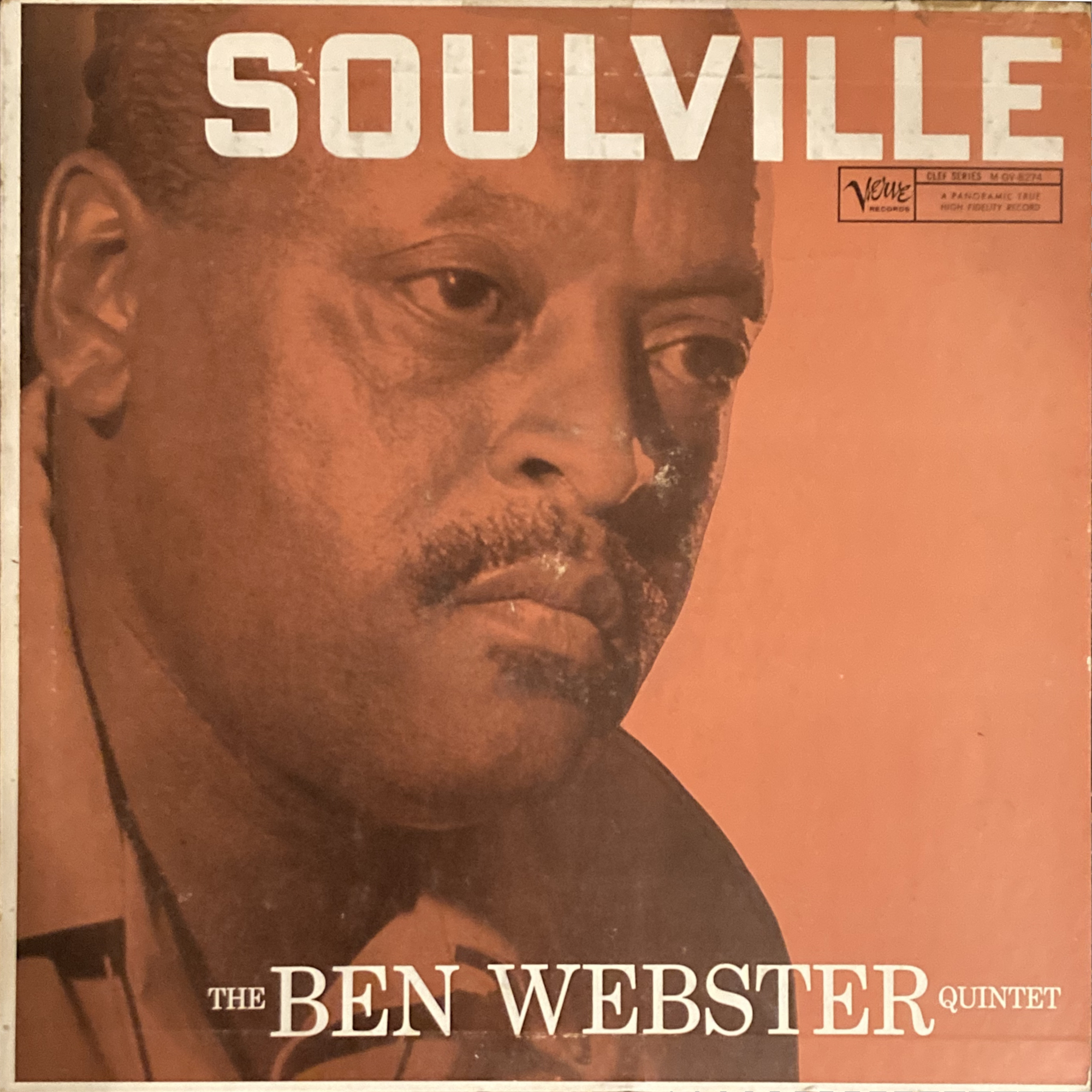
Label: VERVE
No.: MG V-8274
Title: SOULVILLE
Musician: BEN WEBSTER
Recorded: 1957/10/15
Monaural
Cover address: None
Coating無し
Groove Guard
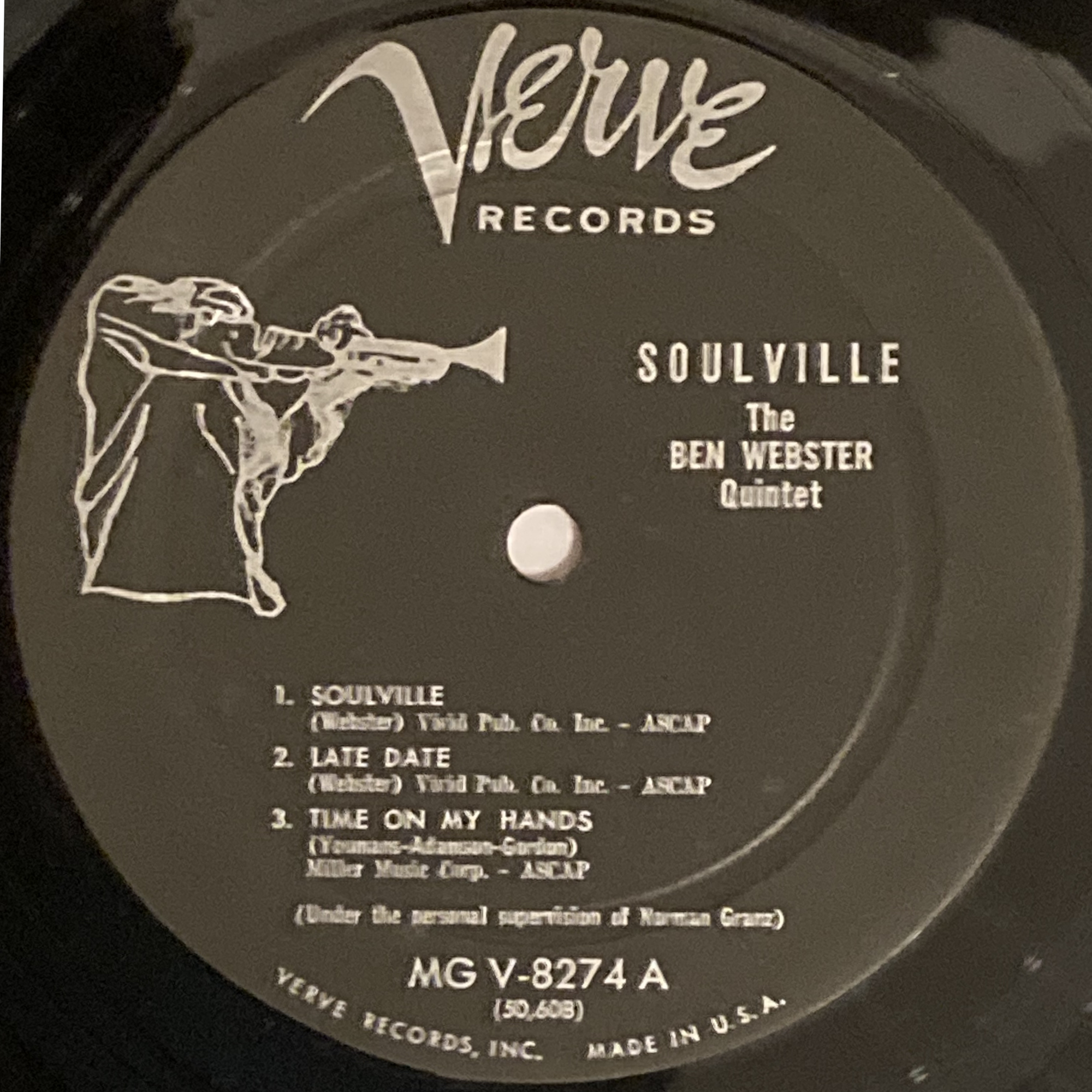
Label Side-A
Black Background
Silver Letter with “Trumpeter” logo
Address:
Deep Groove
Dead Wax Info: MGV 8274-A RE1, 50608
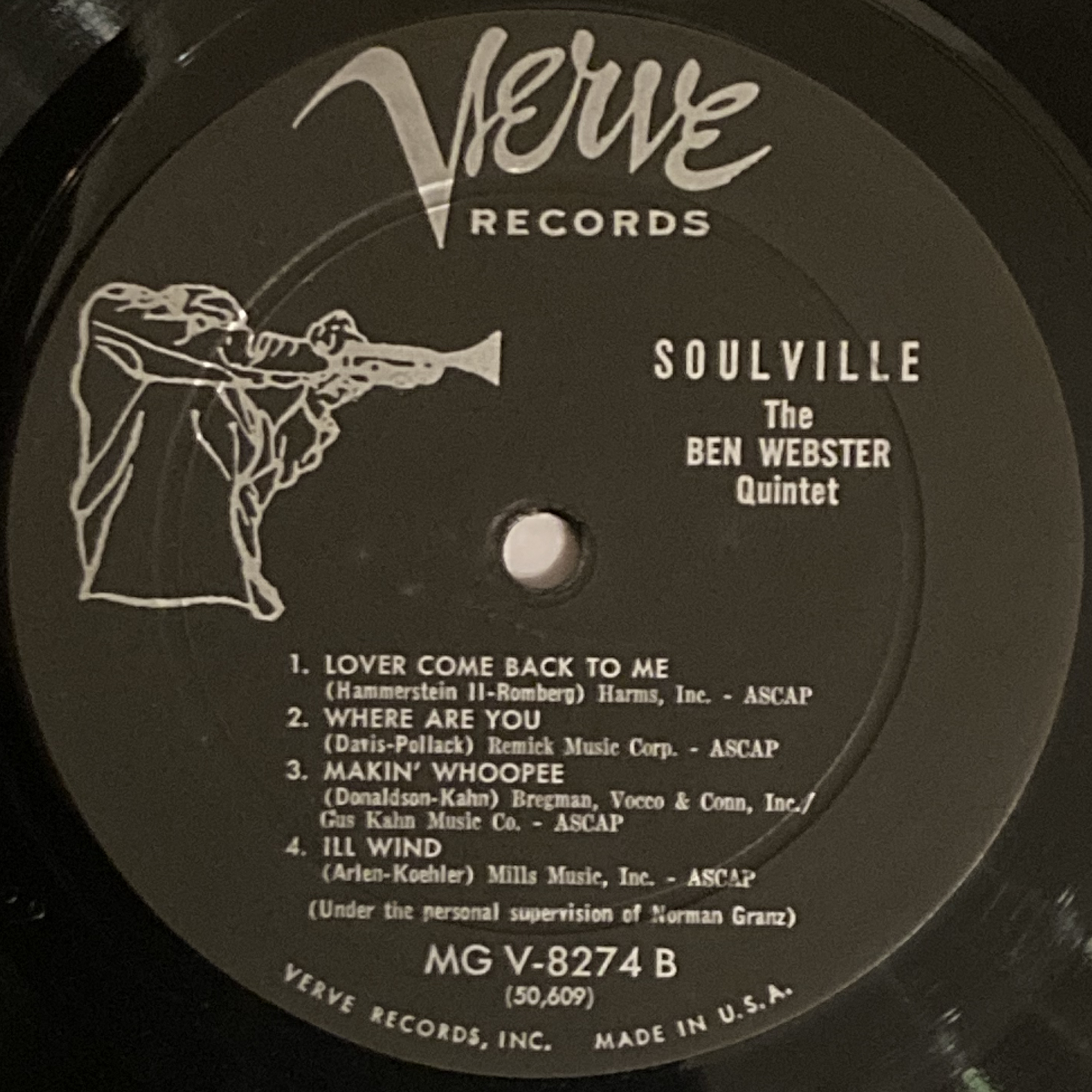
Label Side-B
Black Background
Silver Letter with “Trumpeter” logo
Address:
Deep Groove
Dead Wax Info: MGV 8274-B RE1, 50609
Personnel-
Drums: Stan Levey
Bass: Ray Brown
Piano: Oscar Peterson
Tenor Sax: Ben Webster
Tracks-
1) Soulville
2) Late Date
3) Time on my Hands
Side-B
1) Lover Come Back to Me
2) Where Are You
3) Makin’ Whoopee
4) Ill Wind
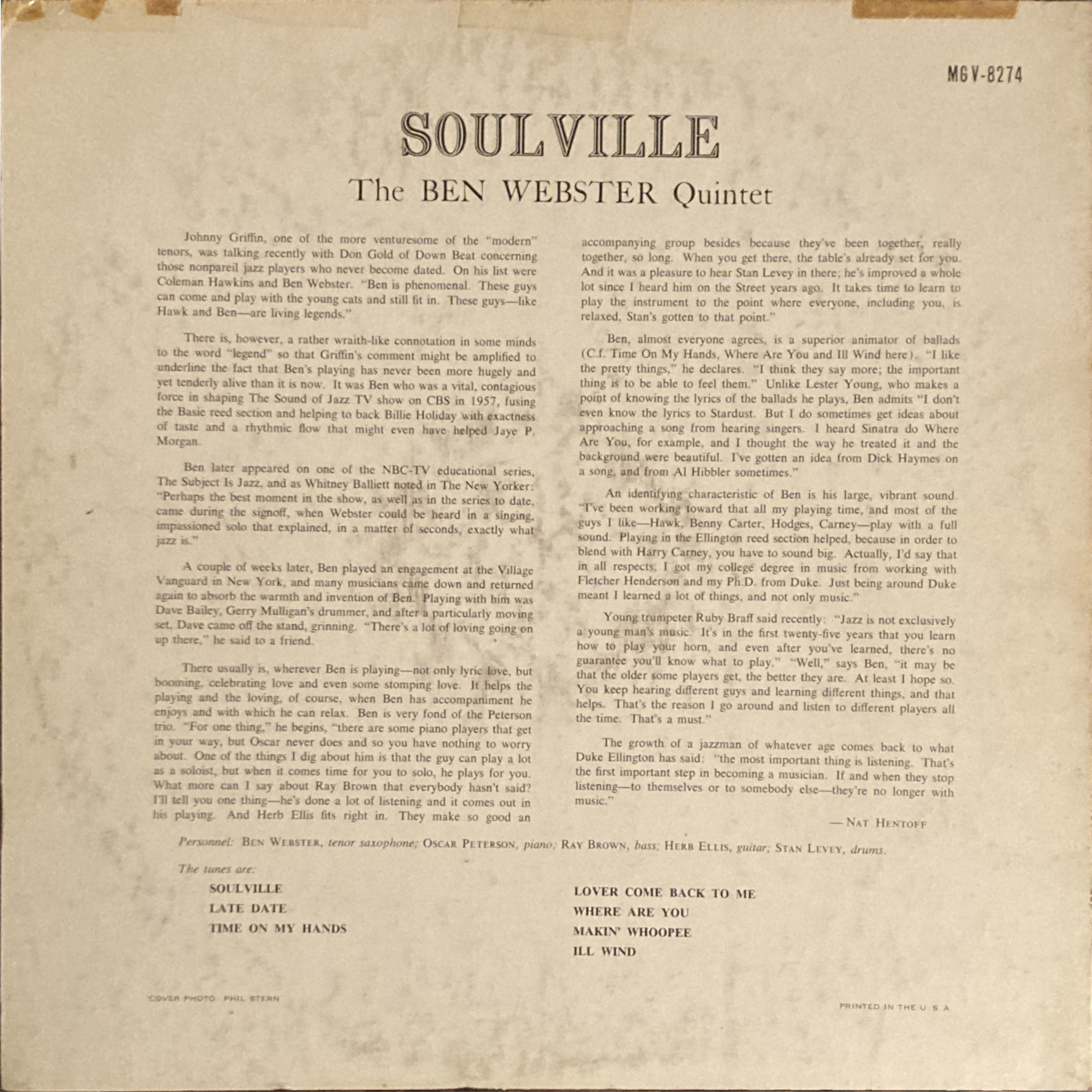
<裏ジャケ原文>
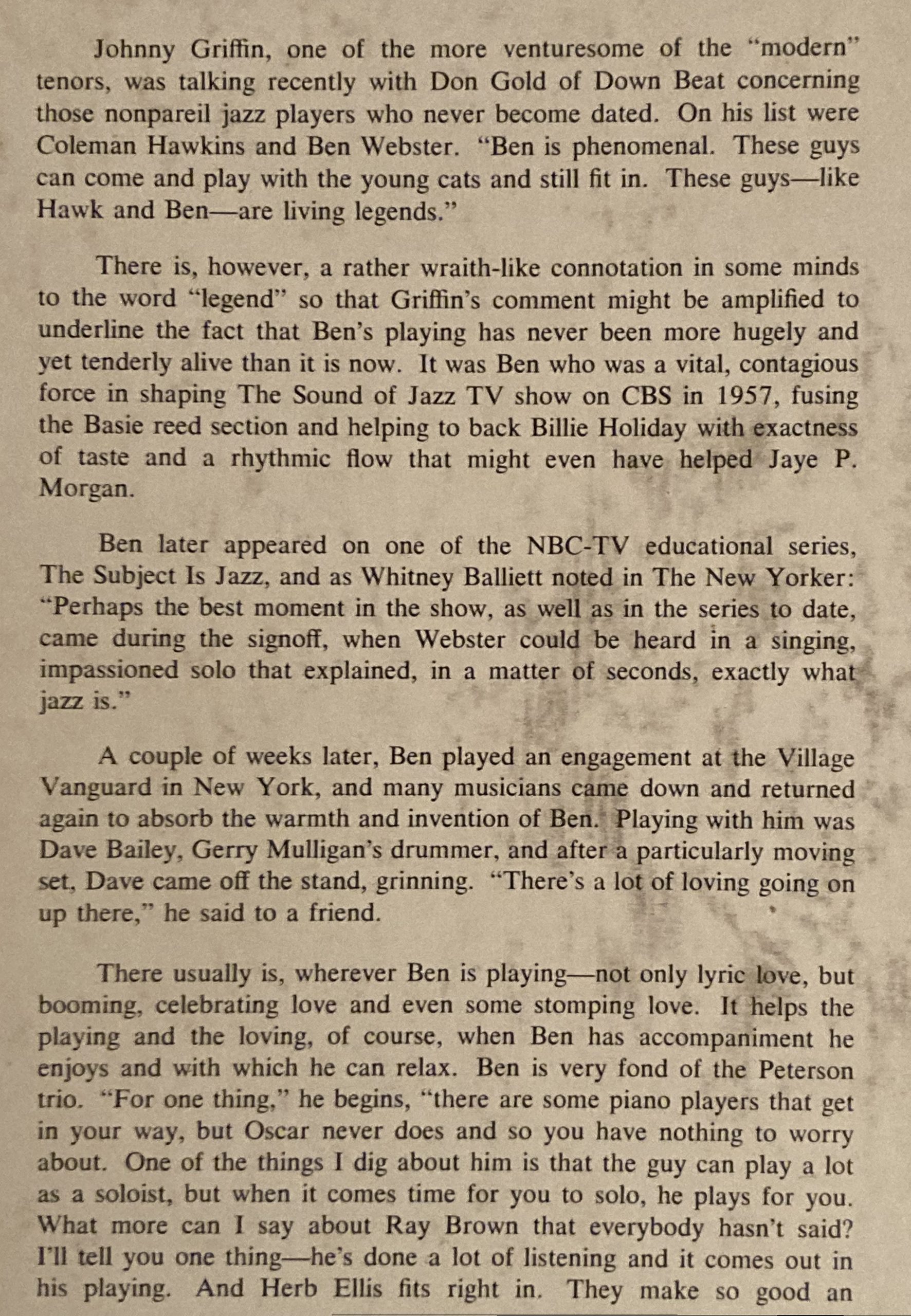
Johnny Griffin, one of the more venturesome of the “modern” tenors, was talking recently with Don Gold of Down Beat concerning those nonpareil jazz players who never become dated. On his list were Coleman Hawkins and Ben Webster. “Ben is phenomenal. These guys can come and play with the young cats and still fit in. These guys-like Hawk and Ben-are living legends.”
There is, however, a rather wraith-like connotation in some minds to the word “legend” so that Griffin’s comment might be amplified to underline the fact that Ben’s playing has never been more hugely and yet tenderly alive than it is now. It was Ben who was a vital, contagious force in shaping The Sound of Jazz TV show on CBS in 1957, fusing the Basie reed section and helping to back Billie Holiday with exactness of taste and a rhythmic flow that might even have helped Jaye P. Morgan.
Ben later appeared on one of the NBC-TV educational series, The Subject Is Jazz, and as Whitney Balliett noted in The New Yorker: “Perhaps the best moment in the show, as well as in the series to date, came during the signoff, when Webster could be heard in a singing, impassioned solo that explained, in a matter of seconds, exactly what jazz is.’
A couple of weeks later, Ben played an engagement at the Village Vanguard in New York, and many musicians came down and returned again to absorb the warmth and invention of Ben. Playing with him was Dave Bailey, Gerry Mulligan’s drummer, and after a particularly moving set, Dave came off the stand, grinning. “There’s a lot of loving going on up there,” he said to a friend.
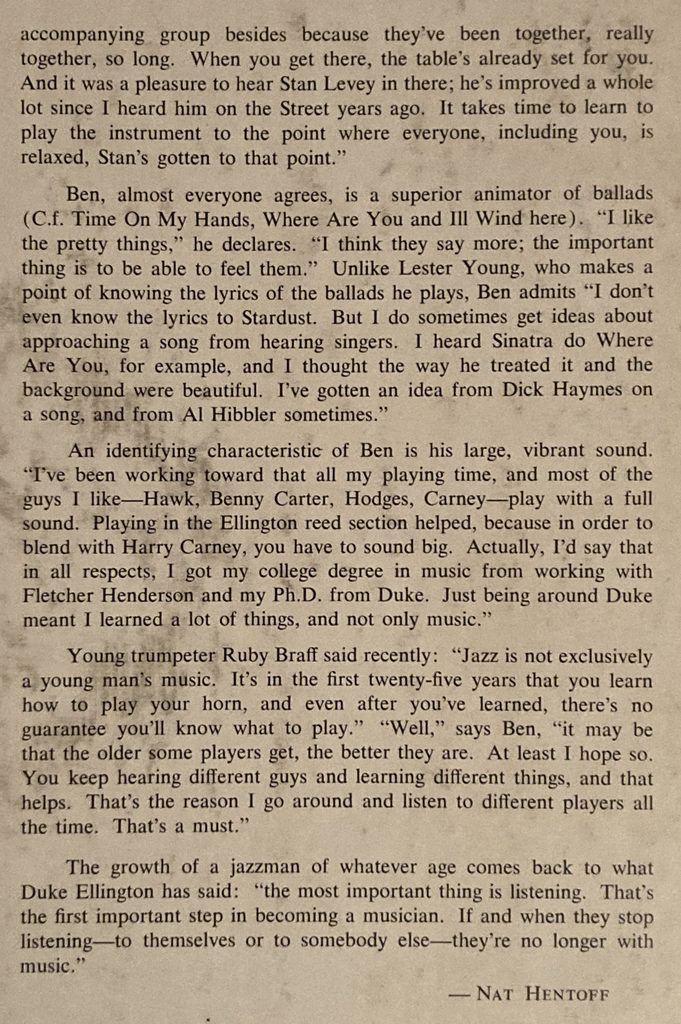
There usually is, wherever Ben is playing-not only lyric love, but booming, celebrating love and even some stomping love. It helps the playing and the loving, of course, when Ben has accompaniment he enjoys and with which he can relax. Ben is very fond of the Peterson trio. “For one thing,” he begins, “there are some piano players that get in your way, but Oscar never does and so you have nothing to worry about. One of the things I dig about him is that the guy can play a lot as a soloist, but when it comes time for you to solo, he plays for you. What more can I say about Ray Brown that everybody hasn’t said? I’ll tell you one thing-he’s done a lot of listening and it comes out in his playing. And Herb Ellis fits right in. They make so good an accompanying group besides because they’ve been together, really together, so long. When you get there, the table’s already set for you. And it was a pleasure to hear Stan Levey in there; he’s improved a whole lot since I heard him on the Street years ago. It takes time to learn to play the instrument to the point where everyone, including you, is relaxed, Stan’s gotten to that point.”
Ben, almost everyone agrees, is a superior animator of ballads (C.f. Time On My Hands, Where Are You and Ill Wind here). “I like the pretty things,” he declares. “I think they say more; the important thing is to be able to feel them.” Unlike Lester Young, who makes a point of knowing the lyrics of the ballads he plays, Ben admits “I don’t even know the lyrics to Stardust. But I do sometimes get ideas about approaching a song from hearing singers. I heard Sinatra do Where Are You, for example, and I thought the way he treated it and the background were beautiful. I’ve gotten an idea from Dick Haymes on a song, and from Al Hibbler sometimes.”
An identifying characteristic of Ben is his large, vibrant sound. “I’ve been working toward that all my playing time, and most of the guys I like-Hawk, Benny Carter, Hodges, Carney-play with a full sound. Playing in the Ellington reed section helped, because in order to blend with Harry Carney, you have to sound big. Actually, I’d say that in all respects, I got my college degree in music from working with Fletcher Henderson and my Ph.D. from Duke. Just being around Duke meant I learned a lot of things, and not only music.”
Young trumpeter Ruby Braff said recently: “Jazz is not exclusively a young man’s music. It’s in the first twenty-five years that you learn how to play your horn, and even after you’ve learned, there’s no guarantee you’ll know what to play.” “Well,” says Ben, “it may be that the older some players get, the better they are. At least I hope so. You keep hearing different guys and learning different things, and that helps. That’s the reason I go around and listen to different players all the time. That’s a must.”
The growth of a jazzman of whatever age comes back to what Duke Ellington has said: “the most important thing is listening. That’s the first important step in becoming a musician. If and when they stop listening to themselves or to somebody else they’re no longer with music.”
NAT HENTOFF
<裏ジャケ和訳>
「モダン」なテナー・サックス奏者の中でも、とりわけ果敢な探求心を持つジョニー・グリフィンが、先日『ダウン・ビート』誌のドン・ゴールドと、時代を超越した比類なきジャズ・ミュージシャンたちについて語り合っていた。そのリストには、コールマン・ホーキンスやベン・ウェブスターの名が挙がっていた。「ベンは驚異的だよ。彼らは若い連中と混じって演奏しても、全く違和感なく溶け込めるんだ。ホーク(ホーキンス)やベンといった連中は、まさに『生ける伝説』さ」
もっとも、「伝説」という言葉には、どこか幽霊のような、実体の薄い響きを感じる人もいるかもしれない。だからこそ、グリフィンの言葉を補足しておこう。ベンの演奏は、今、かつてないほど力強く、それでいて繊細な生命力に満ちあふれているのだ。1957年にCBSで放送されたテレビ番組『ザ・サウンド・オブ・ジャズ』において、ベンは極めて重要な、周囲を鼓舞するような役割を果たした。彼はベイシー楽団のリード・セクションをまとめ上げ、ビリー・ホリデイのバックを務めるにあたっては、絶妙なセンスとリズムの流れで彼女を支えた。その演奏の素晴らしさは、たとえジェイ・P・モーガン(当時人気のあった歌手)が相手であっても、見事に調和したことだろう。
その後、ベンはNBCテレビの教育番組シリーズ『ザ・サブジェクト・イズ・ジャズ』にも出演した。これについて、『ザ・ニューヨーカー』誌のホイットニー・バリエットは次のように記している。「この番組、いや、これまでのシリーズ全体を通じても最高の名場面は、エンディングに訪れた。ウェブスターが歌うように情熱的なソロを聴かせてくれたのだ。そのわずか数秒の演奏の中に、ジャズとは一体何なのかという問いに対する答えが、完璧に示されていた」その数週間後、ベンはニューヨークの「ヴィレッジ・ヴァンガード」に出演した。多くのミュージシャンが会場を訪れ、ベンの演奏からあふれ出る温かさと創意工夫に触れようと、何度も足を運んだ。共演者には、ジェリー・マリガン・バンドのドラマーであるデイヴ・ベイリーがいた。ひときわ感動的なセットを終えてステージから降りてきたデイヴは、満面の笑みを浮かべながら友人にこう言った。「あのステージの上には、たくさんの『愛』が満ちているんだよ」
ベンが演奏する場所には、たいていそうした愛がある。それは単に叙情的な愛というだけでなく、力強く、祝福に満ちた愛であり、時には激しく躍動するような愛でもある。ベンにとって、自分が心から楽しみ、リラックスして演奏できる伴奏陣がいることは、演奏そのものにも、そこに宿る愛にも、大きなプラスに働く。ベンはオスカー・ピーターソン・トリオを非常に高く評価している。「まず第一に、ピアノ奏者の中には演奏の邪魔をしてくるような奴もいるが、オスカーは決してそんなことはしない。だから、何も心配しなくていいんだ。彼を素晴らしいと思うのは、ソロイストとして存分に弾きまくることができる一方で、こちらがソロをとる番になると、しっかりと寄り添って支えてくれるところだ。レイ・ブラウンについては、もう誰もが言い尽くしているだろうから、今さら何を付け加えればいいんだろうね?……ひとつ言えるのは、彼はこれまで実に多くの音楽を聴き込んできたということで、それが演奏にも表れている。ハーブ・エリスも完璧に溶け込んでいるよ。彼らがこれほど優れた伴奏陣である理由は、長い間、本当に濃密な時間を共に過ごしてきたからだろう。彼らと共演すれば、まるで最高の準備が整ったテーブルに招かれたような気分になれる。それから、スタン・リーヴィーのドラムを聴けたのも嬉しかった。何年も前に『ストリート』(52丁目)で聴いた時と比べて、格段に良くなっている。楽器を演奏する技術を磨き、自分自身を含め、周囲の誰もがリラックスできる境地に達するには時間がかかるものだが、スタンはまさにその域に達したんだ」
ベンがバラードの名手であることには、誰もが異論を唱えないだろう(本作に収録された「タイム・オン・マイ・ハンズ」、「ホエア・アー・ユー」、「イル・ウィンド」を聴けば明らかだ)。「僕は美しい曲が好きなんだ」と彼は語る。「美しい曲の方が、より多くのことを語ってくれると思うからね」 「重要なのは、それを感じ取れるかどうかだ」。演奏するバラードの歌詞を必ず把握しておくレスター・ヤングとは対照的に、ベンはこう認める。「俺は『スターダスト』の歌詞さえ知らないんだ。だが、歌手の歌い方を聴いて、曲へのアプローチのヒントを得ることはある。例えば、シナトラが歌う『ホエア・アー・ユー』を聴いたとき、その解釈や背景の作り方が美しいと感じた。ディック・ヘイムズやアル・ヒブラーの歌唱からヒントをもらうこともあるね」。
ベンの大きな特徴は、その豊かで力強いサウンドにある。「これまでずっと、そういう音を出せるよう努めてきた。俺が好む連中――ホーク(コールマン・ホーキンス)、ベニー・カーター、ホッジス、カーニー――は皆、充実した音で演奏するからね。エリントン楽団のリード・セクションで吹いた経験も大きかった。ハリー・カーニーの音と溶け合うには、自分も大きな音を出さなきゃならないからな。実際、音楽における『大学の学位』はフレッチャー・ヘンダーソンの楽団で、そして『博士号』はデューク(・エリントン)のもとで学んだことで得たと言えるだろう。デュークのそばにいるだけで、音楽に限らず、実に多くのことを学べたんだ」。
若手トランペット奏者のルビー・ブラフは最近、こう語っている。「ジャズは若者だけの音楽じゃない。最初の25年で楽器の吹き方を習得するわけだが、それを身につけたからといって、何を演奏すべきかがわかるという保証はないんだ」。これに対し、ベンはこう言う。「そうだな、プレイヤーは年を重ねるほど良くなっていくのかもしれない。少なくとも、そうであってほしいね。さまざまなプレイヤーを聴き、新しいことを学び続ける――それが力になるんだ。だからこそ、俺はいつもあちこちへ出向いて、いろんなプレイヤーの演奏を聴くようにしている。それは不可欠なことさ」。
ジャズ・ミュージシャンの成長は、年齢を問わず、デューク・エリントンの次の言葉に集約される。「最も重要なのは『聴くこと』だ。それがミュージシャンになるための第一歩であり、最も大切なステップなんだ。もし自分自身や他者の演奏に耳を傾けることをやめてしまったら、その人はもう音楽と向き合っていないということになる」。
ナット・ヘントフ
※訳文の制作にはGoogleドライブとGoogle翻訳のお世話になりました。
コメント