Label: PHILIPS
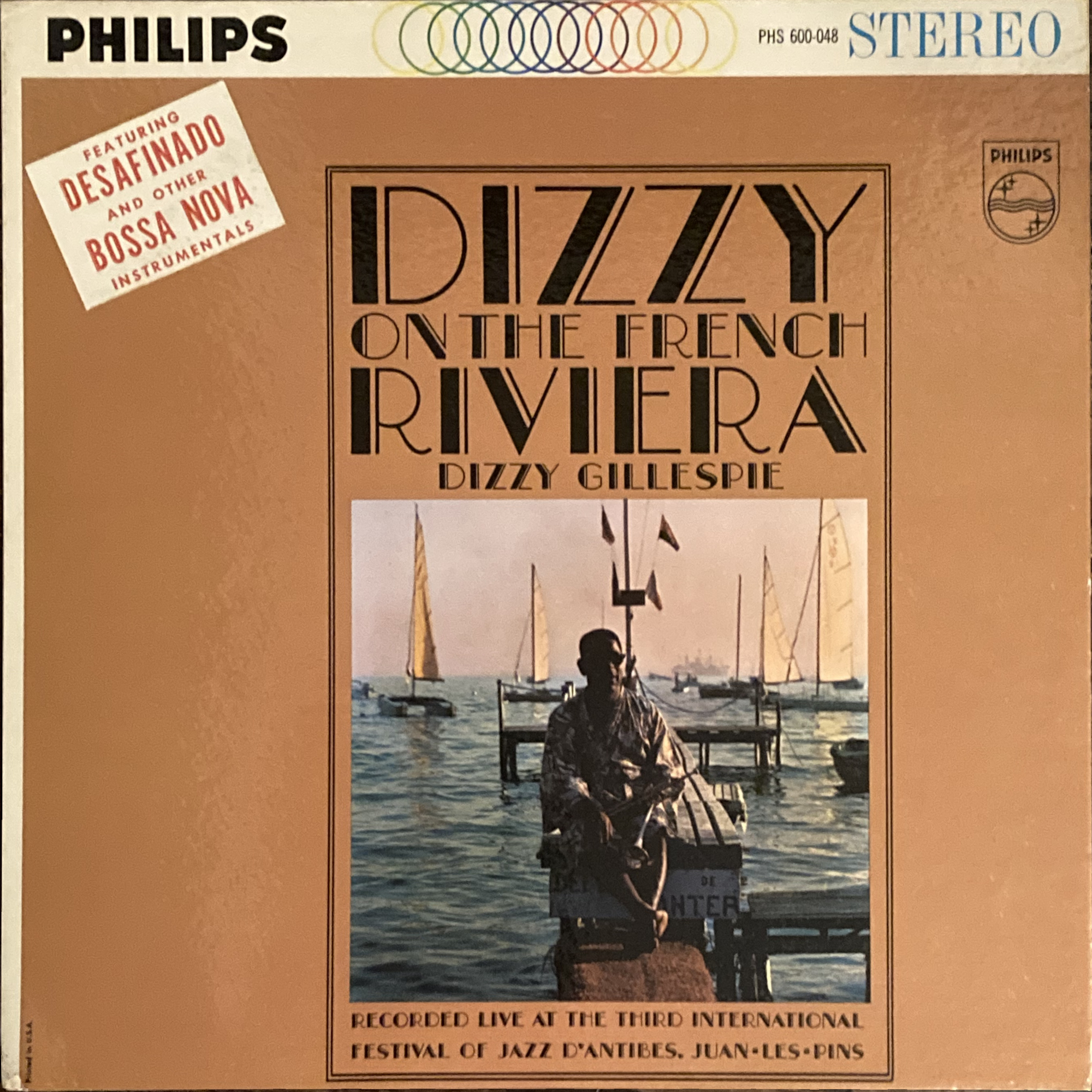
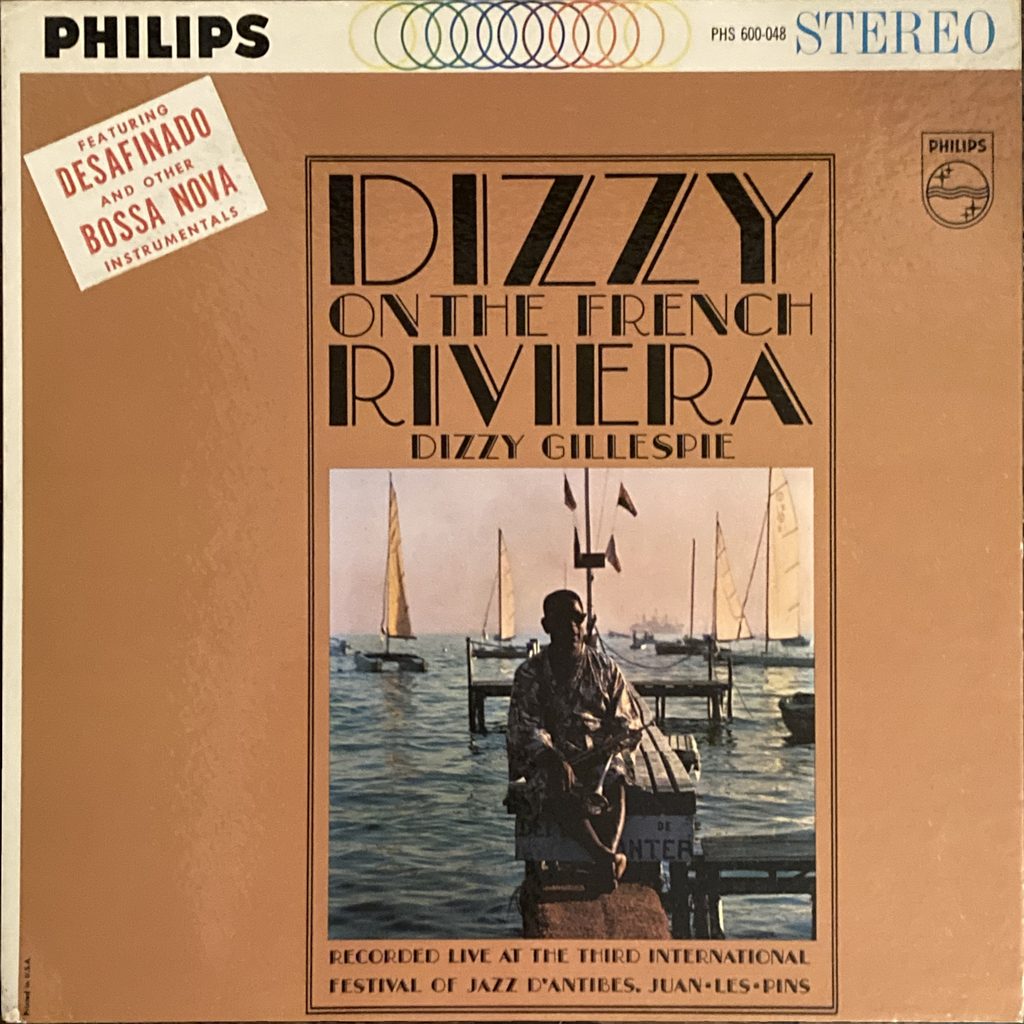
No.: PHS 600-048
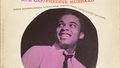
Title: DIZZY ON THE FRENCH RIVIERA
Musician: DIZZY GILLESPIE
Recorded: 1962
Stereo
Cover address: None
Coating
Groove Guard
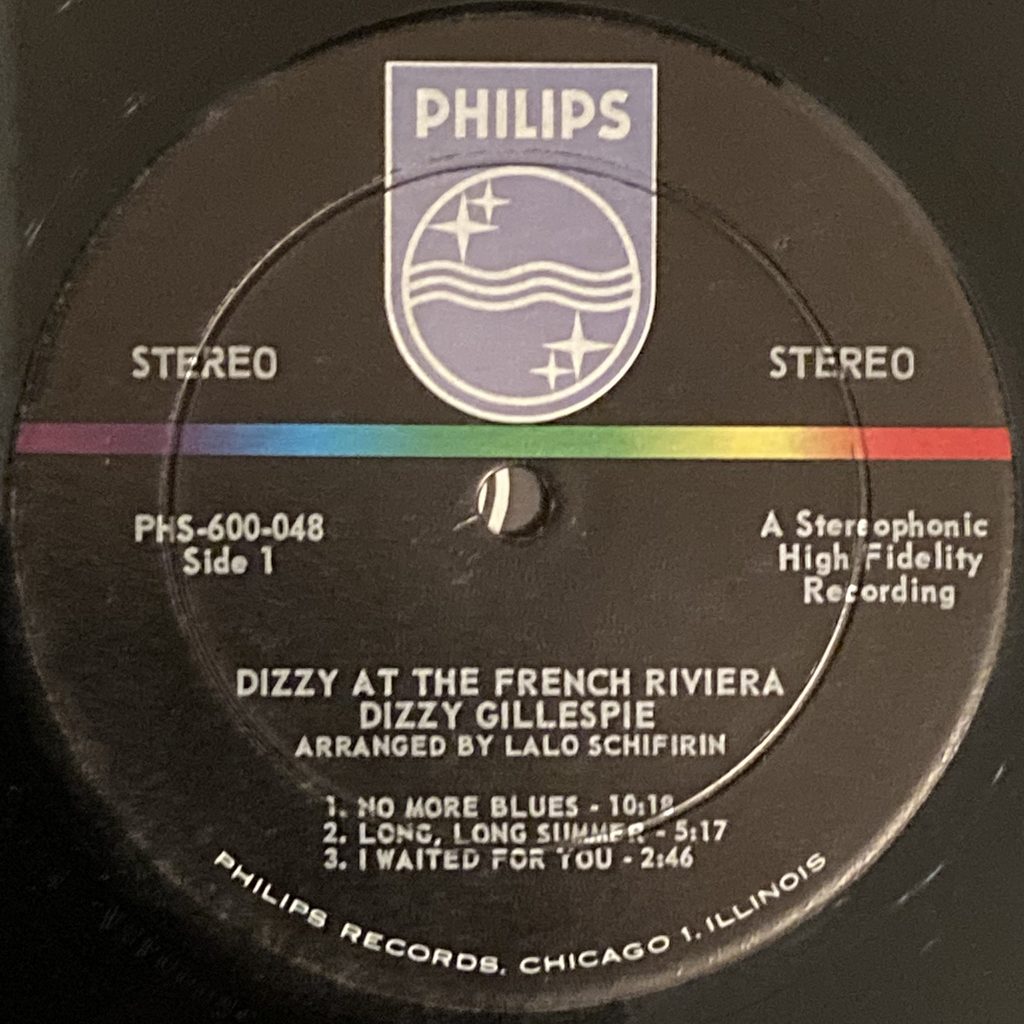
Label Side-1
Black Background
Silver Letter
Address: None
Deep Groove
Dead Wax Info: PHS600048A, M1
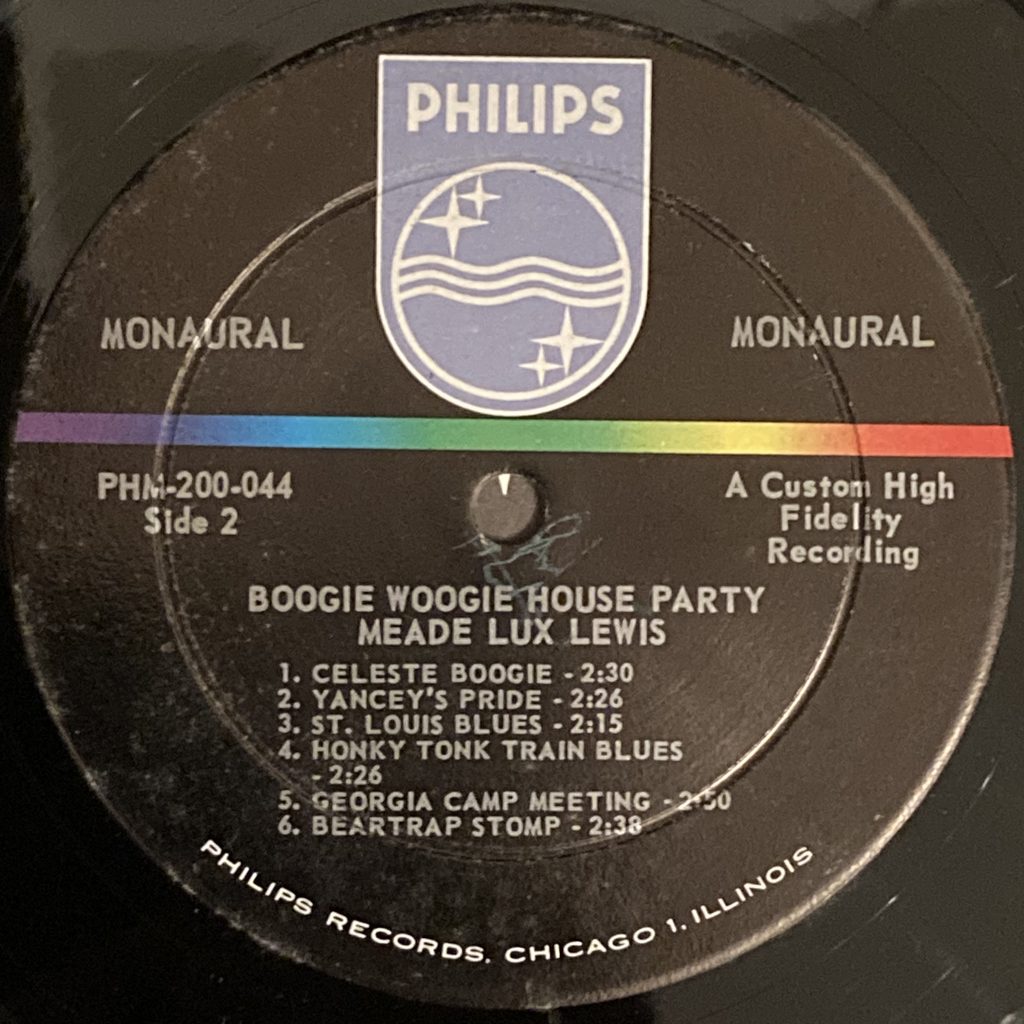
Label Side-2
Blue Background
Silver Letter
Address: None
Deep Groove
Dead Wax Info: PHS600048B, M1
Personnel-
Drums: Ruby Collins
Bass: Chris White
Piano: Lalo Shiffrin
Alto Sax, Flute: Leo Wright
Trumpet: Dizzy Gillespie
Guitar: Tzigane Elek Bacsik
Percussion: Pepito Riestria
Tracks-
Side-1
1) No More Blues 10’18”
2) Long, Long Summer 5’17”
3) I Waited for You 2’46”
Side-2
1) Desafinado 3’28”
2) Here it is 8’39”
3) Pau De Arara 3’42”
4) For the Gypsies 4’40”
Side2のセンターレーベルはmono表記になっていますが刻印はStereoのものです。
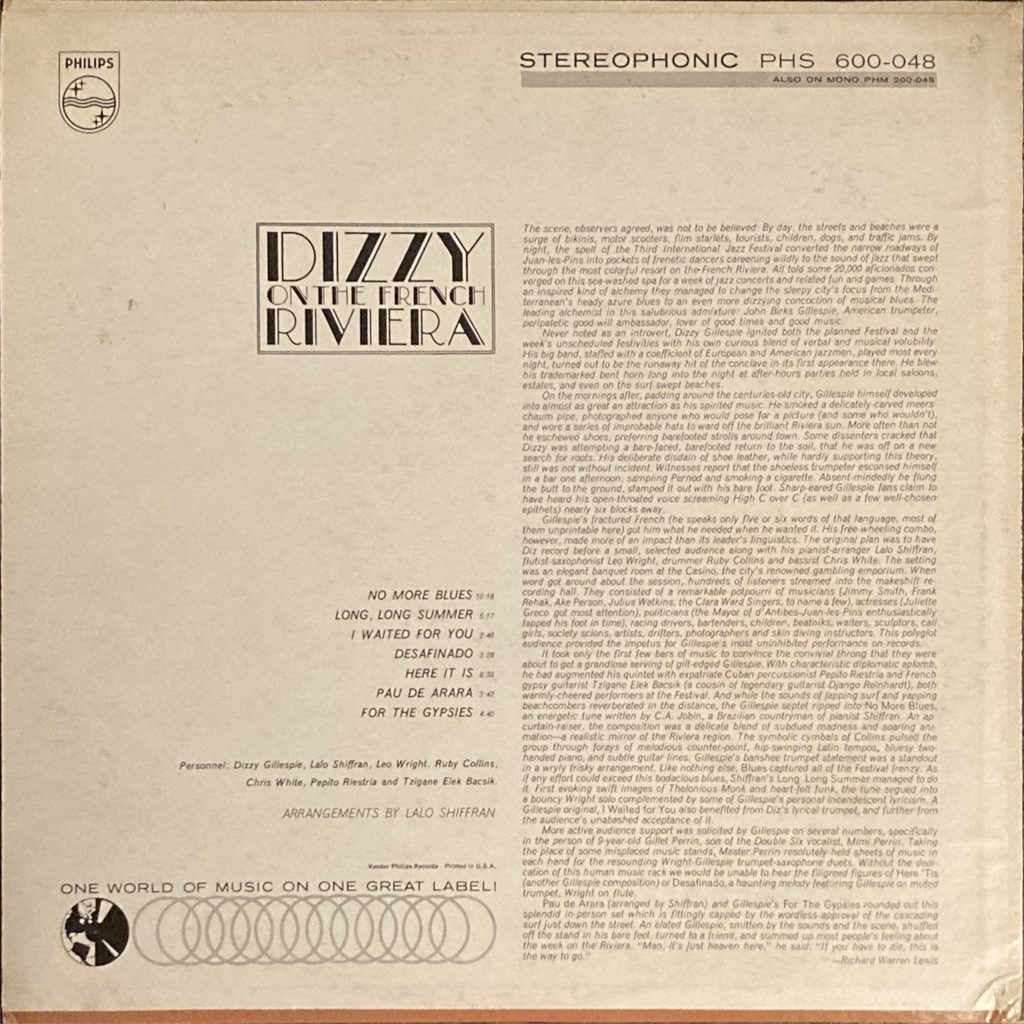
<裏ジャケ原文>
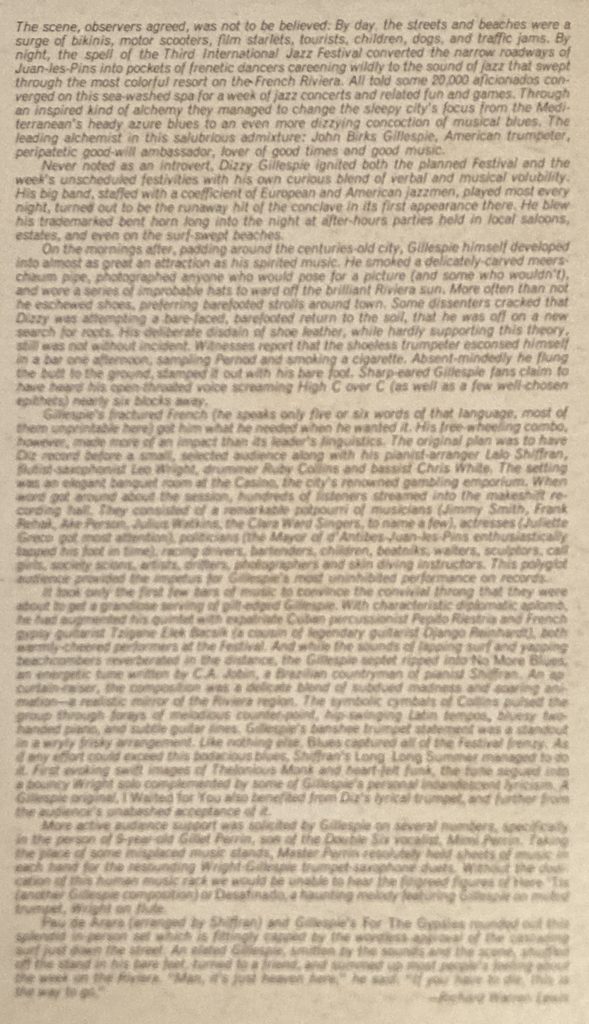
The scene, observers agreed, was not to be believed. By day, the streets and beaches were a surge of bikinis, motor scooters, film starlets, tourists, children, dogs, and traffic jams. By night, the spell of the Third International Jazz Festival converted the narrow roadways of Juan-les-Pins into pockets of frenetic dancers careening wildly to the sound of jazz that swept through the most colorful resort on the French Riviera. All told some 20,000 aficionados con- verged on this sea-washed spa for a week of jazz concerts and related fun and games. Through an inspired kind of alchemy they managed to change the sleepy city’s focus from the Medi- terranean’s heady azure blues to an even more dizzying concoction of musical blues. The leading alchemist in this salubrious admixture: John Birks Gillespie, American trumpeter, peripatetic good-will ambassador, lover of good times and good music.
Never noted as an introvert, Dizzy Gillespie ignited both the planned Festival and the week’s unscheduled festivities with his own curious blend of verbal and musical volubility. His big band, staffed with a coefficient of European and American jazzmen, played most every night, turned out to be the runaway hit of the conclave in its first appearance there. He blew his trademarked bent horn long into the night at after-hours parties held in local saloons, estates, and even on the surf-swept beaches.
On the mornings after, padding around the centuries-old city, Gillespie himself developed into almost as great an attraction as his spirited music. He smoked a delicately-carved meers- chaum pipe, photographed anyone who would pose for a picture (and some who wouldn’t), and wore a series of improbable hats to ward off the brilliant Riviera sun. More often than not he eschewed shoes, preferring barefooted strolls around town. Some dissenters cracked that Dizzy was attempting a bare-faced, barefooted return to the soil, that he was off on a new search for roots. His deliberate disdain of shoe leather, while hardly supporting this theory, still was not without incident. Witnesses report that the shoeless trumpeter esconsed himself in a bar one afternoon, sampling Pernod and smoking a cigarette. Absent-mindedly he flung the butt to the ground, stamped it out with his bare foot. Sharp-eared Gillespie fans claim to have heard his open-throated voice screaming High C over C (as well as a few well-chosen epithets) nearly six blocks away.
Gillespie’s fractured French (he speaks only five or six words of that language, most of them unprintable here) got him what he needed when he wanted it. His free-wheeling combo, however, made more of an impact than its leader’s linguistics. The original plan was to have Diz record before a small, selected audience along with his pianist-arranger Lalo Shiffran, flutist-saxophonist Leo Wright, drummer Ruby Collins and bassist Chris White. The setting was an elegant banquet room at the Casino, the city’s renowned gambling emporium. When word got around about the session, hundreds of listeners streamed into the makeshift re- cording hall. They consisted of a remarkable potpourri of musicians (Jimmy Smith, Frank Rehak, Ake Person, Julius Watkins, the Clara Ward Singers, to name a few), actresses (Juliette Greco got most attention), politicians (the Mayor of d’Antibes-Juan-les-Pins enthusiastically tapped his foot in time), racing drivers, bartenders, children, beatniks, waiters, sculptors, call girls, society scions, artists, drifters, photographers and skin diving instructors. This polyglot audience provided the impetus for Gillespie’s most uninhibited performance on records.
It took only the first few bars of music to convince the convivial throng that they were about to get a grandiose serving of gilt-edged Gillespie. With characteristic diplomatic aplomb, he had augmented his quintet with expatriate Cuban percussionist Pepito Riestria and French gypsy guitarist Tzigane Elek Bacsik (a cousin of legendary guitarist Django Reinhardt), both warmly-cheered performers at the Festival. And while the sounds of lapping surf and yapping beachcombers reverberated in the distance, the Gillespie septet ripped into No More Blues, an energetic tune written by C.A. Jobin, a Brazilian countryman of pianist Shiffran. An ap curtain-raiser, the composition was a delicate blend of subdued madness and soaring ani- mation-a realistic mirror of the Riviera region. The symbolic cymbals of Collins pulsed the group through forays of melodious counter-point, hip-swinging Latin tempos, bluesy two- handed piano, and subtle guitar lines. Gillespie’s banshee trumpet statement was a standout in a wryly frisky arrangement. Like nothing else, Blues captured all of the Festival frenzy. As if any effort could exceed this bodacious blues, Shiffran’s Long Long Summer managed to do it. First evoking swift images of Thelonious Monk and heart-felt funk, the tune segued into a bouncy Wright solo complemented by some of Gillespie’s personal incandescent lyricism. A Gillespie original, I Waited for You also benefited from Diz’s lyrical trumpet, and further from the audience’s unabashed acceptance of it.
More active audience support was solicited by Gillespie on several numbers, specifically in the person of 9-year-old Gillet Perrin, son of the Double Six vocalist, Mimi Perrin. Taking the place of some misplaced music stands, Master Perrin resolutely held sheets of music in each hand for the resounding Wright-Gillespie trumpet-saxophone duets. Without the dedi- cation of this human music rack we would be unable to hear the filigreed figures of Here ‘Tis (another Gillespie composition) or Desafinado, a haunting melody featuring Gillespie on muted trumpet, Wright on flute.
Pau de Arara (arranged by Shiffran) and Gillespie’s For The Gypsies rounded out this splendid in-person set which is fittingly capped by the wordless approval of the cascading surf just down the street. An elated Gillespie, smitten by the sounds and the scene, shuffled off the stand in his bare feet, turned to a friend, and summed up most people’s feeling about the week on the Riviera. “Man, it’s just heaven here,” he said. “If you have to die, this is the way to go.” -Richard Warren Lewis
<裏ジャケ和訳>
その光景は、目撃者たちが口を揃えて「信じがたい」と評するほどだった。日中の通りやビーチは、ビキニ姿の人々、スクーター、映画スターの卵たち、観光客、子供、犬、そして交通渋滞で溢れかえっていた。夜になると、「第3回国際ジャズ・フェスティバル」の魔法がかかり、ジュアン=レ=パンの狭い通りは、熱狂的に踊る人々で埋め尽くされた。フランス・リヴィエラ随一の華やかなリゾート地には、ジャズの調べが響き渡っていた。結局のところ、約2万人のジャズ愛好家たちがこの海辺のリゾート地に集結し、1週間にわたってジャズ・コンサートやそれに付随する娯楽の数々を楽しんだのである。まるで魔法のような錬金術によって、この静かな街の主役は、地中海のうっとりするような青い海から、それ以上にめくるめく「音楽のブルース(憂いと情熱)」へと塗り替えられた。この心地よい混成の立役者となった「錬金術師」こそ、アメリカのトランペット奏者であり、世界を飛び回る親善大使、そして楽しい時間と良質な音楽をこよなく愛するジョン・バークス・ガレスピー(ディジー・ガレスピー)だった。
決して内向的とは言えないディジー・ガレスピーは、言葉と音楽の両面において、彼特有の饒舌さで、予定されていたフェスティバルだけでなく、その週に行われた即興的な祝祭の数々にも火をつけた。ヨーロッパとアメリカのジャズ・ミュージシャンを擁する彼のビッグバンドは、ほぼ毎晩のように演奏を披露し、このイベントにおける最大の目玉となった。彼は、トレードマークである「曲がったトランペット」を手に、深夜まで、地元の酒場や邸宅、さらには波打ち際のビーチで開かれるアフターパーティーで演奏を続けた。
翌朝、何世紀もの歴史を持つこの街を歩き回るガレスピー自身の姿は、彼の情熱的な音楽に劣らぬほどの注目を集めていた。彼は精巧に彫刻されたメシャム(海泡石)のパイプをくゆらせ、カメラを向ければ応じてくれる人(あるいは、そうでない人までも)を写真に収め、リヴィエラの強烈な日差しを避けるために、一風変わった帽子を次々と披露した。それだけでなく、彼は靴を履くことを好まず、裸足で街を散策することが多かった。これを見て、「ディジーは裸足で大地に回帰しようとしているのではないか」「自身のルーツを新たに探し求めているのではないか」と冗談めかして言う者もいた。彼が意図的に靴を履かなかったことは、この説を裏付ける根拠にはならないにせよ、それなりに波乱を伴う出来事ではあった。目撃者によると、ある午後のこと、靴を履いていないこのトランペット奏者はバーに陣取り、ペルノーを味わいながらタバコをくゆらせていたという。彼はうっかりタバコの吸い殻を地面に放り投げると、それを素足で踏み消した。耳の鋭いガレスピーのファンによれば、その際、彼が喉の奥から絞り出した「ハイC(高いドの音)」の叫び声(と、ここでは書けないような際どい罵り言葉の数々)が、6ブロック先まで響き渡ったという。
ガレスピーのたどたどしいフランス語(彼が知っているフランス語は5、6語程度で、そのほとんどはここには書けないような代物だ)は、彼が必要なものを手に入れる際には十分役に立った。しかし、それ以上に強烈なインパクトを放っていたのは、彼の率いる自由奔放なコンボの演奏だった。当初の計画では、ガレスピーがピアニスト兼アレンジャーのラロ・シフリン、フルート・サックス奏者のレオ・ライト、ドラマーのルビー・コリンズ、ベーシストのクリス・ホワイトを従え、少数の選ばれた観客の前でレコーディングを行う予定だった。会場となったのは、街で有名なギャンブル施設「カジノ」にある優雅な宴会場である。ところが、このセッションの噂が広まると、何百人もの聴衆が即席のレコーディング会場へと押し寄せた。その顔ぶれは実に多彩で、ミュージシャン(ジミー・スミス、フランク・リハック、オーケ・ペーション、ジュリアス・ワトキンス、クララ・ウォード・シンガーズなど)、女優(特にジュリエット・グレコが注目を集めていた)、政治家(アンティーブ=ジュアン・レ・パンの市長が、熱心に足でリズムをとっていた)、レーシングドライバー、バーテンダー、子供たち、ビートニク、ウェイター、彫刻家、コールガール、上流階級の若者たち、アーティスト、流れ者、写真家、さらにはスキューバダイビングのインストラクターまでが入り混じっていた。こうした多種多様な人々が集う聴衆の熱気が、ガレスピーのレコーディング史上、最も開放的で奔放な演奏を引き出す原動力となったのである。
演奏が始まってわずか数小節で、陽気な観衆は、これから「最高級のギレスピー」を堪能できるのだと確信した。ギレスピーは、彼らしい巧みな采配で、自身のクインテットにキューバ出身のパーカッショニスト、ペピート・リエストリアと、フランスのジプシー・ギタリストであるチガーヌ・エレク・バチク(伝説的なギタリスト、ジャンゴ・ラインハルトの従兄弟)を加え、セプテット(7人編成)へと拡大した。二人とも、このフェスティバルで観客から熱烈な喝采を浴びていたミュージシャンたちである。波打ち際の音や、浜辺で騒ぐ人々のざわめきが遠くに響く中、ギレスピー率いる7人編成のバンドは『ノー・モア・ブルース(No More Blues)』を力強く演奏し始めた。この曲は、ピアニストのシフランと同郷であるブラジル人、C.A.ジョビンが作曲したものだ。オープニングにふさわしいこの楽曲は、抑制された狂気と高揚する躍動感が絶妙にブレンドされており、まさにリヴィエラ地方の空気をそのまま映し出しているかのようだった。コリンズが叩くシンバルがグループの推進力となり、メロディアスな対位法、腰を揺らすようなラテン・テンポ、ブルージーなピアノ、そして繊細なギターの旋律が次々と繰り出された。遊び心にあふれた軽快なアレンジの中で、ギレスピーが奏でる、まるで叫びのようなトランペットのフレーズがひときわ際立っていた。この『ブルース』という曲ほど、フェスティバルの熱狂を完璧に捉えたものはなかった。しかし、この大胆で素晴らしいブルースをさらに上回るものがあった。シフラン作曲の『ロング・ロング・サマー(Long Long Summer)』である。セロニアス・モンクを彷彿とさせる瞬間から、心に響くファンキーな響きへと展開し、そこからライトによる弾むようなソロへとつながる。さらに、ギレスピー自身の燃え上がるような叙情的なトランペットがそれに花を添えた。ギレスピーのオリジナル曲『アイ・ウェイテッド・フォー・ユー(I Waited for You)』でも、ディジー(ギレスピーの愛称)の叙情的なトランペットが冴え渡り、観客もそれを心から、素直に受け入れていた。
ギレスピーはいくつかの曲で、観客からより積極的な協力を求めた。その一人が、ボーカル・グループ「ダブル・シックス」のメンバーであるミミ・ペランの息子、9歳のジレ・ペラン君だった。本来あるべき譜面台が見当たらなかったため、ペラン君は両手に楽譜をしっかりと持ち、ライト(サックス)とギレスピー(トランペット)による力強いデュエットの間、ずっとそれを支え続けたのである。この「人間譜面台」の献身的な働きがなければ、私たちは『ヒア・ティズ』(これもガレスピーの作曲)の繊細で入り組んだ旋律や、『デザフィナード』を耳にすることはできなかっただろう。後者は、ガレスピーがミュートをかけたトランペットを吹き、ライトがフルートを奏でる、心に深く残るメロディが印象的な一曲だ。
シフランが編曲した『パウ・デ・アララ』、そしてガレスピー自身の『フォー・ザ・ジプシーズ』が、この素晴らしいライブ・セットを締めくくった。すぐそばの海岸に打ち寄せる波の音が、まるで無言の賛辞を送っているかのようだった。その音と光景にすっかり魅了され、上機嫌になったガレスピーは、裸足のままステージを降りると、友人にこう語りかけた。リヴィエラで過ごしたこの一週間に対する、多くの人々の思いを代弁するような言葉だった。「いやあ、ここはまさに天国だよ。もし死ぬのなら、こんな場所で死にたいね」
リチャード・ウォーレン・ルイス
※訳文の制作にはGoogleドライブとGoogle翻訳のお世話になりました。
コメント