



Label: CONTEMPORARY RECORDS
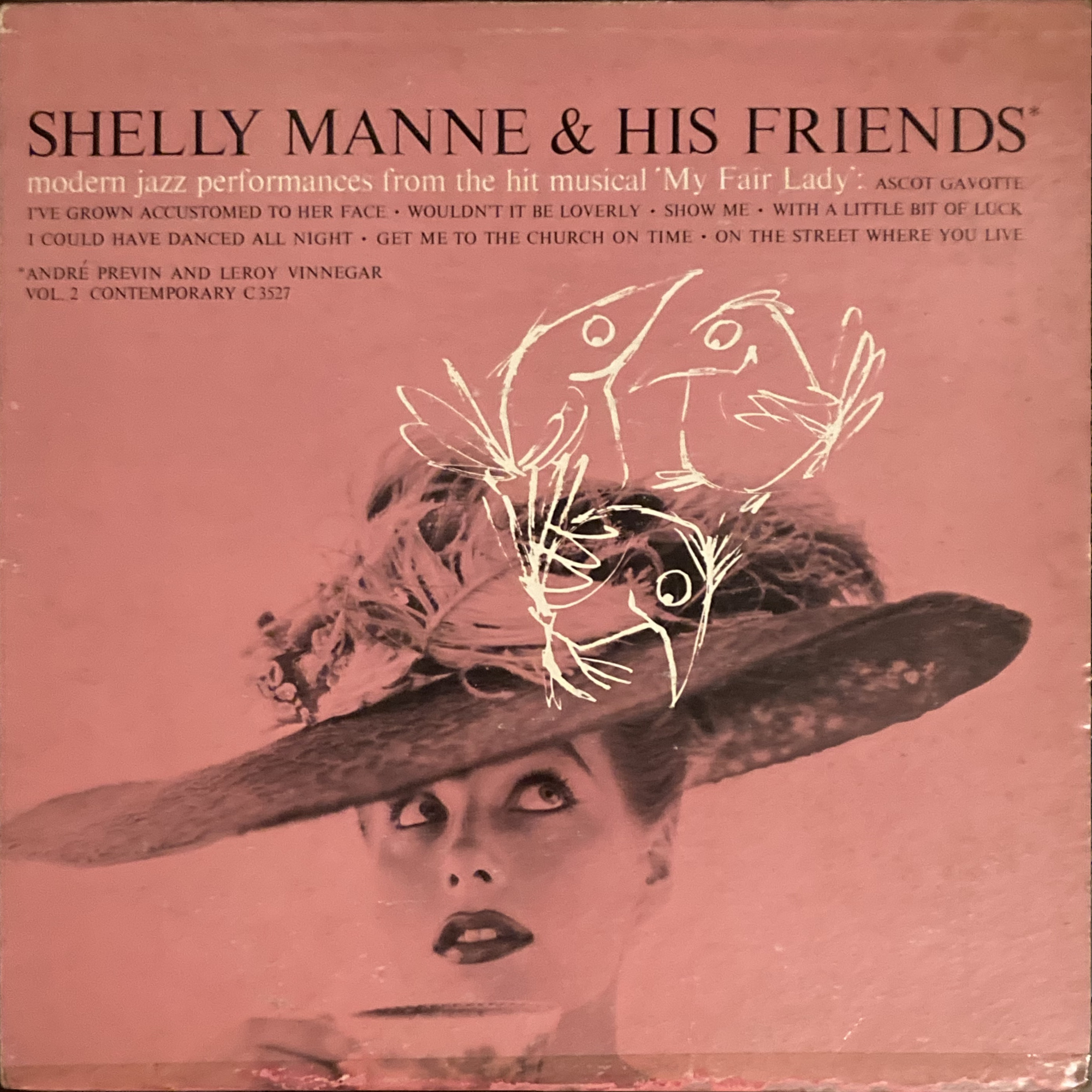
No.:C-3527
Title: SHELLY MANNE AND HIS FRIENDS, VOL.2
Musician: SHELLY MANNE (3)
Recorded: 1956/8/17
Monaural
Cover address: 8481 MELROSE PLACE, LOS ANGELS 46, CALIFORNIA
Coating
裏面2色刷り
Groove Guard
Label Side-1
Yellow Background
Black Letter
Address: None
Deep Groove
Dead Wax Info: LKL-12-93-D3, H
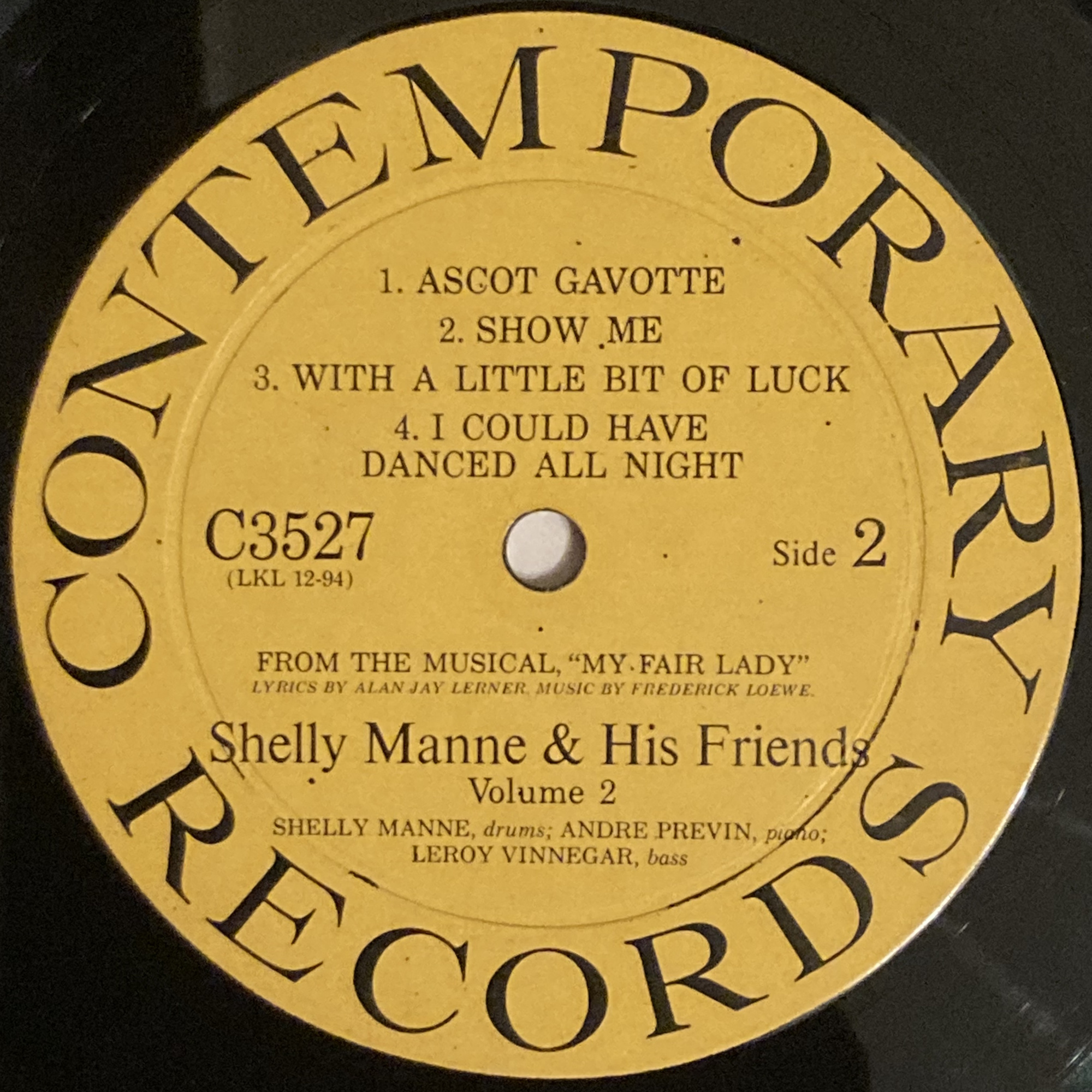
Label Side-2
Yellow Background
Black Letter
Address: None
Deep Groove
Dead Wax Info: LKL-12-94-D3, H
Personnel-
Drums: Shelly Manne
Bass: Leroy Vinnegar
Piano: Andre Previn
Tracks-
Side-1
1) Get Me to the Church on Time 4’21”
2) On the Street Where You Live 5’37”
3) I’ve Grown Accustomed to Her Face 3’21”
4) Wouldn’t it be Loverly 5’33”
Side-2
1) Ascot Gavotte 4’17”
2) Show Me 3’40”
3) With a Little Bit of Luck 6’01”
4) I Could Have Danced All Night 3’00”
このレコードは通称マイ・フェア・レディと呼ばれていますが、初期盤のジャケット表面には
MY FAIR LADYの文字は入っていません。
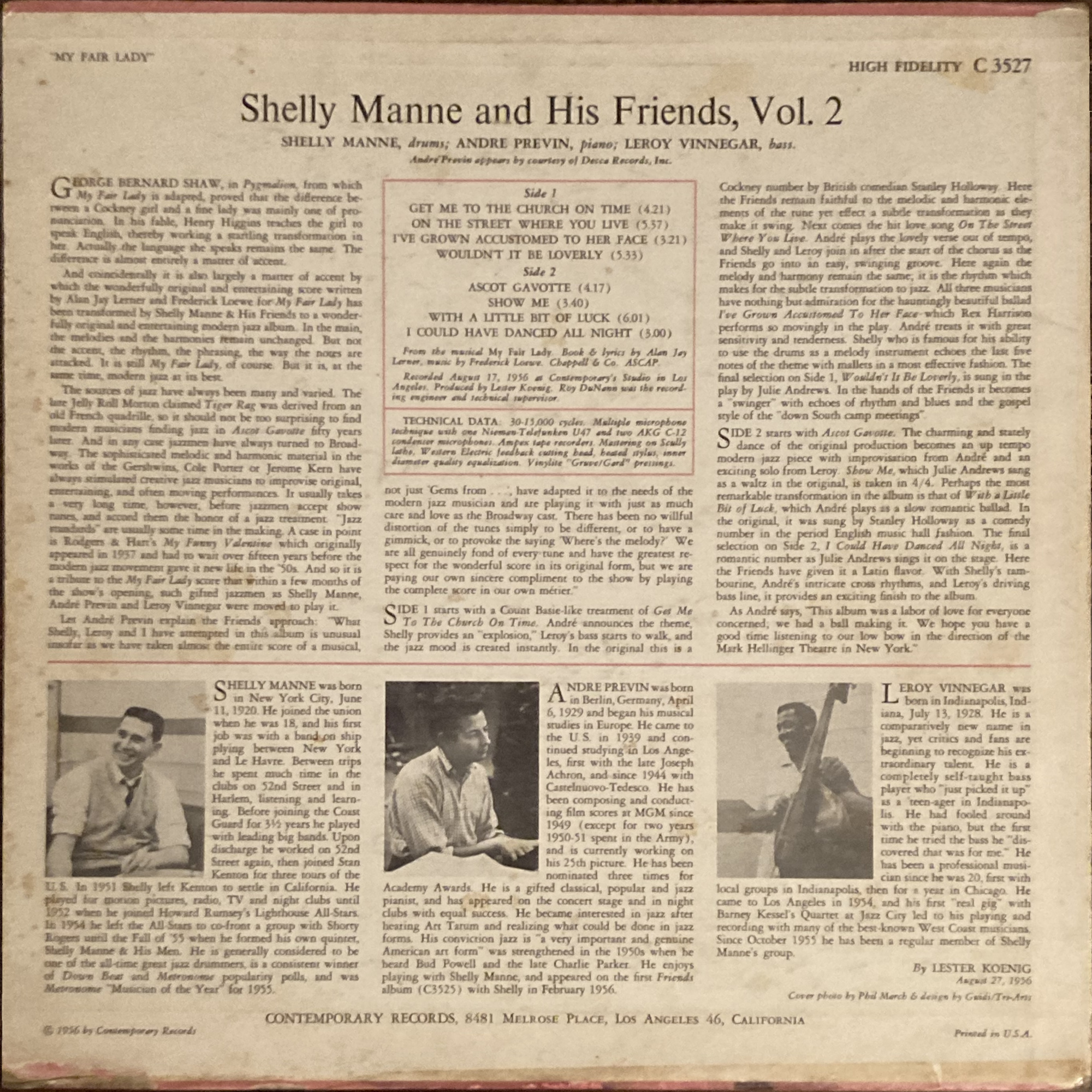
<裏ジャケ原文>
GEORGE BERNARD SHAW, in Pygmalion, from which My Fair Lady is adapted, proved that the difference be- tween a Cockney girl and a fine lady was mainly one of pro- nunciation. In his fable, Henry Higgins teaches the girl to speak English, thereby working a startling transformation in her. Actually the language she speaks remains the same. The difference is almost entirely a matter of accent.
And coincidentally it is also largely a matter of accent by which the wonderfully original and entertaining score written by Alan Jay Lerner and Frederick Loewe for My Fair Lady has been transformed by Shelly Manne & His Friends to a wonder- fully original and entertaining modern jazz album. In the main, the melodies and the harmonies remain unchanged. But not the accent, the rhythm, the phrasing, the way the notes are attacked. It is still My Fair Lady, of course. But it is, at the same time, modern jazz at its best.
The sources of jazz have always been many and varied. The late Jelly Roll Morton claimed Tiger Rag was derived from an old French quadrille, so it should not be too surprising to find modern musicians finding jazz in Ascot Gavotte fifty years later. And in any case jazzmen have always turned to Broad- way. The sophisticated melodic and harmonic material in the works of the Gershwins, Cole Porter or Jerome Kern have always stimulated creative jazz musicians to improvise original, entertaining, and often moving performances. It usually takes a very long time, however, before jazzmen accept show tunes, and accord them the honor of a jazz treatment. “Jazz standards” are usually some time in the making. A case in point is Rodgers & Hart’s My Funny Valentine which originally appeared in 1937 and had to wait over fifteen years before the modern jazz movement gave it new life in the ’50s. And so it is a tribute to the My Fair Lady score that within a few months of the show’s opening, such gifted jazzmen as Shelly Manne, André Previn and Leroy Vinnegar were moved to play it.
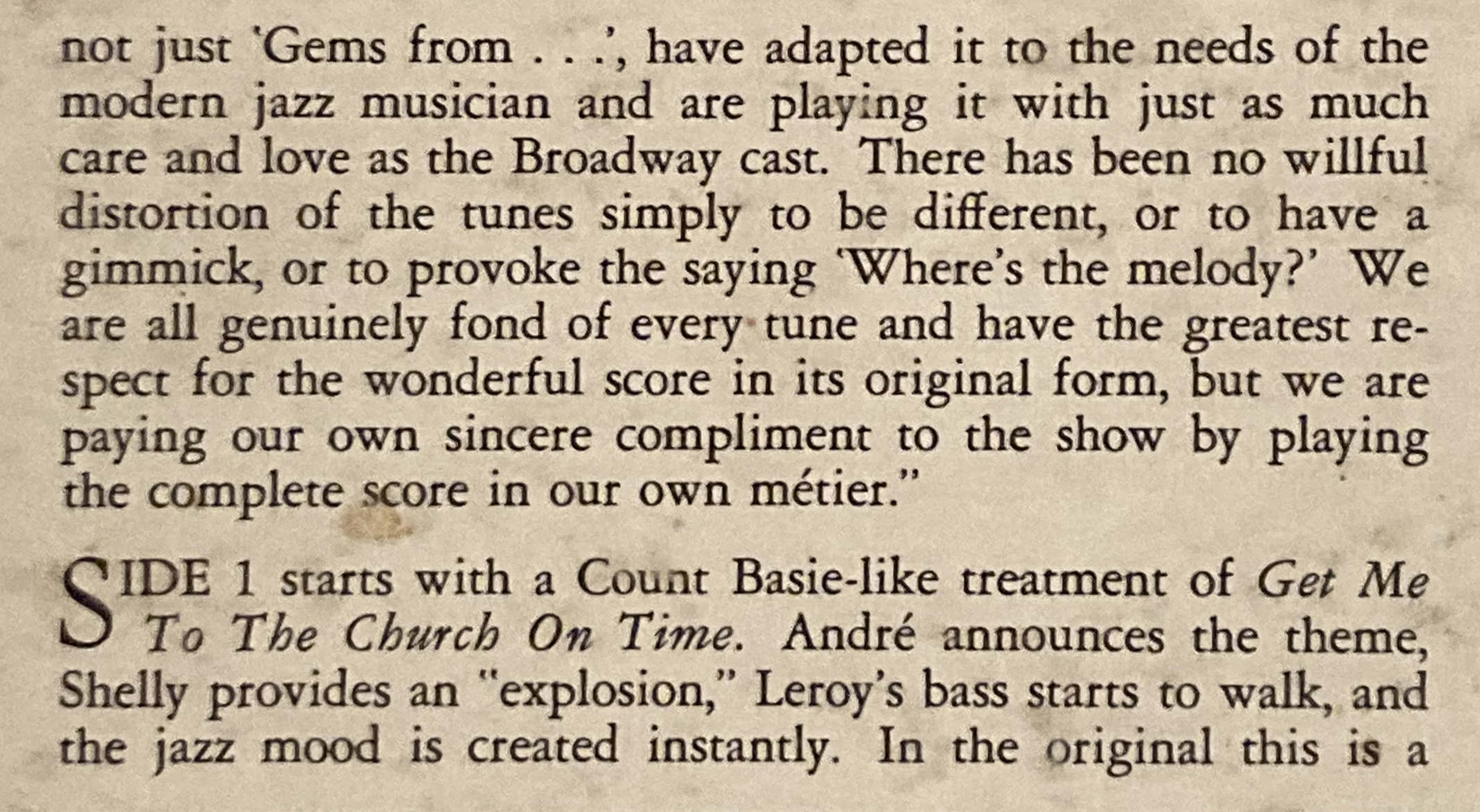
Let André Previn explain the Friends’ approach: “What Shelly, Leroy and I have attempted in this album is unusual insofar as we have taken almost the entire score of a musical, not just ‘Gems from …, have adapted it to the needs of the modern jazz musician and are playing it with just as much care and love as the Broadway cast. There has been no willful distortion of the tunes simply to be different, or to have a gimmick, or to provoke the saying ‘Where’s the melody?’ We are all genuinely fond of every tune and have the greatest re- spect for the wonderful score in its original form, but we are paying our own sincere compliment to the show by playing the complete score in our own métier.”
SIDE 1 starts with a Count Basie-like treatment of Get Me To The Church On Time. André announces the theme, Shelly provides an “explosion,” Leroy’s bass starts to walk, and the jazz mood is created instantly. In the original this is a Cockney number by British comedian Stanley Holloway. Here the Friends remain faithful to the melodic and harmonic ele- ments of the tune yet effect a subtle transformation as they make it swing. Next comes the hit love song On The Street Where You Live. André plays the lovely verse out of tempo, and Shelly and Leroy join in after the start of the chorus as the Friends go into an easy, swinging groove. Here again the melody and harmony remain the same; it is the rhythm which makes for the subtle transformation to jazz. All three musicians have nothing but admiration for the hauntingly beautiful ballad I’ve Grown Accustomed To Her Face- which Rex Harrison performs so movingly in the play. André treats it with great sensitivity and tenderness. Shelly who is famous for his ability to use the drums as a melody instrument echoes the last five notes of the theme with mallets in a most effective fashion. The final selection on Side 1, Wouldn’t It Be Loverly, is sung in the play by Julie Andrews. In the hands of the Friends it becomes a “swinger” with echoes of rhythm and blues and the gospel style of the “down South camp meetings”.
SIDE 2 starts with Ascot Gavotte. The charming and stately dance of the original production becomes an up tempo modern jazz piece with improvisation from André and an exciting solo from Leroy. Show Me, which Julie Andrews sang as a waltz in the original, is taken in 4/4. Perhaps the most remarkable transformation in the album is that of With a Little Bit of Luck, which André plays as a slow romantic ballad. In the original, it was sung by Stanley Holloway as a comedy number in the period English music hall fashion. The final selection on Side 2, I Could Have Danced All Night, is a romantic number as Julie Andrews sings it on the stage. Here the Friends have given it a Latin flavor. With Shelly’s tam- bourine, André’s intricate cross rhythms, and Leroy’s driving bass line, it provides an exciting finish to the album.
As André says, “This album was a labor of love for everyone concerned; we had a ball making it. We hope you have a good time listening to our low bow in the direction of the Mark Hellinger Theatre in New York.”
SHELLY MANNE was born in New York City, June
11, 1920. He joined the union when he was 18, and his first job was with a band on ship plying between New York and Le Havre. Between trips he spent much time in the clubs on 52nd Street and in Harlem, listening and learn- ing. Before joining the Coast Guard for 311⁄2 years he played with leading big bands. Upon discharge he worked on 52nd Street again, then joined Stan Kenton for three tours of the
U.S. In 1951 Shelly left Kenton to settle in California. He played for motion pictures, radio, TV and night clubs until 1952 when he joined Howard Rumsey’s Lighthouse All-Stars. In 1954 he left the All-Stars to co-front a group with Shorty Rogers until the Fall of ’55 when he formed his own quintet, Shelly Manne & His Men. He is generally considered to be one of the all-time great jazz drummers, is a consistent winner of Down Beat and Metronome popularity polls, and was Metronome “Musician of the Year” for 1955.
ANDRE PREVIN was born in Berlin, Germany, April 6, 1929 and began his musical studies in Europe. He came to the U.S. in 1939 and con- tinued studying in Los Ange- les, first with the late Joseph Achron, and since 1944 with Castelnuovo-Tedesco. He has been composing and conduct- ing film scores at MGM since 1949 (except for two years 1950-51 spent in the Army),” and is currently working on his 25th picture. He has been nominated three times for
Academy Awards. He is a gifted classical, popular and jazz pianist, and has appeared on the concert stage and in night clubs with equal success. He became interested in jazz after hearing Art Tatum and realizing what could be done in jazz forms. His conviction jazz is “a very important and genuine American art form” was strengthened in the 1950s when he heard Bud Powell and the late Charlie Parker. He enjoys playing with Shelly Manne, and appeared on the first Friends album (C3525) with Shelly in February 1956.
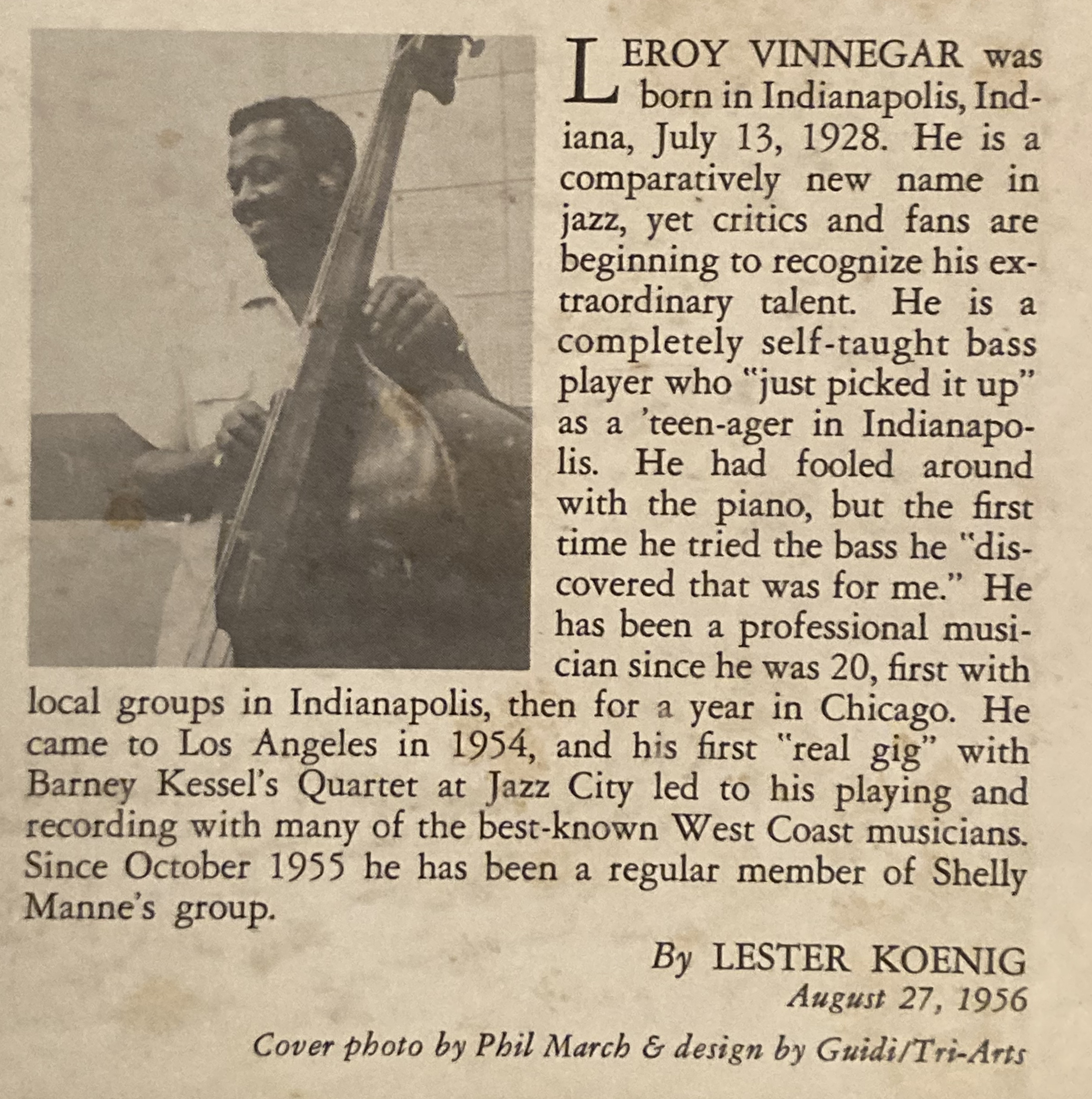
LEROY VINNEGAR was born in Indianapolis, Ind- iana, July 13, 1928. He is a comparatively new name in jazz, yet critics and fans are beginning to recognize his ex- traordinary talent. He is a completely self-taught bass player who “just picked it up” as a ‘teen-ager in Indianapo- lis. He had fooled around with the piano, but the first time he tried the bass he “dis- covered that was for me.” He has been a professional musi- cian since he was 20, first with
local groups in Indianapolis, then for a year in Chicago. He came to Los Angeles in 1954, and his first “real gig” with Barney Kessel’s Quartet at Jazz City led to his playing and recording with many of the best-known West Coast musicians. Since October 1955 he has been a regular member of Shelly Manne’s group.
By LESTER KOENIG August 27, 1956
Cover photo by Phil March & design by Guidi/T
<裏ジャケ和訳>
『マイ・フェア・レディ』の原作である『ピグマリオン』の中で、ジョージ・バーナード・ショーは、コックニー(ロンドンの下町)の娘と上流階級の淑女との違いは、主に発音にあることを証明しました。その物語では、ヘンリー・ヒギンズが娘に英語を教え込むことで、彼女を驚くべき姿へと変貌させます。実際には、彼女が話す言語そのものは変わっていません。その違いは、ほぼ完全に「アクセント(訛りや話し方の調子)」の問題なのです。
そして偶然にも、アラン・ジェイ・ラーナーとフレデリック・ロウが『マイ・フェア・レディ』のために書き上げた、独創的で楽しい楽曲の数々が、シェリー・マン&ヒズ・フレンズの手によって、同じく独創的で楽しいモダン・ジャズ・アルバムへと変貌を遂げた際にも、やはり「アクセント」が大きな役割を果たしています。基本となるメロディやハーモニーは変わっていません。しかし、アクセント、リズム、フレージング、そして音の出し方(アタック)は異なります。もちろん、それは依然として『マイ・フェア・レディ』の音楽です。しかし同時に、最高水準のモダン・ジャズでもあるのです。
ジャズの源泉は常に多岐にわたってきました。故ジェリー・ロール・モートンは『タイガー・ラグ』が古いフランスのカドリーユ(舞曲)に由来すると主張していましたから、50年後に現代のミュージシャンたちが『アスコット・ガヴォット』の中にジャズを見出したとしても、それほど驚くべきことではないでしょう。いずれにせよ、ジャズ・ミュージシャンたちは常にブロードウェイに目を向けてきました。ガーシュウィン兄弟、コール・ポーター、あるいはジェローム・カーンといった作曲家たちの作品に見られる洗練されたメロディやハーモニーは、創造性豊かなジャズ・ミュージシャンたちを刺激し、独創的で楽しく、時に感動的な即興演奏を生み出してきました。とはいえ、ジャズ・ミュージシャンがショー・チューンを受け入れ、ジャズとして演奏するという「栄誉」を与えるまでには、通常かなりの時間を要するものです。「ジャズ・スタンダード」というものは、時間をかけて形成されていくものだからです。好例として挙げられるのが、ロジャース&ハートの『マイ・ファニー・ヴァレンタイン』です。1937年に発表されたこの曲は、1950年代にモダン・ジャズのムーブメントによって新たな命を吹き込まれるまで、15年以上もの歳月を待たねばなりませんでした。そう考えると、ショーの開幕からわずか数ヶ月のうちに、シェリー・マン、アンドレ・プレヴィン、リロイ・ヴィネガーといった才能あるジャズ・ミュージシャンたちがこの曲を演奏しようという気になったことは、『マイ・フェア・レディ』の楽曲がいかに優れていたかを物語る証と言えるでしょう。
「ザ・フレンズ」のアプローチについて、アンドレ・プレヴィンに語ってもらいましょう。「このアルバムでシェリー、リロイ、そして私が試みたことは、ある意味で異例なものです。単なる『名曲集(Gems from…)』ではなく、ミュージカルのスコア(楽曲)のほぼ全体を取り上げ、現代のジャズ・ミュージシャンのスタイルに合わせてアレンジし、ブロードウェイのキャストと同じくらいの愛情と丁寧さをもって演奏しているからです。単に他と違うことをしたり、ギミック(仕掛け)を狙ったり、『メロディはどこにあるんだ?』と言わせるような意図的な改変は一切行っていません。私たちは皆、どの曲も心から愛しており、オリジナルの素晴らしいスコアに最大限の敬意を払っています。しかし、自分たちの得意とするスタイルで全曲を演奏することによって、この作品への心からの賛辞を捧げているのです」
SIDE 1は、カウント・ベイシー風のアレンジが施された「Get Me To The Church On Time(時間通りに教会へ連れてって)」で幕を開けます。アンドレがテーマを提示し、シェリーが「爆発」のようなドラミングを繰り出し、リロイのベースがウォーキング・ベースを刻み始めると、瞬く間にジャズのムードが醸し出されます。オリジナルでは、イギリスのコメディアン、スタンリー・ホロウェイがコックニー訛りで歌うナンバーですが、ここでは「ザ・フレンズ」が原曲のメロディやハーモニーの要素を忠実に守りつつ、スウィングさせることで絶妙な変化を生み出しています。続いて、ヒットしたラブソング「On The Street Where You Live(君の住む街角で)」が演奏されます。アンドレが美しいヴァース(導入部)をテンポにとらわれずに弾き、コーラスに入るとシェリーとリロイが加わって、ゆったりとしたスウィング・グルーヴへと展開します。ここでもメロディとハーモニーはそのままですが、リズムによってジャズらしい絶妙な変化がもたらされています。3人のミュージシャン全員が、心に残る美しいバラード「I’ve Grown Accustomed To Her Face(彼女の顔に慣れ親しんで)」に深い感銘を受けています。この曲は劇中でレックス・ハリソンが感動的に歌うものですが、アンドレは極めて繊細かつ優しく演奏しています。ドラムをメロディ楽器のように操ることで知られるシェリーは、マレットを使ってテーマの最後の5音を効果的に反復させています。SIDE 1の最後を飾る「Wouldn’t It Be Loverly(素敵じゃない?)」は、劇中ではジュリー・アンドリュースが歌う曲です。「ザ・フレンズ」の手にかかると、この曲はリズム&ブルースや、アメリカ南部で行われる「キャンプ・ミーティング(野外集会)」のゴスペル・スタイルの響きを帯びた、スウィング感あふれるナンバーへと変貌します。
SIDE 2は「Ascot Gavotte(アスコット・ガヴォット)」で始まります。オリジナル版の優雅で堂々としたダンス曲は、ここではアップテンポなモダン・ジャズ・ナンバーへと変貌を遂げ、アンドレの即興演奏やリロイのエキサイティングなソロがフィーチャーされています。ジュリー・アンドリュースがオリジナル版でワルツとして歌った「Show Me」は、ここでは4/4拍子で演奏されています。このアルバムで最も驚くべきアレンジと言えるのが「With a Little Bit of Luck」でしょう。アンドレはこれを、ロマンチックなスロー・バラードとして演奏しています。オリジナル版では、スタンリー・ホロウェイが往年の英国ミュージック・ホールのスタイルでコミカルに歌っていた曲です。サイド2の最後を飾る「I Could Have Danced All Night」は、舞台上でジュリー・アンドリュースが歌うロマンチックなナンバーですが、ここでは「フレンズ」がラテン・テイストを加えています。シェリーのタンバリン、アンドレの複雑なクロス・リズム、そしてリロイの推進力あふれるベース・ラインが相まって、アルバムをエキサイティングに締めくくっています。
アンドレはこう語っています。「このアルバムは、関わった全員が愛情を込めて作り上げた作品であり、制作は本当に楽しいものでした。ニューヨークのマーク・ヘリンジャー劇場に向けて捧げるこの演奏を、皆様にも楽しんでいただければ幸いです。」
シェリー・マンは1920年6月11日、ニューヨーク市で生まれました。18歳でミュージシャン組合に加入し、最初の仕事はニューヨークとル・アーヴル(フランス)を結ぶ航路の船内バンドでの演奏でした。航海の合間には、52丁目やハーレムのクラブに通い、演奏を聴いて多くのことを学びました。沿岸警備隊に3年半ほど所属する前には、一流のビッグ・バンドで演奏していました。除隊後は再び52丁目で活動し、その後スタン・ケントンのバンドに加わって全米ツアーを3回行いました。1951年、シェリーはケントンのバンドを離れてカリフォルニアに定住しました。1952年にハワード・ラムジーの「ライトハウス・オール・スターズ」に加わるまでは、映画、ラジオ、テレビ、ナイトクラブなどで演奏活動を行っていました。1954年にはオール・スターズを離れ、ショーティ・ロジャースと共同でグループを率いましたが、1955年の秋には自身のクインテットである「シェリー・マン&ヒズ・メン」を結成しました。彼は史上最高のジャズ・ドラマーの一人と広く認められており、『ダウン・ビート』誌や『メトロノーム』誌の人気投票で常に上位に選出され、1955年には『メトロノーム』誌の「ミュージシャン・オブ・ザ・イヤー」にも選ばれています。
アンドレ・プレヴィンは1929年4月6日、ドイツのベルリンで生まれ、ヨーロッパで音楽の勉強を始めました。1939年に渡米し、ロサンゼルスで研鑽を続けました。当初は故ジョセフ・アクロンに師事し、1944年からはカステルヌオーヴォ=テデスコに師事しました。彼は1949年以来(1950年から51年にかけての兵役期間を除き)、MGMで映画音楽の作曲と指揮を手がけており、現在は25作目の映画に取り組んでいるところだ。これまでにアカデミー賞に3回ノミネートされている。クラシック、ポピュラー、ジャズのいずれの分野でも才能あるピアニストであり、コンサートの舞台やナイトクラブのステージで同様に成功を収めてきた。アート・テイタムの演奏を聴き、ジャズという形式の中で何が可能かを知ったことで、ジャズに関心を持つようになった。バド・パウエルや故チャーリー・パーカーの演奏に触れた1950年代には、ジャズこそが「極めて重要かつ真にアメリカ的な芸術形式である」という確信をさらに深めた。シェリー・マンとの共演を好んでおり、1956年2月にはシェリーと共にアルバム『Friends』(C3525)に参加している。
リロイ・ヴィネガーは1928年7月13日、インディアナ州インディアナポリスで生まれた。ジャズ界では比較的新しい名前だが、批評家やファンの間ではその並外れた才能が認められ始めている。彼は完全な独学のベーシストであり、インディアナポリスで10代の頃に「何となく手にとった」のがきっかけだった。それ以前にはピアノを少しかじったこともあったが、初めてベースを弾いたとき、「これこそ自分に合っている」と直感したという。20歳でプロのミュージシャンとなり、最初はインディアナポリスの地元グループで、その後シカゴで1年間活動した。1954年にロサンゼルスへ移り、「ジャズ・シティ」でのバーニー・ケッセル・カルテットとの共演が本格的な活動の足掛かりとなって、西海岸の著名なミュージシャンたちと数多くの演奏やレコーディングを行うようになった。1955年10月からは、シェリー・マンのグループのレギュラーメンバーを務めている。
レスター・ケーニグ著 1956年8月27日
カバー写真:フィル・マーチ デザイン:グイディ/T
※訳文の制作にはGoogleドライブとGoogle翻訳のお世話になりました。

コメント