Label: VERVE
No.: V/V6 4053
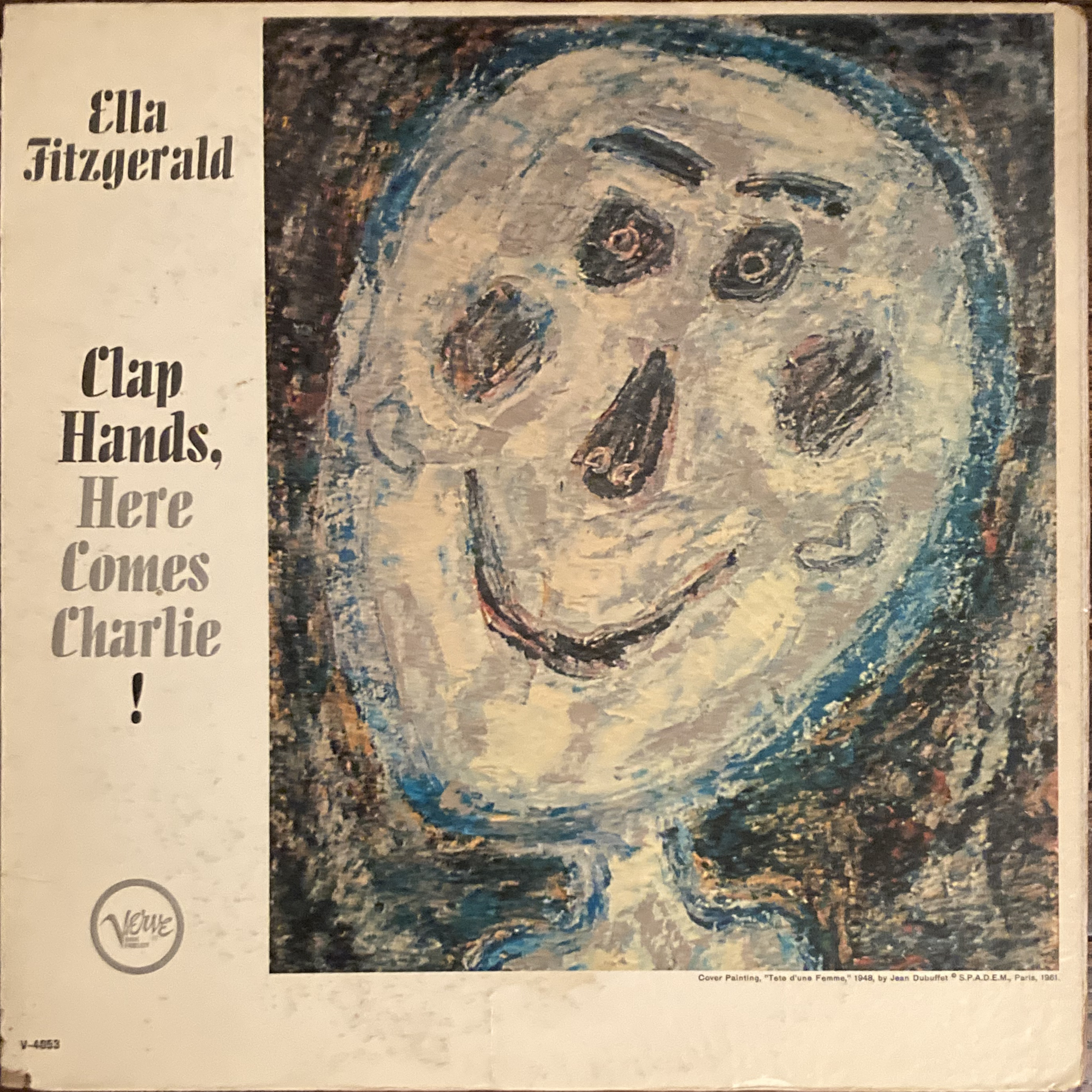
Title: CLAP HANDS, HERE COMES CHARLIE!
Musician: ELLA FITZGERALD
Recorded: 1961/6/22
Monaural
Cover address: None
Coating無し
Groove Guard
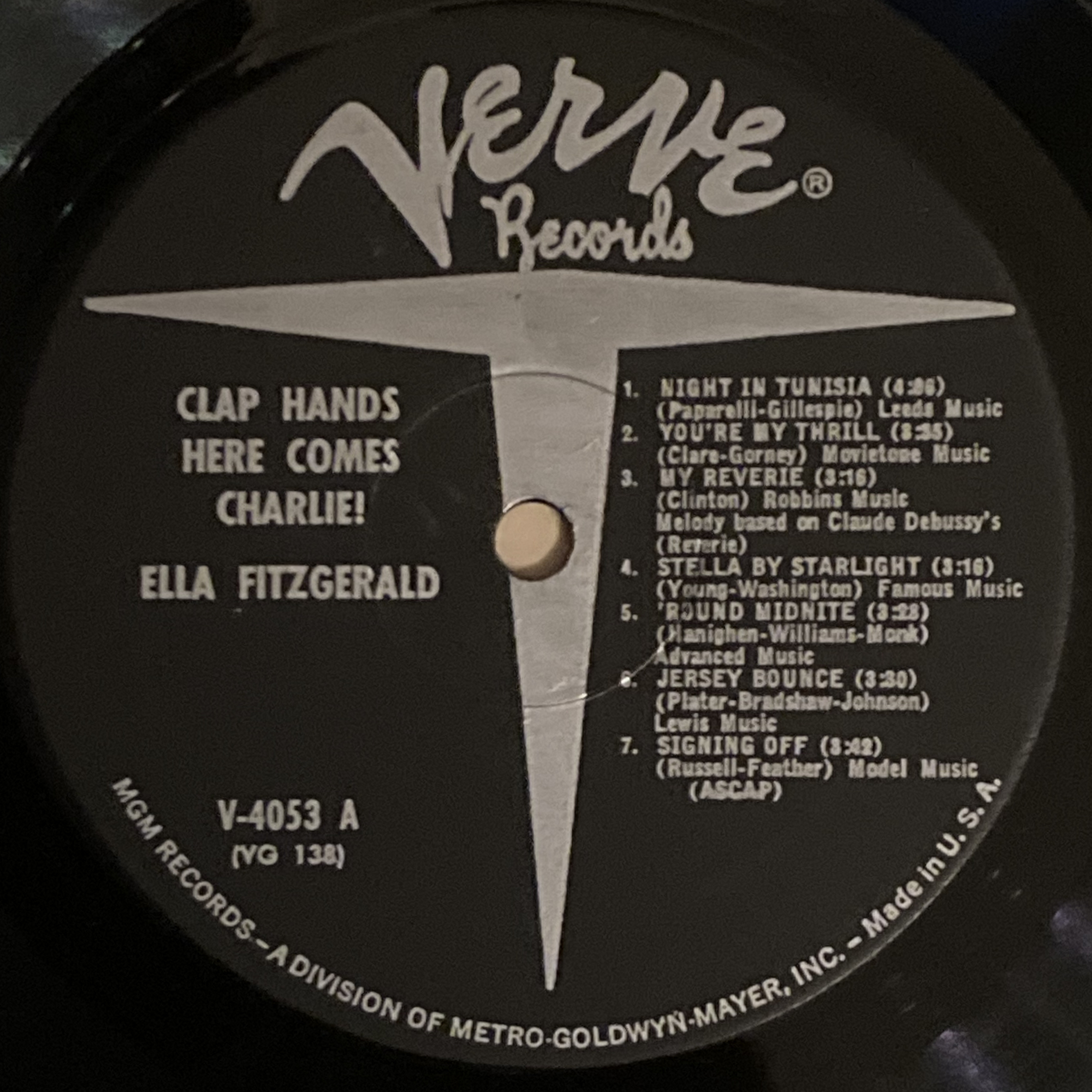
Label Side-A
Black Background
Silver Letter with “T” logo
Address:
Deep Groove無し
Dead Wax Info: 61-V6-138-1, V4053A
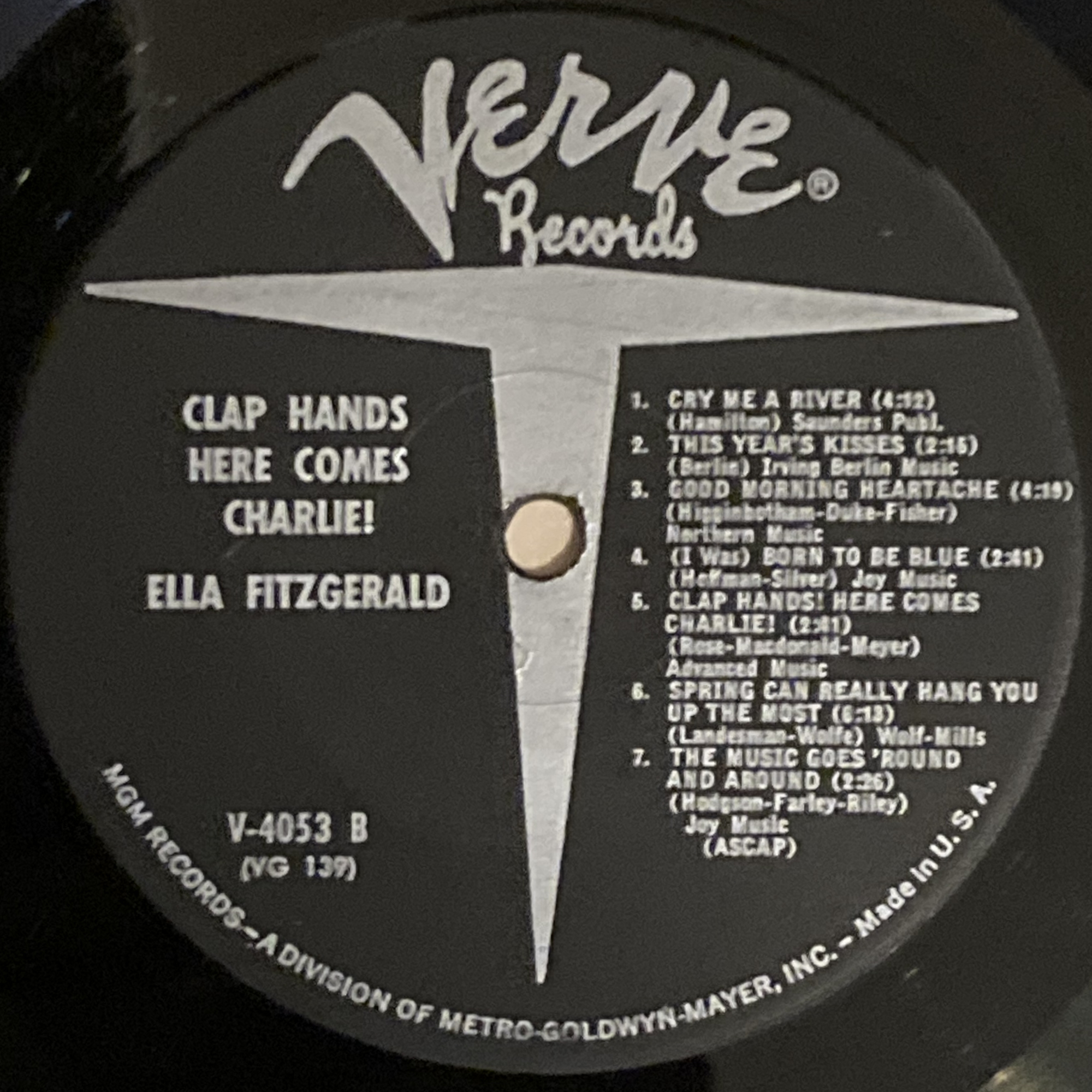
Label Side-B
Black Background
Silver Letter with “T” logo
Address:
Deep Groove無し
Dead Wax Info: 61-V6-139-1, V4053B
Personnel-
Vocal: Ella Fitzgerald
Tracks-
Side-A
1) Night in Tunisia 4’06”
2) You’re My Thrill 3’35”
3) My Reverie 3’16”
4) Stella by Starlight 3’16”
5) ‘Round Midnite 3’28”
6) Jersey Bounce 3’30”
7) Singing off 3’42”
Side-B
1) Cry Me a River 4’12”
2) This Year’s Kisses 2’15”
3) Good Morning Heartache 4’19”
4) (It was ) Born to Be Blue 2’41”
5) Clap Hands Here Comes Charlie! 2’41”
6) Spring Can Really Hang You up the Most 6’13”
7) Music Goes ‘Round and ‘Round 2’26”
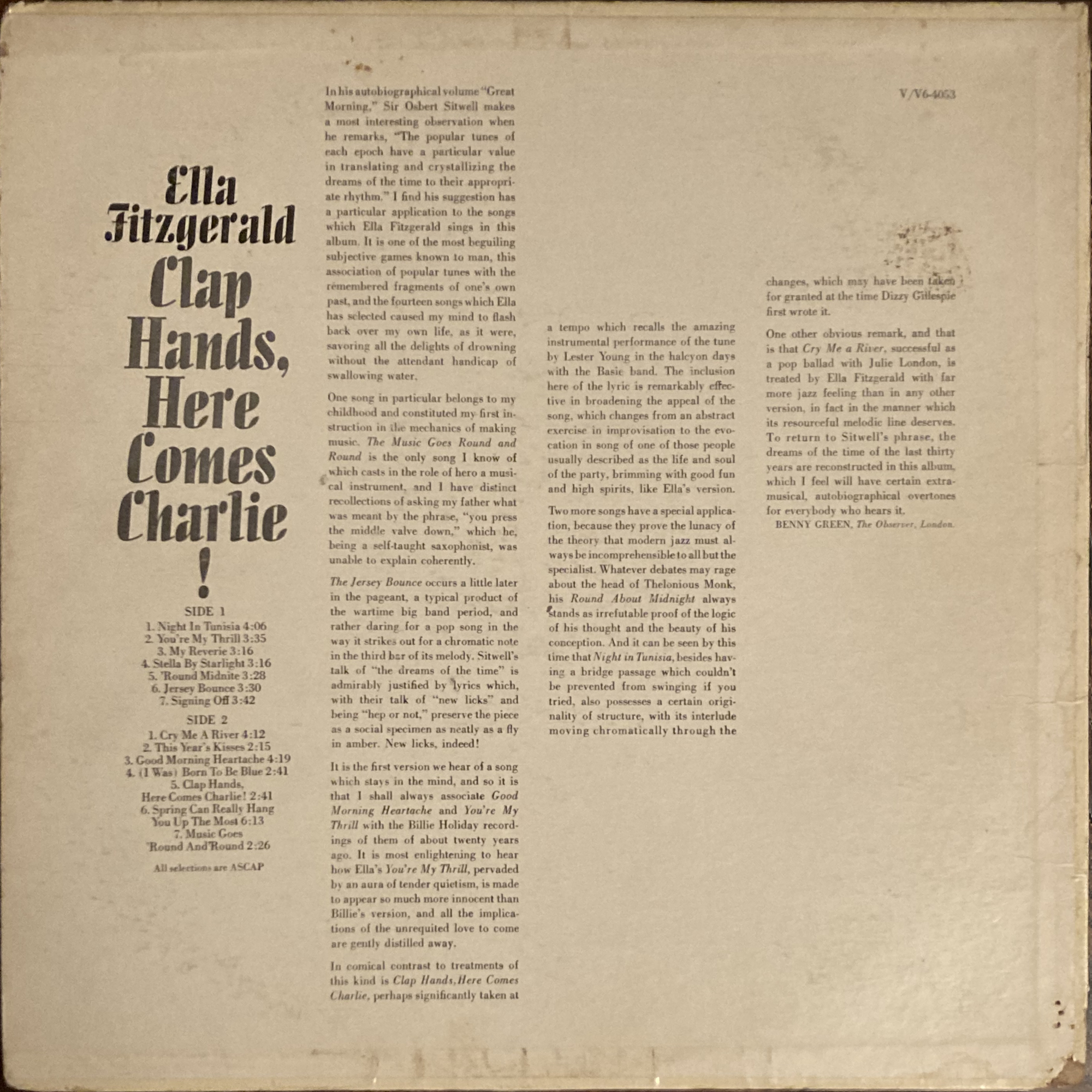
<裏ジャケ原文>
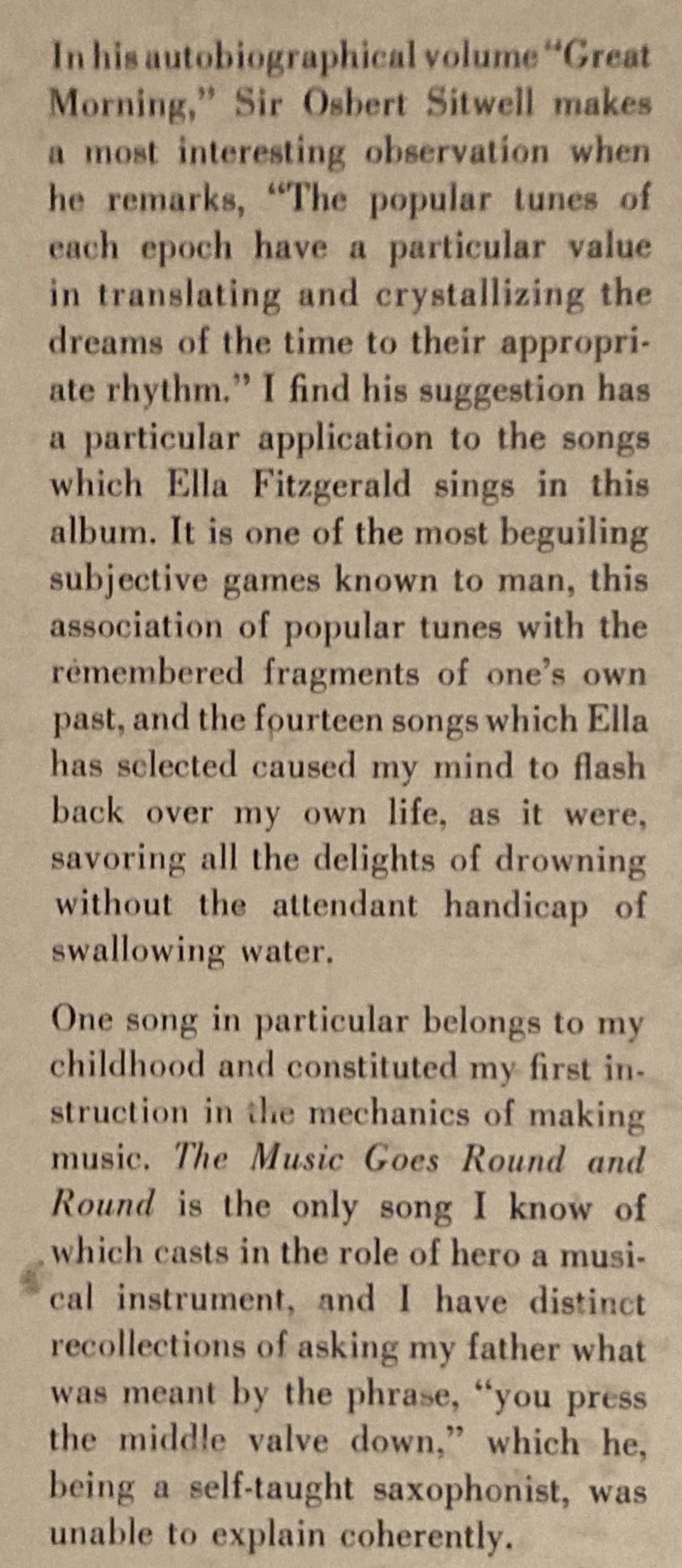
In his autobiographical volume “Great Morning,” Sir Osbert Sitwell makes a most interesting observation when he remarks, “The popular tunes of each epoch have a particular value in translating and crystallizing the dreams of the time to their appropri- ate rhythm.” I find his suggestion has a particular application to the songs which Ella Fitzgerald sings in this album. It is one of the most beguiling subjective games known to man, this association of popular tunes with the remembered fragments of one’s own past, and the fourteen songs which Ella has selected caused my mind to flash back over my own life, as it were, savoring all the delights of drowning without the attendant handicap of swallowing water.
One song in particular belongs to my childhood and constituted my first in- struction in the mechanics of making music. The Music Goes Round and Round is the only song I know of which casts in the role of hero a musi- cal instrument, and I have distinct recollections of asking my father what was meant by the phrase, “you press the middle valve down,” which he, being a self-taught saxophonist, was unable to explain coherently.
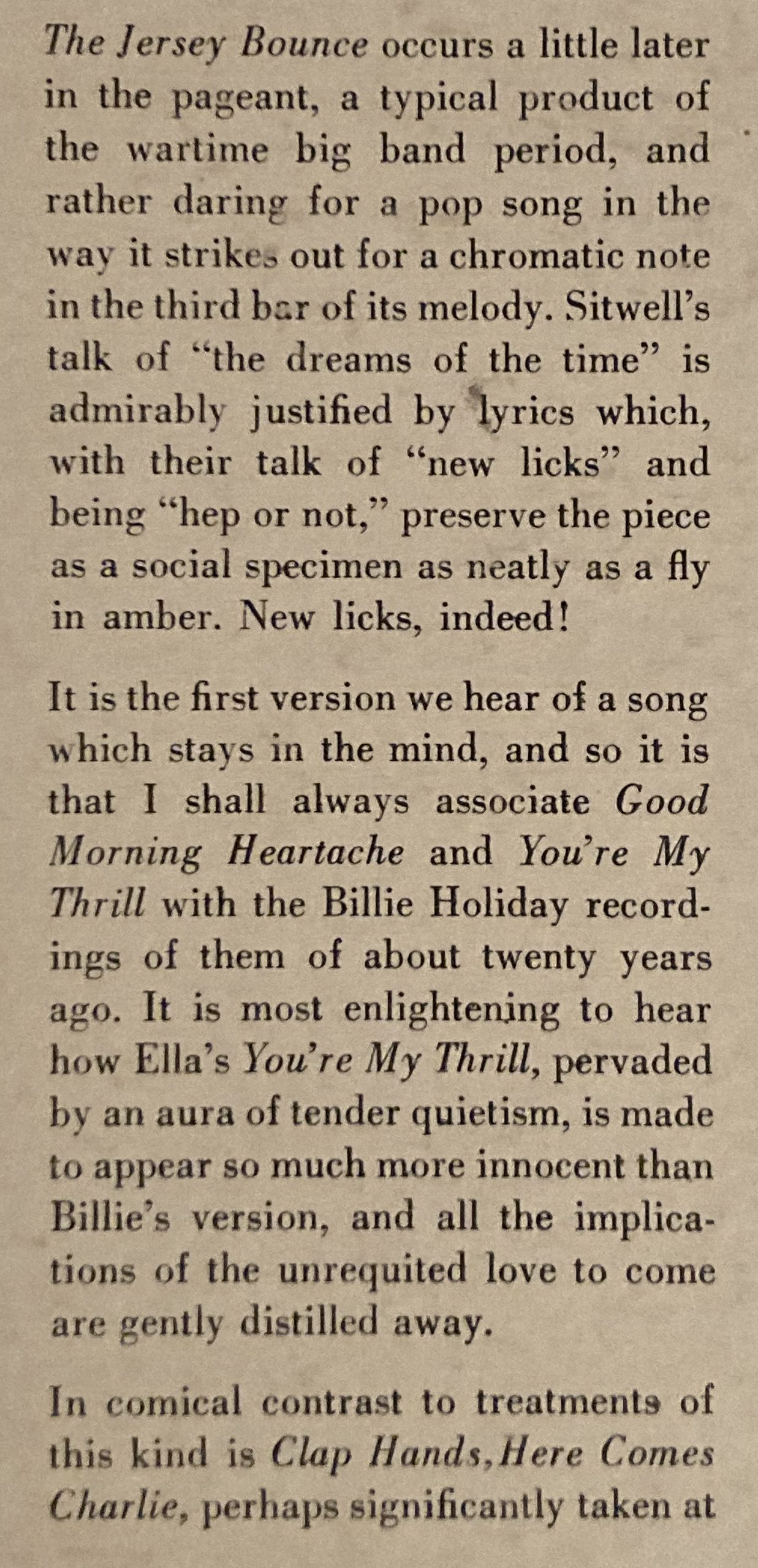
The Jersey Bounce occurs a little later in the pageant, a typical product of the wartime big band period, and rather daring for a pop song in the way it strikes out for a chromatic note in the third bar of its melody. Sitwell’s talk of “the dreams of the time” is admirably justified by lyrics which, with their talk of “new licks” and being “hep or not,” preserve the piece as a social specimen as neatly as a fly in amber. New licks, indeed!
It is the first version we hear of a song which stays in the mind, and so it is that I shall always associate Good Morning Heartache and You’re My Thrill with the Billie Holiday record- ings of them of about twenty years ago. It is most enlightening to hear how Ella’s You’re My Thrill, pervaded by an aura of tender quietism, is made to appear so much more innocent than Billie’s version, and all the implica- tions of the unrequited love to come are gently distilled away.
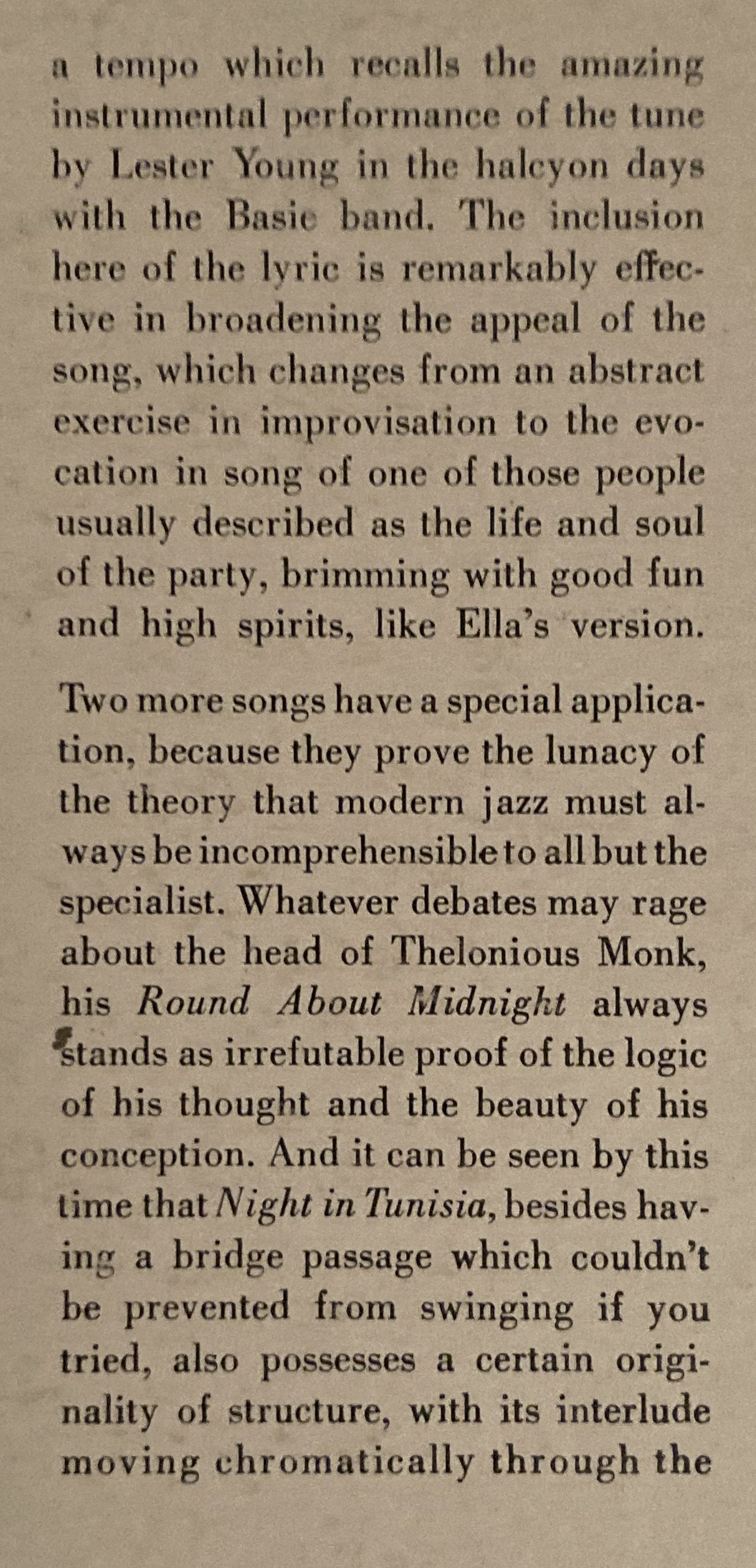
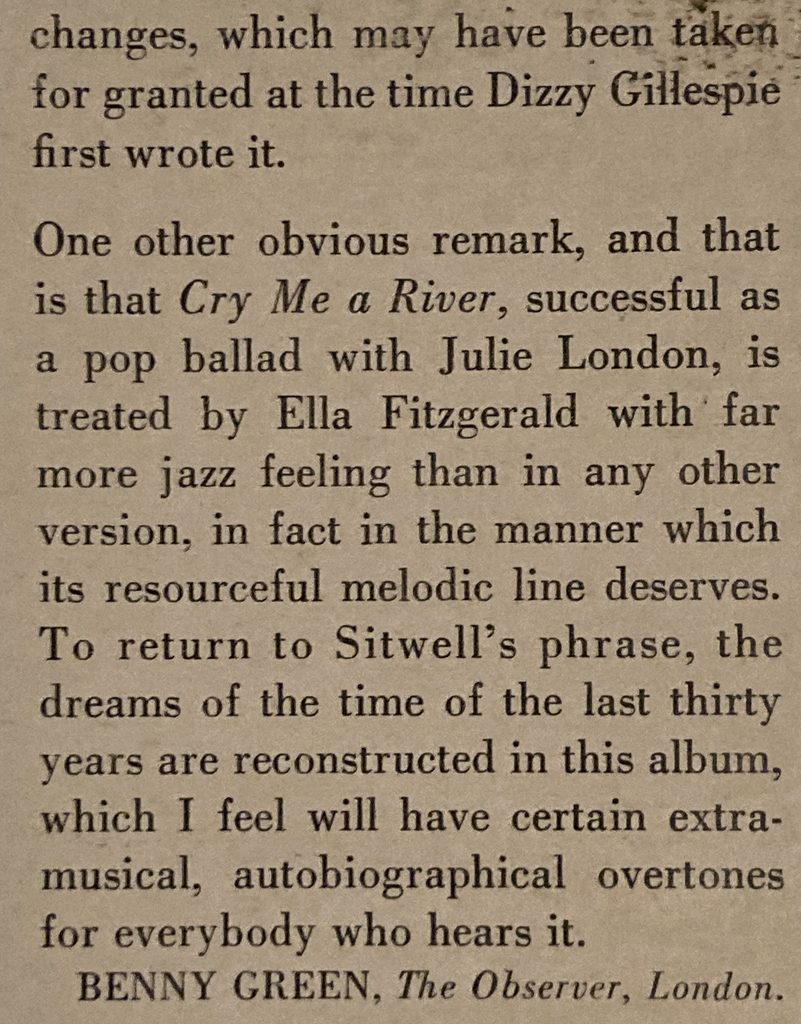
In comical contrast to treatments of this kind is Clap Hands, Here Comes Charlie, perhaps significantly taken at a tempo which recalls the amazing instrumental performance of the tune by Lester Young in the halcyon days with the Basie band. The inclusion here of the lyric is remarkably effec- tive in broadening the appeal of the song, which changes from an abstract exercise in improvisation to the evo- cation in song of one of those people usually described as the life and soul of the party, brimming with good fun and high spirits, like Ella’s version. Two more songs have a special applica- tion, because they prove the lunacy of the theory that modern jazz must al- ways be incomprehensible to all but the specialist. Whatever debates may rage about the head of Thelonious Monk, his Round About Midnight always stands as irrefutable proof of the logic of his thought and the beauty of his conception. And it can be seen by this time that Night in Tunisia, besides hav- ing a bridge passage which couldn’t be prevented from swinging if you tried, also possesses a certain origi- nality of structure, with its interlude moving chromatically through the changes, which may have been taken for granted at the time Dizzy Gillespie first wrote it.
One other obvious remark, and that is that Cry Me a River, successful as a pop ballad with Julie London, is treated by Ella Fitzgerald with far more jazz feeling than in any other version, in fact in the manner which its resourceful melodic line deserves. To return to Sitwell’s phrase, the dreams of the time of the last thirty years are reconstructed in this album, which I feel will have certain extra- musical, autobiographical overtones for everybody who hears it.
BENNY GREEN, The Observer, London.
<裏ジャケ和訳>
サー・オズバート・シットウェルは、その自伝的作品『グレート・モーニング(Great Morning)』の中で、極めて興味深い指摘をしている。「各時代のポピュラー・ソングには、その時代の夢を、それにふさわしいリズムに乗せて翻訳し、結晶化させるという特別な価値がある」というものだ。この見解は、エラ・フィッツジェラルドが本作で歌っている楽曲群に、まさに当てはまるように思える。ポピュラー・ソングを、自分自身の過去の断片的な記憶と結びつけるという行為は、人間が経験しうる最も魅惑的な「主観的遊戯」の一つである。エラが選んだ14曲は、私の人生を走馬灯のように蘇らせてくれた。それはまるで、溺れることの快楽だけを味わいながら、実際に水を飲み込んで苦しむという不都合は一切ない、そんな不思議な体験だった。
その中の一曲は、私の幼少期に深く関わっており、音楽がどのように作られるのかを初めて教えてくれた曲でもある。『ザ・ミュージック・ゴーズ・ラウンド・アンド・ラウンド(The Music Goes Round and Round)』は、楽器そのものを主人公に据えた、私が知る限り唯一の曲だ。この曲には「真ん中のバルブを押す(you press the middle valve down)」という歌詞が出てくるのだが、幼い頃、父にその意味を尋ねたことを鮮明に覚えている。当時、独学でサックスを吹いていた父でさえ、その歌詞の意味をうまく説明できなかったのだ。
『ジャージー・バウンス(The Jersey Bounce)』は、それから少し後の時代、戦時下のビッグバンド全盛期を象徴する一曲だ。ポピュラー・ソングとしてはかなり大胆なことに、メロディの3小節目で半音(クロマチック・ノート)が使われている。シットウェルの言う「時代の夢」という概念は、この曲の歌詞を見れば見事に裏付けられる。「新しいリック(フレーズ)」や「ヘップ(流行に敏感)」といった言葉が散りばめられたこの歌詞は、まるで琥珀の中に閉じ込められたハエのように、当時の社会のありのままの姿を鮮やかに保存している。まさに、「新しいリック」というわけだ!
人は、最初に耳にしたバージョンを強く記憶に留めるものだ。だからこそ、私にとって『グッド・モーニング・ハートエイク(Good Morning Heartache)』や『ユー・アー・マイ・スリル(You’re My Thrill)』といえば、約20年前にビリー・ホリデイが吹き込んだレコードのバージョンと、どうしても結びついてしまうのである。エラが歌う「ユー・アー・マイ・スリル(You’re My Thrill)」が、柔らかな静けさを帯びた雰囲気に満ちており、ビリーのバージョンと比べてはるかに無垢なものとして響くこと――そして、その歌に本来含まれていたはずの、やがて訪れる報われぬ恋の予感といった意味合いが、巧みに、かつ穏やかに取り除かれていること――について聞くのは、非常に啓発的である。
こうしたアプローチとは対照的で、どこか滑稽ですらあるのが「クラップ・ハンズ、ヒア・カムズ・チャーリー(Clap Hands, Here Comes Charlie)」だ。この曲のテンポ設定は、レスター・ヤングがベイシー楽団在籍時の黄金期に見せた、あの驚異的なインストゥルメンタル・パフォーマンスを彷彿とさせる。興味深いことに、本作では歌詞が取り入れられており、これが楽曲の魅力を大きく広げる役割を果たしている。単なる抽象的な即興演奏の練習曲から、エラ・フィッツジェラルドのバージョンがそうであるように、パーティーの盛り上げ役として、陽気で快活な人柄を歌で描き出すような楽曲へと変貌を遂げているのだ。他にも特筆すべき曲が2つある。それらは、「モダン・ジャズとは、専門家以外には理解不能なものであるべきだ」という馬鹿げた説を完全に否定するものだからだ。セロニアス・モンクを巡ってどんな議論が交わされようとも、彼の「ラウンド・アバウト・ミッドナイト(Round About Midnight)」は、その思考の論理性と構想の美しさを証明する、反論の余地のない証拠であり続けている。また、「ナイト・イン・チュニジア(Night in Tunisia)」に目を向ければ、この曲には、どうあがいてもスウィングせずにはいられないブリッジ(中間部)があるだけでなく、構造面でも独特の独創性があることがわかる。コード進行に沿って半音階的に動く間奏部は、ディジー・ガレスピーがこの曲を書き上げた当初は、当たり前のこととして受け取られていたのかもしれない。
もう一つ指摘しておきたいのは、「クライ・ミー・ア・リヴァー(Cry Me a River)」についてだ。ジュリー・ロンドンが歌ってポップ・バラードとして成功を収めたこの曲だが、エラ・フィッツジェラルドは、他のどのバージョンよりもジャズのフィーリングを色濃く込めて歌い上げている。それこそが、この曲の豊かなメロディラインにふさわしいアプローチと言えるだろう。シットウェルの言葉を借りれば、このアルバムには過去30年間の夢が再構築されており、聴く人それぞれにとって、音楽の枠を超えた、自伝的な響きを帯びた作品として感じられるはずだ。
ベニー・グリーン(ロンドン、『ジ・オブザーバー』紙)
※訳文の制作にはGoogleドライブとGoogle翻訳のお世話になりました。

コメント